
Rice skipper
Parnara guttata
Description
How to identify
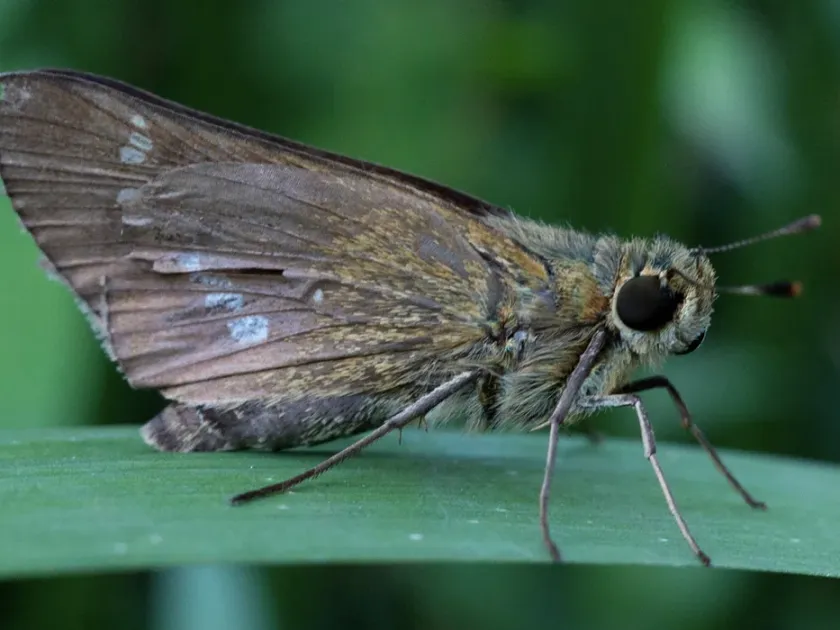
The rice skipper (Parnara guttata) is a butterfly belonging to the family Hesperiidae in the order Lepidoptera. It is a medium-sized insect with a wingspan of approximately 30 to 40 mm, characterized by its dark brown wings adorned with distinct white spots.
The larvae, or caterpillars, possess a cylindrical body that is generally light green with a darker longitudinal stripe running along the dorsal side. The head is well-developed, supporting their feeding habits on grass tissues.
Pupae of this species have a green hue and are typically hidden within leaves rolled by the larvae. This stage is crucial for their transition into adult butterflies.
The biological cycle of Parnara guttata is closely synchronized with the growth phases of rice. Depending on the geographical region and climate, the species may undergo several generations per year.
Overwintering often occurs in the pupal stage or as late-instar larvae, usually among crop residues or weeds surrounding the fields, which makes sanitation practices vital.
What it damages
Rice (Oryza sativa) is the primary host plant for the rice skipper. The larvae cause direct damage by feeding on the leaves of the rice plant, significantly reducing the green surface area available for photosynthesis.
While rice is the main concern, these larvae also feed on various wild grasses. These grasses act as alternative hosts that maintain the population density outside of the primary rice-growing season.
Feeding damage typically begins with minor notches on leaf edges and progresses to severe skeletonization of the leaf blades as the larvae grow in size and number.
The reduction in photosynthetic capacity leads to stunted plant growth, impaired tiller development, and a reduction in both grain quantity and quality during the harvest period.
Under high infestation levels, large areas of the field can suffer significant defoliation, which causes physiological stress to the plants and can lead to yield losses of up to 20 percent.
Signs of infestation
The most diagnostic sign of an infestation is the presence of rolled or folded rice leaves. The larvae use silk to bind the leaf edges together, creating a tubular shelter.
Visible leaf tissue loss is characterized by uneven, jagged edges along the leaf blade. This damage is caused by the caterpillars feeding from the margins toward the midrib.
Adult butterflies are active during daylight hours and can be seen flying low over the fields, which provides an opportunity for early visual scouting and population monitoring.
Frass (larval waste) accumulation within the rolled leaf shelters is a clear indication of active feeding and the presence of larvae inside the protected structures.
Stunted growth of tillers and a patchy appearance of the field are visible signs that the larval population has reached a level that significantly affects plant development.
Control measures
Cultural control is a cornerstone of management. Removing weeds from field borders and irrigation canals destroys secondary host sites and reduces the overwintering potential.
Adjusting the planting schedule to ensure that plants reach a stage of maturity before peak larval activity can help minimize the damage caused by the later generations.
Biological control agents, such as microbial insecticides based on Bacillus thuringiensis, are highly effective against larval stages while preserving beneficial insect populations.
Chemical control should only be applied when monitoring data indicates that the population has exceeded the economic injury level, utilizing selective insecticides to protect rice crops.
Integrated Pest Management (IPM) practices, including the use of pheromone traps to monitor adult flight, are essential for making informed decisions regarding the timing of insecticide applications.
Taxonomy
- Latin name
- Parnara guttata
- Order
- Lepidoptera (butterflies)
- Family
- Hesperiidae
- EPPO code
- PARNGG
Discussion
No discussions yet — be the first.