
Parnara bewani
Parnara bewani
Description
How to identify
Parnara bewani is a species of butterfly belonging to the family Hesperiidae, commonly known as skippers. This insect is recognized as a significant herbivorous pest in regions where rice is cultivated extensively.
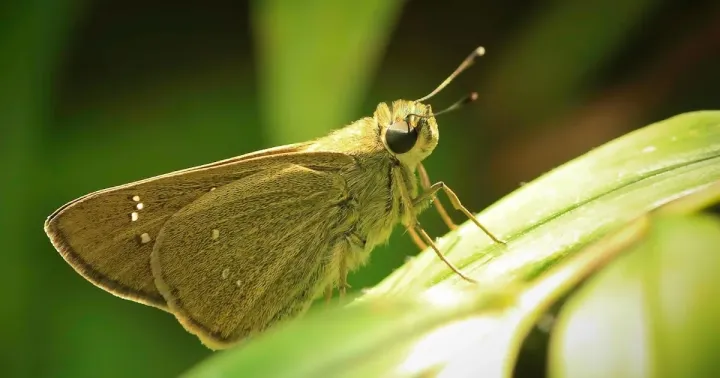
The adult butterfly features a wingspan of approximately 30–35 mm. The wing color is predominantly dark brown with distinctive semi-transparent white spots on the forewings, which are typical characteristics of the genus Parnara.
The life cycle involves complete metamorphosis: egg, larva, pupa, and adult. The larvae are bright green, providing excellent camouflage against the foliage of host plants, and possess a darker, well-defined head capsule.
Pupation typically occurs within a rolled leaf, secured with silken threads. The pupa is greenish, blending perfectly with the plant tissue, and gradually darkens as the adult butterfly develops inside.
This species is highly adapted to tropical and subtropical climates, where it can complete multiple generations within a single cropping season, presenting a persistent challenge for farmers.
What it damages
The larvae of Parnara bewani primarily feed on members of the Poaceae family, with rice (Oryza sativa) being the most economically significant host plant targeted by this insect.
Larvae consume leaf tissue, often starting from the leaf margins and advancing inward. This feeding behavior significantly reduces the surface area available for photosynthesis, directly impacting the plant's metabolic capacity.
Heavy infestations can lead to substantial defoliation. In severe cases, the plant's ability to fill grain heads is compromised, leading to significant yield losses for the grower.
Younger rice plants are particularly vulnerable to larval feeding, which can stunt growth and weaken the plant, making it more susceptible to secondary infections or environmental stress.
The pest also utilizes various wild grasses surrounding rice fields as alternative hosts, ensuring population survival even during periods when the main crop is not available.
Signs of infestation
The most distinctive sign of infestation is the presence of rolled or folded leaves. Larvae create these shelters by binding the leaf margins together with silk, creating a protective environment for feeding.
Small, dark, granular frass (excrement) found on the leaves or at the base of the plant is a clear indicator that larvae are actively feeding nearby.
Leaf damage appears as irregular notches or large sections missing from the leaf margins. As the damage progresses, affected leaf parts turn yellow, wither, and eventually die off.
Field observation often reveals the presence of adult butterflies fluttering above the crop, especially during daylight hours, signaling the time for increased vigilance and monitoring for egg-laying.
At a field level, an infested crop may appear scorched or ragged due to the significant amount of foliage consumed by the larval population during peak outbreaks.
Control measures
Effective management begins with strict field hygiene, including the removal of weeds and grasses around field bunds, which act as primary breeding grounds for the pest.
Biological control, using formulations of Bacillus thuringiensis, is a highly effective and environmentally friendly method for managing younger larval stages without disrupting beneficial insect populations.
Chemical control via selective insecticides is recommended only when the pest population exceeds the economic threshold. Application timing is critical to ensure larvae are targeted before they reach maturity.
Integrated pest management (IPM) practices, including the use of light traps, assist in monitoring adult population dynamics, helping farmers make informed decisions about intervention timing.
Promoting balanced soil fertility and avoiding excessive nitrogen application can help maintain plant health, making crops less attractive to pests and more resilient to feeding damage.
Taxonomy
- Latin name
- Parnara bewani
- Order
- Lepidoptera (butterflies)
- Family
- Hesperiidae
- EPPO code
- PARNBE
Discussion
No discussions yet — be the first.