
New Zealand flatworm
Parakontikia ventrolineata
Description
How to identify
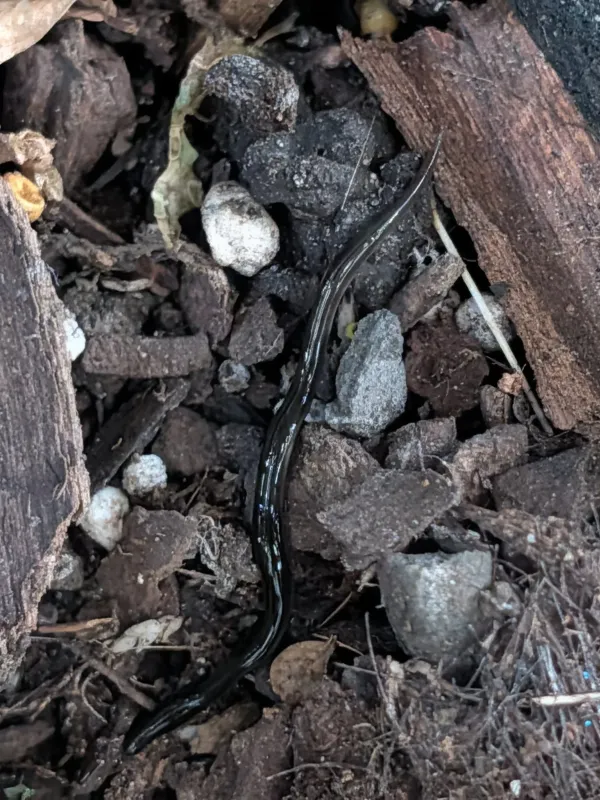
The New Zealand flatworm (Parakontikia ventrolineata) is an invasive species of predatory flatworm within the family Geoplanidae. It has a flattened, elongated body that can reach lengths of 3 to 6 centimeters.
The dorsal side typically displays a dark brown to black coloration, often featuring faint pale margins or stripes. The ventral side is usually lighter, appearing creamy or greyish in color.
This organism lacks a segmented body, distinguishing it from earthworms. It moves by gliding on a thin layer of mucus, which it secretes during its nocturnal hunting activities.
The body is highly contractile, allowing the flatworm to squeeze through narrow crevices in the soil, under plant pots, or within organic debris. The head region is slightly tapered but lacks complex sensory organs visible to the naked eye.
It thrives in cool, moist environments and is exclusively nocturnal. During daylight hours, it remains hidden beneath stones, leaf litter, or synthetic materials like plastic sheeting and pots.
What it damages
The primary ecological impact of Parakontikia ventrolineata is the systematic predation of earthworms. By consuming the primary decomposers of the soil, the flatworm disrupts essential soil processes.
Earthworms are vital for soil aeration and nutrient cycling. Their depletion leads to soil compaction, which inhibits root growth and reduces the overall vigor of garden and greenhouse plants.
The predatory activity of the flatworm can decimate local earthworm populations in a relatively short period, causing long-term degradation of soil quality and fertility in private gardens and commercial nurseries.
While the flatworm does not feed on plants directly, the indirect damage to the soil structure is severe enough to cause reduced yields and stunted growth in sensitive ornamental or vegetable crops.
The species is highly problematic in managed environments, where imported soil or potted plants act as vectors for its accidental introduction into new areas.
When it appears
Activity levels are heavily dependent on environmental humidity and temperature. The flatworms are most active during mild, rainy weather, particularly in the spring and autumn seasons.
During dry, hot summer months or freezing winter temperatures, the flatworms seek refuge deep within the soil or in sheltered moist microhabitats, entering a state of reduced activity.
In temperate climates, they can persist throughout the year if soil moisture is maintained. Greenhouse environments provide ideal, stable conditions for year-round survival and reproduction.
The breeding season typically aligns with periods of high moisture, allowing for rapid expansion of populations when conditions are optimal for surface movement.
Monitoring should be most intense during early spring and autumn, as this is when the flatworms emerge to forage and migrate across garden surfaces.
Signs of infestation
A notable decrease or total absence of earthworms in established garden beds or compost piles is a primary indicator of a flatworm infestation.
The presence of shiny, mucus-like trails on the surface of soil, garden pots, or concrete paths after rainy nights is a characteristic sign of their recent activity.
Direct sightings of the flatworms under loose objects left on damp ground, such as bricks, boards, or nursery pots, confirm their presence on the property.
Stunted plant growth coupled with poor soil structure—specifically increased compaction and lack of visible earthworm tunnels—serves as a secondary diagnostic sign.
Inspection of new nursery stock or soil deliveries often reveals hidden individuals sheltered within the root balls or along the interior edges of containers.
Control measures
Currently, there are no chemical pesticides approved for the targeted control of New Zealand flatworms that would not also harm earthworms, making manual control the most viable strategy.
- Regular manual collection and destruction of individuals found during early morning or evening inspections.
- Placing artificial shelters, such as cardboard or plastic sheets, on damp soil to attract the flatworms, which can then be collected daily.
- Strict quarantine of any new plants or soil substrates; inspect root systems thoroughly before introduction to the garden.
- Encouraging natural predators and maintaining healthy soil structure to support a resilient ecosystem.
Preventing the spread through the movement of pots and compost is critical. Community-based awareness is the most effective tool in limiting the expansion of this invasive predator.
Taxonomy
- Latin name
- Parakontikia ventrolineata
- Family
- Geoplanidae
- EPPO code
- PKONVE
Discussion
No discussions yet — be the first.