
New Zealand flatworm
Arthurdendyus
Description
How to identify
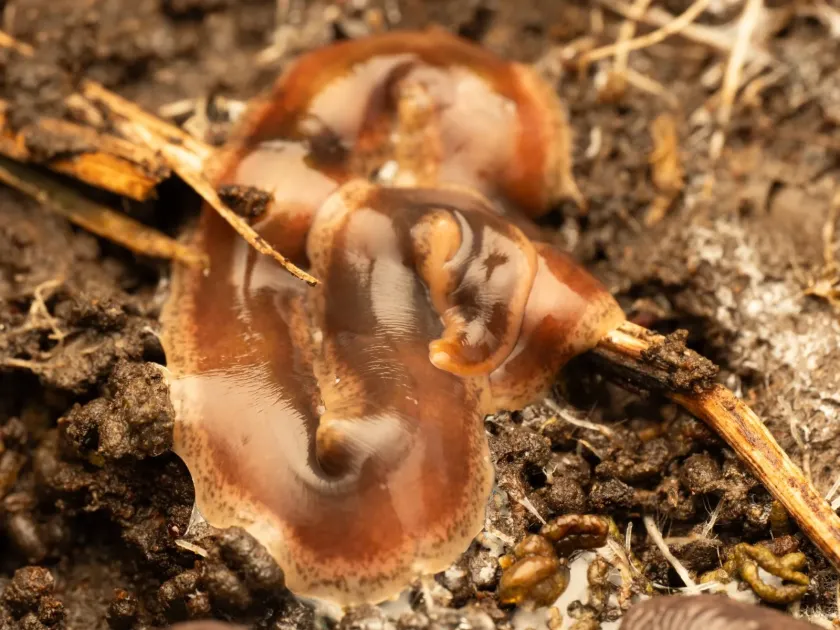
The New Zealand flatworm (Arthurdendyus triangulatus) is an invasive species belonging to the Geoplanidae family. It is a long, flattened, and non-segmented worm that can grow up to 20 cm in length, typically displaying dark purple or brown coloration with a lighter edge.
The body is covered in a thick layer of mucus, which facilitates movement and prevents dehydration. When inactive, these worms typically coil themselves into a tight, sticky spiral, which is a key identification feature for gardeners.
Reproduction occurs through egg capsules (cocoons). These are initially golden-yellow and turn deep black over time, often found in soil crevices or attached to the bottom of plant pots in moist conditions.
These creatures thrive in cool, moist, and shaded environments. They are highly susceptible to desiccation and direct sunlight, so they typically remain hidden under logs, stones, or thick mulch during the day.
Their biology is purely predatory. They hunt earthworms by tracking their scent, then enveloping the prey with their body and secreting enzymes that digest the earthworm externally before the flatworm consumes the remains.
What it damages
The primary damage caused by the New Zealand flatworm is the systematic eradication of native earthworm populations. By eliminating earthworms, the species destroys the natural system responsible for soil aeration, drainage, and nutrient cycling.
Although they do not feed on crops directly, their presence leads to significant soil degradation. Compacted, lifeless soil results in poor plant growth, stunted root development, and reduced yields across horticultural and agricultural crops.
These pests pose a high risk to nurseries and garden centers. Because they can hide inside potting soil, they are easily transported across regions, leading to new infestations in previously unaffected areas.
In regions where they have become established, they can reduce earthworm numbers by up to 90%. This ecological disruption is irreversible in many cases, requiring long-term changes to soil management practices.
The flatworm lacks natural predators in its invasive range, allowing its population to expand rapidly and dominate the local soil invertebrate community, threatening both biodiversity and garden productivity.
Signs of infestation
The most reliable sign of an infestation is a noticeable decline in the number of earthworms when digging or working the soil. If you find soil becoming hard and clumpy with no earthworm activity, this is a major warning.
Presence of slimy trails on the soil surface, paving stones, or garden structures during the early morning hours indicates that flatworms have been active overnight.
Finding the black, capsule-like egg cocoons on the base of plant pots or in shaded damp areas is a definitive indicator that the pest has established a breeding colony.
Sightings of adult flatworms beneath stones, wooden planks, or moist organic mulch are common in areas with high humidity, especially after rainfall when they move to the surface.
Unexpectedly dry or compacted patches in garden beds that were previously fertile can be a secondary indicator of the long-term impact of earthworm predation.
Control measures
There are currently no chemical treatments available to control the New Zealand flatworm, as any substance toxic enough to kill the flatworm would simultaneously destroy the beneficial earthworm population.
The best defense is rigorous biosecurity. Inspect all new plants and their pots thoroughly for the presence of the worm or its egg capsules before introducing them to your garden.
Mechanical removal is the most effective control method. Regularly check the undersides of pots, stones, and garden debris, especially in the mornings, and destroy any found specimens by placing them in salt water or crushing them.
Using artificial refugia, such as pieces of dark cardboard or plastic placed on damp soil, can act as a trap. Check these traps regularly to gather and remove the pests from your garden plot.
- Prohibit the movement of soil and potting media between different areas.
- Keep garden surfaces clean and remove unnecessary debris.
- Clean all horticultural tools thoroughly before moving between garden beds.
Taxonomy
- Latin name
- Arthurdendyus
- Family
- Geoplanidae
- EPPO code
- ARDDSP
Discussion
No discussions yet — be the first.