
New Zealand flatworm
Arthurdendyus albidus
Description
How to identify
The New Zealand flatworm (Arthurdendyus albidus) is a member of the Platyhelminthes phylum and the Geoplanidae family. Adults typically appear as flat, ribbon-like creatures ranging from 5 to 15 centimeters in length.
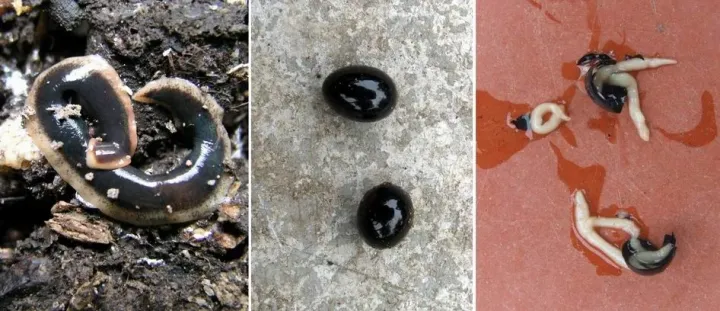
Their bodies are devoid of segmentation and covered in a protective mucus layer. The coloration is generally creamy-white to pale pink, often featuring a distinct golden-brown margin along the edges.
When resting, they look like a flat patch of tissue, but they elongate significantly while moving. The head is blunt or rounded and lacks clearly visible sensory organs, which is an adaptation for navigating through soil crevices.
These flatworms are hermaphroditic and reproduce by laying egg cocoons. The cocoons are initially bright red but gradually turn dark brown or almost black as they mature.
They are primarily nocturnal and highly elusive, spending daylight hours hidden under stones, plant pots, mulch, or any objects lying on damp soil.
What it damages
The primary harm caused by Arthurdendyus albidus is its role as a specialized predator of earthworms. It actively tracks and consumes earthworms, which are essential for ecosystem health.
Earthworms are crucial for soil aeration, drainage, and nutrient cycling. A significant reduction in their population leads to severe soil compaction and loss of fertility.
In areas heavily infested with this flatworm, the soil structure degrades rapidly, which can negatively impact the root development and overall vigor of horticultural crops.
The flatworm does not feed on plant tissues directly, so crops are not damaged by biting or chewing. However, the indirect damage to the soil environment acts as a major stressor for vegetation.
In nursery settings, the flatworm can be unintentionally transported with potted plants, making it a significant phytosanitary concern for the horticultural industry.
When it appears
The activity of the New Zealand flatworm is heavily dependent on moisture and moderate temperatures. They are most active during the wet and mild periods of spring and autumn.
During hot and dry summer months, they tend to retreat into deeper soil layers or hide in damp microhabitats under dense organic matter to avoid desiccation.
Mild winters do not restrict their activity. As long as the ground does not freeze, they can continue to hunt and reproduce throughout the winter period.
Egg cocoons are highly resistant to environmental stressors, allowing the species to persist through periods of drought or cold and hatch when conditions become optimal.
The dispersal of this pest is often linked to human activity, as individuals and cocoons are easily moved via trade in potted plants, compost, and gardening equipment during moist conditions.
Signs of infestation
The most reliable sign of an infestation is a noticeable decline or total disappearance of earthworm activity within a specific area of the garden or greenhouse.
Direct sightings of the flatworms themselves, typically found when lifting stones, wooden boards, plant pots, or bags stored on the ground.
Visible trails of dried, shiny mucus on surfaces or the soil after rain or at night, indicating the pathways where the worms have moved.
Discovery of egg cocoons on the base of pots, beneath planters, or inside garden debris. These look like small, smooth, reddish or black berries.
Compacted, dense soil that lacks the typical granular texture or drainage holes usually created by earthworm activity is a strong indicator of their presence.
Control measures
There are currently no chemical pesticides approved or effective for controlling the New Zealand flatworm that would not also harm beneficial earthworms and soil biodiversity.
The primary control strategy is vigilant phytosanitary inspection. All new plant materials should be carefully checked for the presence of flatworms or cocoons before being placed in the garden.
- Manual collection and destruction of any identified specimens in soapy water.
- Minimizing the use of thick mulch in high-risk areas to facilitate regular inspections.
- Checking the undersides of pots and garden tools, especially those that remain outdoors in damp areas.
- Raising awareness to prevent the accidental trade or movement of potentially infested plants.
- Focusing on biological soil management to maintain high earthworm resilience in areas where populations are still healthy.
Ongoing research is focused on biological controls, though natural predators are scarce in invaded regions, making manual removal the most recommended practice for gardeners.
Taxonomy
- Latin name
- Arthurdendyus albidus
- Family
- Geoplanidae
- EPPO code
- ARDDAL
Discussion
No discussions yet — be the first.