
New Zealand flatworm
Arthurdendyus triangulatus
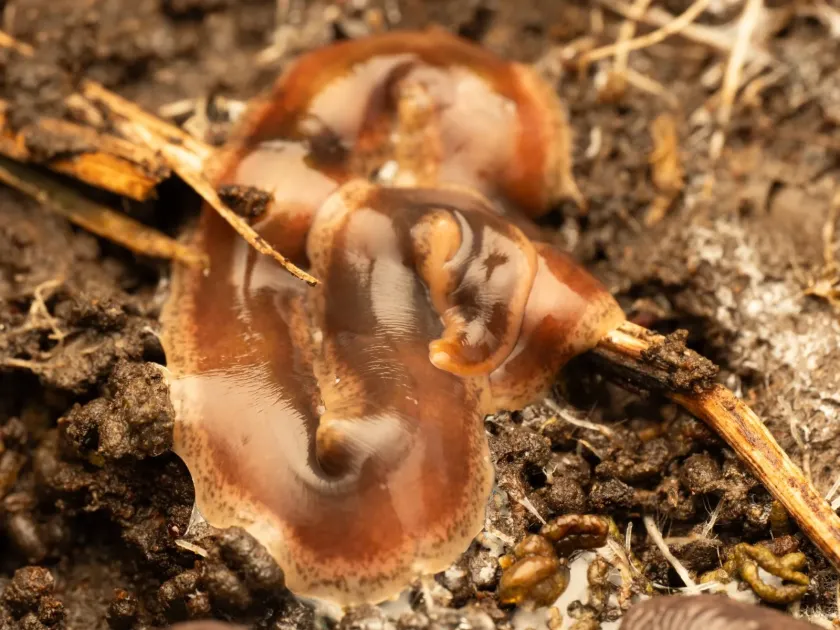
Description
How to identify
The New Zealand flatworm (Arthurdendyus triangulatus) is an invasive flatworm of the family Geoplanidae that poses a significant threat to earthworm populations.
Adult worms can grow between 5 and 17 cm in length and up to 1 cm in width, exhibiting a flattened, ribbon-like body shape when moving.
The dorsal surface is typically dark brown or violet, while the ventral side is pale cream, often bordered by a distinct margin of small white spots.
They are covered in a sticky mucus layer, which helps them move efficiently and protects them from environmental stress, such as drying out.
Reproduction involves laying small, spherical egg cocoons that start bright red and turn black over time, making them a key identifier in soil inspections.
What it damages
The primary damage caused by Arthurdendyus triangulatus is the systematic predation of earthworms, which are essential for maintaining healthy, aerated, and fertile soil.
By consuming earthworms, this invasive predator destroys the natural structure of the soil, leading to compaction and poor drainage over time.
Plants suffer from root growth inhibition because the soil loses the aeration channels typically created by earthworms, reducing oxygen and water uptake.
The absence of earthworms disrupts the nutrient cycle, as organic matter is not efficiently incorporated into the soil, negatively impacting general garden productivity.
In regions where it has become established, the flatworm significantly alters the soil micro-ecosystem, threatening biodiversity and agricultural efficiency.
Signs of infestation
The most alarming sign of infestation is a sudden disappearance or significant reduction in the population of local earthworms in your garden soil.
Flatworms can be found coiled into a resting disk or spiral shape under pots, stones, logs, or plastic sheeting, especially in cool, damp conditions.
Viscous mucus trails left behind after nocturnal hunting sessions are often visible on the soil surface or garden surfaces during early morning hours.
The discovery of black, capsule-like egg cocoons in the top layers of the soil indicates an active and reproducing population of the pest.
Plants that appear stunted or chlorotic, despite being watered, may be suffering from the secondary effects of reduced soil health caused by the flatworm.
Control measures
Currently, there are no approved chemical pesticides specifically for the control of Arthurdendyus triangulatus that do not also harm beneficial soil organisms.
Prevention is the best strategy; always thoroughly inspect the base of new pots and the root balls of incoming plants for the presence of the flatworm or its cocoons.
Manual removal remains the most effective control method; collect the worms and dispose of them in a sealed container with soapy water or salt solution.
Removing garden debris, such as piles of wood or damp plastic, reduces the number of favorable daytime refuges for the flatworms in the garden.
Promoting a diverse garden environment and avoiding the importation of soil from infested areas are essential steps in limiting the spread of this invasive organism.
Taxonomy
- Latin name
- Arthurdendyus triangulatus
- Family
- Geoplanidae
- EPPO code
- ARDDTR
Discussion
No discussions yet — be the first.