
Australoplana sanguinea
Australoplana sanguinea
Description
How to identify
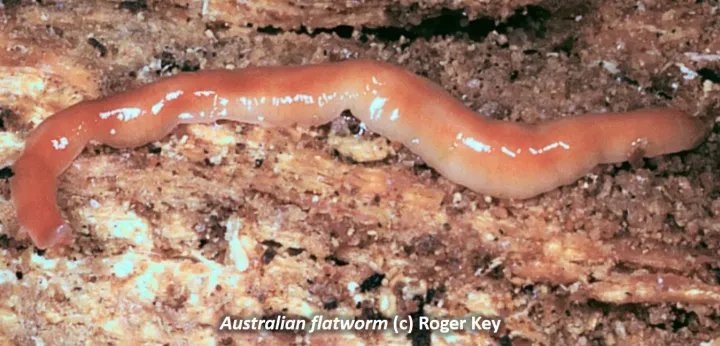
Australoplana sanguinea is a species of terrestrial flatworm, known for its elongated and flattened body, usually reaching lengths of 50 to 80 millimeters.
The organism is easily identified by its vibrant, blood-red or orange color, which contrasts sharply with most soil particles and organic debris.
Lacking segments, the worm moves by gliding on a layer of mucus, which it secretes to stay moist and protect its delicate skin from environmental stresses.
The anterior end is rounded and packed with chemosensory cells, allowing the predator to track the movements and vibrations of its prey through the soil.
This flatworm is considered an invasive species in many parts of the world, often spread accidentally through the nursery trade and international plant shipments.
What it damages
The primary agricultural impact of this species is its aggressive predation on earthworms, which are vital for maintaining healthy soil structure and aeration.
By consuming earthworm populations, these flatworms indirectly degrade the soil quality, leading to compaction and reduced nutrient availability for garden plants.
While they do not feed on plant tissues directly, the long-term presence of these predators can significantly inhibit the growth and vigor of various ornamental species.
In greenhouses and commercial nurseries, the loss of earthworms results in the failure of natural soil processes, forcing growers to rely more heavily on fertilizers.
Ecologically, the introduction of this predator disrupts local soil biodiversity, threatening the survival of native earthworm species that cannot escape the hunting behavior of this worm.
When it appears
The activity level of Australoplana sanguinea is highly dependent on environmental moisture, with the highest levels of activity occurring during rainy or damp seasons.
In temperate zones and protected greenhouse environments, these worms can remain active throughout the entire year, as long as moisture levels stay high.
During dry, hot summer months, the worms typically retreat deep into the soil profile or hide under solid cover to avoid dehydration and lethal temperatures.
Reproduction is largely opportunistic, continuing as long as food sources are available and the humidity is sufficient for their survival and egg development.
Gardeners are most likely to encounter these flatworms during early morning or evening hours, when they crawl onto the surface of the soil to forage.
Signs of infestation
A sudden, unexplained decline in the local earthworm population within a specific garden bed or greenhouse area is a primary sign of infestation.
Visual confirmation can be achieved by checking beneath flower pots, stone tiles, wood scraps, or dense layers of mulch where the worms seek shelter during the day.
Look for shimmering mucus trails on the soil surface, which the flatworms leave behind as they move through their habitat in search of food.
During soil cultivation, gardeners may encounter the egg cocoons of this species, which appear as small, dark, and shiny capsules embedded in the substrate.
Poor performance of container-grown plants despite adequate watering and fertilization can sometimes be a secondary indicator of disturbed soil ecology caused by this pest.
Control measures
Controlling this pest is challenging because standard insecticides are generally ineffective against flatworms, requiring a reliance on integrated management practices.
Strict quarantine measures are the most effective way to prevent the entry of these worms; always inspect the base of pots and root balls of new plant material.
Use simple manual traps consisting of wet cardboard or wooden boards laid on the soil, then inspect and dispose of any gathered flatworms every morning.
Avoid excessive irrigation that creates perpetually saturated soil, as this provides a perfect environment for the survival and hunting activity of these flatworms.
In the case of severe infestation, replacing the infested potting media with sterile soil and thoroughly disinfecting containers is necessary to break the cycle.
Taxonomy
- Latin name
- Australoplana sanguinea
- Family
- Geoplanidae
- EPPO code
- AUSPSA
Discussion
No discussions yet — be the first.