
Panstrongylus megistus
Panstrongylus megistus
Description
How to identify
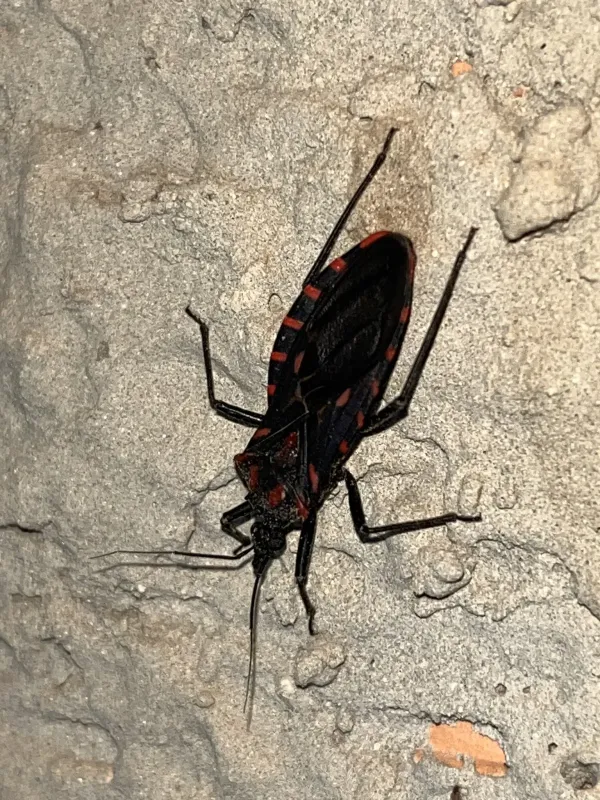
Panstrongylus megistus belongs to the Reduviidae family, also known as assassin bugs. It is a large insect, with adult specimens measuring up to 3.5–4 cm in length.
The insect possesses a distinctive elongated body with a broad abdomen, exhibiting a dark brown or black coloration with subtle orange-red markings along the edges.
Its mouthparts are modified into a long, sharp proboscis that is folded under the head when at rest, adapted specifically for piercing the skin of hosts.
Adults are fully winged, which grants them the mobility required to navigate between habitats in search of suitable living conditions and regular blood meals.
Immature nymphs share a similar structural profile to adults but are significantly smaller and wingless, progressing through multiple molting stages throughout their life cycle.
What it damages
While primarily recognized in public health as a vector for pathogens, this species can occasionally infiltrate agricultural infrastructures and livestock housing.
It does not cause direct damage to crops, as its primary food source consists of vertebrate blood, making it a nuisance to farm animals and workers.
Indirect economic impacts occur when large populations inhabit animal shelters, leading to increased stress on livestock and the potential for unsanitary conditions.
Presence within storage or farming facilities may necessitate additional sanitation protocols to ensure the safety and hygiene of the agricultural environment.
Constant monitoring is advised in areas where wild animal hosts are present, as these environments provide perfect conditions for the bug to thrive.
When it appears
The activity of this insect is highly temperature-dependent, with optimal biological performance occurring between 20 and 28 degrees Celsius.
Peak breeding and dispersal activities typically align with warmer seasons, during which insects actively seek to expand their territory and find new hosts.
During colder months, the insects seek shelter in protected areas, often colonizing wall crevices, wooden structures, or sub-floor spaces to hibernate.
Development cycles are highly variable and sensitive to external factors; under ideal temperature and food availability, the life cycle is completed more efficiently.
Humidity levels also play a pivotal role, as high dryness can affect the viability of eggs, leading the species to prefer stable, microclimatic environments.
Signs of infestation
Evidence of a Panstrongylus megistus infestation often includes dark, localized fecal spots found on walls, floorboards, or near nesting sites.
Because the insects are strictly nocturnal, they are rarely seen during the day, making evening inspections with a flashlight the most effective detection method.
Careful examination of farm outbuildings should focus on hidden recesses, such as gaps in timber, cracks in masonry, or piles of stored supplies.
In cases of high population density, a distinct odor generated by the insect's scent glands may be noticeable in poorly ventilated storage spaces.
Discovery of discarded nymphal exoskeletons is a definitive indicator of an established and reproducing population within the facility.
Control measures
The primary control strategy involves rigorous sanitation to eliminate all potential harborages and nesting sites within agricultural buildings.
Sealing structural gaps, cracks in foundations, and wall fissures is essential to prevent these insects from migrating from external environments into farm structures.
Application of residual contact insecticides within known infestation zones can significantly reduce population levels when performed systematically.
Effective management of surrounding vegetation and the removal of organic debris are crucial to discourage wild animal hosts from approaching the farm perimeter.
Integrated Pest Management (IPM) practices, including regular surveillance and professional site assessments, are recommended to maintain long-term control.
Taxonomy
- Latin name
- Panstrongylus megistus
- Order
- Hemiptera (bugs, aphids, leafhoppers)
- Family
- Reduviidae
- EPPO code
- PANUME
Discussion
No discussions yet — be the first.