
Panstrongylus geniculatus
Panstrongylus geniculatus
Description
How to identify
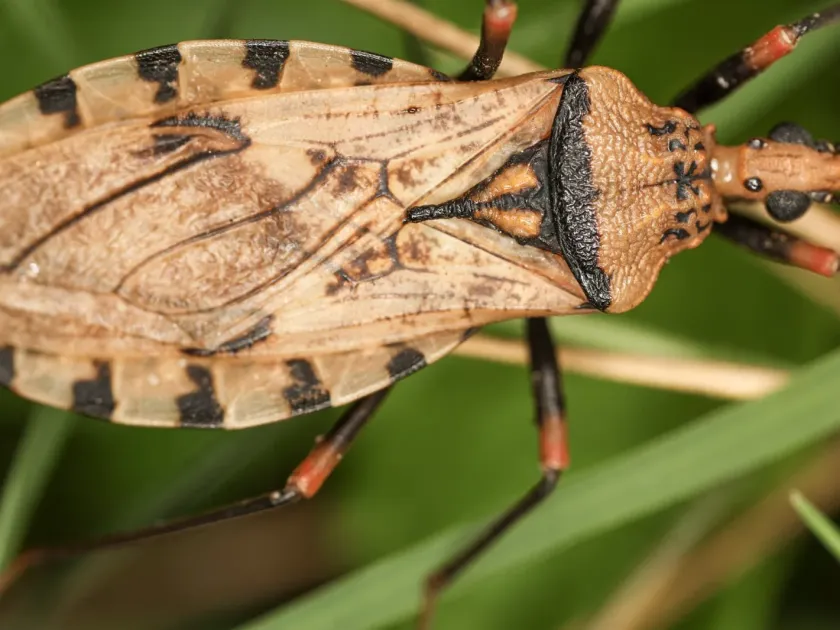
Panstrongylus geniculatus belongs to the family Reduviidae, commonly known as the assassin bug family. These insects are large, often reaching 3 cm in length, with a dark brown or blackish body and distinct reddish-orange markings along the abdominal edges.
Adult bugs possess well-developed wings, allowing them to fly between forests and nearby human or animal dwellings. They have an elongated head with a sharp, piercing proboscis used for blood-feeding.
Nymphs resemble the adults but are smaller, flightless, and undergo several developmental stages before reaching maturity. They are primarily nocturnal, spending daylight hours hidden in crevices or organic debris.
This species is well-adapted to both sylvatic (wild) and domestic environments, making it a versatile and resilient insect in varied agricultural landscapes.
Understanding their morphology and nocturnal behavior is crucial for effective monitoring and developing mitigation strategies on agricultural properties.
What it damages
While Panstrongylus geniculatus does not directly consume plant tissues, its impact on the agricultural sector is significant due to its parasitic relationship with livestock.
By feeding on the blood of farm animals and poultry, these bugs cause stress, anemia, and reduced productivity, leading to direct economic losses for the farmer.
Beyond physical irritation, these insects act as vectors for various pathogens, complicating veterinary health management and requiring strict bio-security measures.
The presence of these bugs can necessitate frequent veterinary interventions and expensive pest management efforts, further straining the farm's budget.
In rural areas where crops and livestock co-exist, these bugs can spread from nearby wooded areas, turning storage sheds and animal pens into permanent breeding grounds.
When it appears
The activity of these pests is heavily influenced by humidity and temperature, with populations peaking during warmer and wetter months.
In tropical and subtropical regions, activity can persist year-round, though major population surges often coincide with seasonal rainfall patterns that support their wild host animals.
During colder or excessively dry periods, the bugs tend to slow down their metabolic activity and seek shelter, often moving deeper into infrastructure or organic accumulations.
Monitoring should be most intensive during peak agricultural seasons when increased movement from the surrounding environment into farm structures is expected.
Field observation and the use of strategic light traps help agronomists identify the timing of migration waves, allowing for timely preventative actions.
Signs of infestation
Identifying the presence of Panstrongylus geniculatus often involves locating the bugs themselves in dark, quiet corners of livestock shelters or poultry houses.
Visible excrement stains, appearing as small dark spots on walls, rafters, or furniture, are clear indicators that a colony is established in the area.
Behavioral changes in livestock, such as restlessness during the night or signs of skin lesions and anemia, are frequently linked to repeated nocturnal bites from these pests.
Checking near burrows of wild rodents or stacks of wood adjacent to fields can reveal the initial stages of an infestation before it reaches the core livestock areas.
Using specialized monitoring tools, including sticky traps and infrared cameras at night, can significantly increase the chances of detection in the early stages.
Control measures
Effective management begins with rigorous sanitation, including the removal of organic debris, wood piles, and clutter from the vicinity of animal shelters.
Structural improvements, such as sealing gaps in walls and roofs and installing mesh screens, are vital to preventing the bugs from gaining entry into barns and sheds.
Chemical control can be implemented using approved insecticides for perimeter treatment, which creates a barrier against migrating adult bugs.
Integrated Pest Management (IPM) should also include controlling rodent populations around the farm, as they serve as the primary natural hosts for these insects.
Regular professional inspections are necessary to ensure that population density remains below critical thresholds and to prevent the establishment of permanent infestations.
Taxonomy
- Latin name
- Panstrongylus geniculatus
- Order
- Hemiptera (bugs, aphids, leafhoppers)
- Family
- Reduviidae
- EPPO code
- PANUGE
Discussion
No discussions yet — be the first.