
Ocola skipper
Panoquina ocola
Description
How to identify
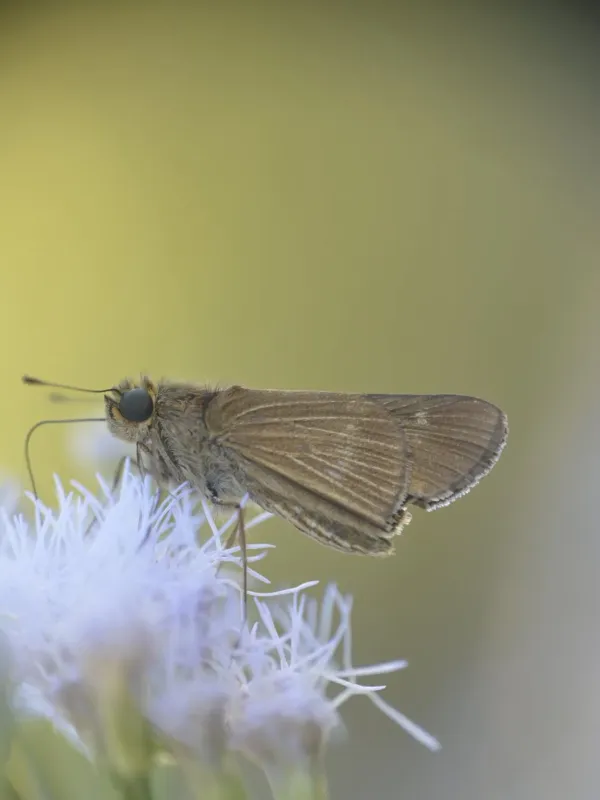
The Ocola skipper (Panoquina ocola) is a butterfly belonging to the family Hesperiidae within the order Lepidoptera. It is recognized as a pest in various agricultural regions, particularly where host grasses are grown.
The adult butterfly exhibits a brownish coloration with small, semi-transparent spots on the wings. It is known for its rapid and darting flight pattern, common among most skipper species.
The larval stage is characterized by a slender, greenish caterpillar. Its body color often matches the foliage of its host plants, providing excellent camouflage against natural predators.
The life cycle is complete, passing through egg, larva, pupa, and adult stages. Depending on environmental conditions, multiple generations can occur within a single growing season.
Proper identification involves inspecting leaf surfaces for the presence of larvae or the characteristic shelter structures they construct for protection.
What it damages
The Ocola skipper primarily feeds on grasses (Poaceae). Rice is among the most notable agricultural crops affected by this pest, especially in tropical and subtropical regions.
In addition to rice, the larvae utilize various wild grasses as host plants. These wild grasses often act as reservoirs, allowing the pest population to persist when primary crops are not available.
The larvae consume the leaf tissue of host plants, which, in cases of severe infestation, can lead to significant defoliation and a subsequent reduction in plant vigor.
Economic damage is most pronounced when infestations occur during the critical vegetative growth stages, as the plant's ability to photosynthesize is directly compromised.
While often considered a secondary pest, under favorable conditions, their numbers can increase rapidly, necessitating intervention to protect yield quality and quantity.
Signs of infestation
One of the most indicative signs of Ocola skipper presence is the folding or rolling of leaves. The caterpillar binds parts of the leaf together with silk to form a hidden feeding retreat.
Initial feeding damage appears as small, irregular notches along the leaf margins. These marks are distinct and often serve as the first visual cue for scouting efforts.
As larvae grow, they consume larger portions of the leaf blade. In advanced stages of infestation, leaves may appear ragged or skeletonized, with only the main veins remaining intact.
The accumulation of larval frass (droppings) near the feeding sites or within the rolled leaves is a reliable indicator that the larvae are currently active on the plant.
Stunted growth or chlorosis of the damaged leaves may follow as the plant loses the capacity to maintain normal physiological processes due to foliage loss.
Control measures
Effective management begins with rigorous field monitoring. Early detection of eggs and young larvae is essential for implementing timely and successful control measures.
Sanitation practices, such as removing wild grasses and weeds surrounding the fields, are vital to reducing the available habitat for the pest's reproductive cycle.
Biological control agents, including various parasitic wasps and predators, often help keep populations in check; preserving these beneficial insects is key to sustainable management.
If chemical intervention is required, select narrow-spectrum or biological-based insecticides that target the larval stage while minimizing impact on non-target species.
- Regular field scouting during peak flight periods.
- Maintenance of clean field borders to eliminate alternative hosts.
- Application of Bacillus thuringiensis sprays for larval control.
Taxonomy
- Latin name
- Panoquina ocola
- Order
- Lepidoptera (butterflies)
- Family
- Hesperiidae
- EPPO code
- PANOOC
Discussion
No discussions yet — be the first.