
Panoquina hecebolus
Panoquina hecebolus
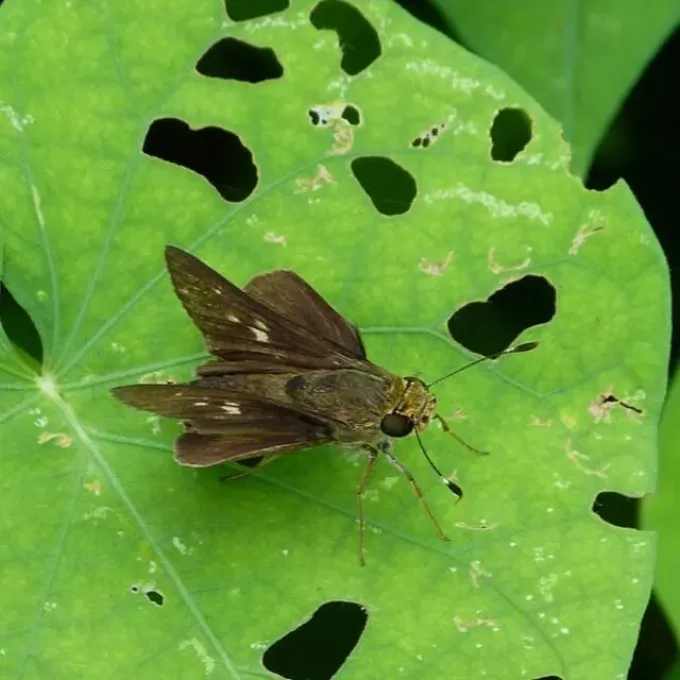
Description
How to identify
Panoquina hecebolus is a species of butterfly belonging to the Hesperiidae family, commonly known as skippers. These insects are characterized by their stout bodies and rapid, darting flight patterns.
Adult butterflies typically display brownish wings with subtle light-colored spots, which provide excellent camouflage against the foliage of their host plants.
The larval stage consists of caterpillars with a well-developed head capsule, adapted for feeding on the tough, fibrous leaves of various grass species.
Development involves complete metamorphosis, progressing through egg, larval, pupal, and adult stages. The duration of these stages is significantly influenced by temperature and humidity levels.
Pupa are often found protected within leaves that have been folded and secured with silk, providing a safe environment for the butterfly's transformation.
What it damages
This pest primarily targets grass-family crops, including rice and various wild grasses, causing significant damage to the vegetative parts of the plants.
Larvae are the most destructive stage, feeding on the leaf tissues and reducing the plant's overall photosynthetic surface area, which hinders healthy growth.
Severe infestations can lead to substantial biomass loss and reduced crop yields, as the plants struggle to recover from extensive leaf damage.
The feeding patterns often leave the plants weakened, making them more susceptible to secondary infections and environmental stresses.
In intensive agricultural settings, Panoquina hecebolus can spread rapidly, creating patchy areas of damaged vegetation that impact the entire field's performance.
Signs of infestation
The most distinctive sign of an infestation is the presence of leaves that have been rolled or folded and fastened with silk strands created by the caterpillars.
Feeding damage appears as irregular notches or complete holes on the leaf blades, often resulting in jagged edges where the larvae have been active.
Frass, or caterpillar droppings, can usually be found accumulated near the site of the leaf shelters, serving as a clear indicator of recent feeding activity.
Damaged leaves often show signs of necrosis or drying out due to the destruction of the plant's vascular tissue during the feeding process.
- Rolled or webbed leaves used as shelters.
- Irregular holes and notches on leaf margins.
- Accumulated larval frass on plant surfaces.
Control measures
Cultural practices, such as deep plowing after harvest, are highly effective in disrupting the life cycle by destroying pupae hidden in crop residues or soil.
Regular field scouting is essential to identify early stages of the infestation, allowing for targeted interventions before the caterpillar population causes widespread damage.
Biological controls, including the use of entomopathogenic bacteria or fungi, provide an environmentally friendly alternative for managing larvae without harming beneficial insects.
Chemical control measures should be employed only when the infestation exceeds economic thresholds, utilizing registered insecticides appropriate for the specific crop.
Promoting a diverse agricultural environment supports natural predators, such as parasitoid wasps, which naturally regulate the population density of Panoquina hecebolus.
Taxonomy
- Latin name
- Panoquina hecebolus
- Order
- Lepidoptera (butterflies)
- Family
- Hesperiidae
- EPPO code
- PANOHE
Discussion
No discussions yet — be the first.