
Panoquina
Panoquina
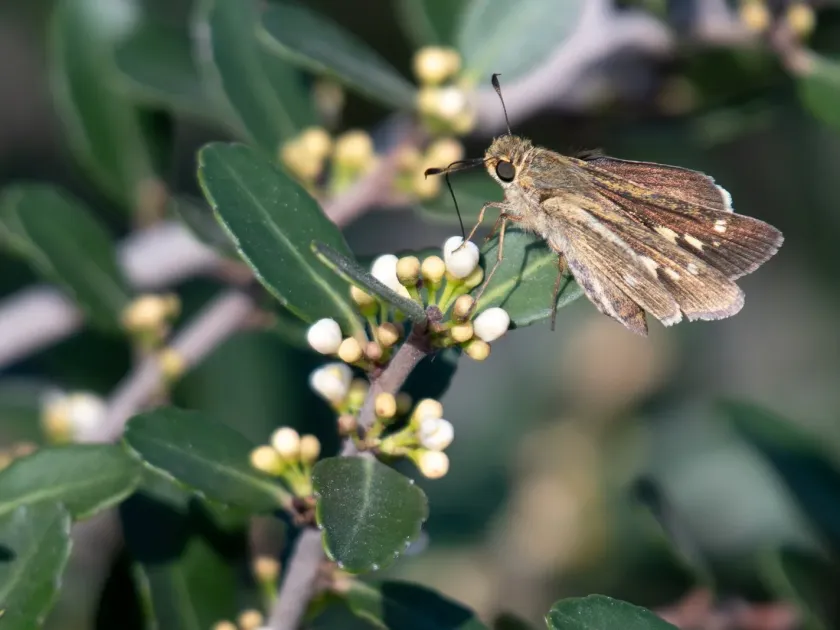
Description
How to identify
Panoquina is a genus of butterflies belonging to the skipper family (Hesperiidae), known for their swift, darting flight patterns.
Adult butterflies typically possess dull-colored wings, often in shades of brown or grey, featuring subtle translucent or light spots.
The larvae are distinct in their appearance and behavior, often exhibiting a secretive lifestyle that involves hiding within curled leaves.
Taxonomically, they are categorized within the subfamily Hesperiinae, and their identification often requires an examination of wing venation.
Agronomists should note that while adults are pollinators, the larval stage is the primary cause of agricultural concern due to its feeding habits.
What it damages
This pest species primarily targets monocotyledonous crops, with a specific preference for sugar cane, maize, rice, and several forage grasses.
The larvae cause damage by consuming the leaf tissue, often starting from the margins and moving towards the midrib of the leaf.
In addition to direct consumption, the larvae cause physical damage by tying leaf parts together with silk, which disrupts plant growth.
Heavy infestations can lead to severe defoliation, significantly reducing the photosynthetic capacity and overall vigor of the crop plants.
Economic damage is most pronounced when infestations occur during the early vegetative stages, potentially leading to yield loss if left unchecked.
When it appears
The life cycle of Panoquina is largely dictated by temperature and humidity levels, with populations peaking during the warm growing season.
In tropical environments, multiple generations can occur annually, allowing the pest to persist throughout the entire cultivation period.
Flight activity of the adults is most intense during sunny hours when they search for host plants to deposit their eggs.
Larval development typically takes a few weeks, depending on the ambient temperature and the nutritional quality of the host plant.
Proper monitoring schedules should align with the crop's phonological stages to catch early larval instars before major damage occurs.
Signs of infestation
The most reliable sign of a Panoquina presence is the appearance of leaf shelters, where the larvae fold the leaf margins and fasten them with silk.
Upon inspecting the leaves, one may find frass (larval excrement) accumulated inside these leaf shelters or on the surface of nearby leaves.
Visible feeding damage consists of irregular notches or large sections missing from the leaf blades, often with associated browning.
When the population is dense, the characteristic leaf rolling becomes widespread, creating a patchy appearance across the infested field.
Observing the presence of small, white, or pale eggs on the underside of leaves can provide an early warning of an impending larval outbreak.
Control measures
Integrated Pest Management (IPM) is essential for controlling Panoquina, starting with cultural practices like field sanitation and crop rotation.
Natural enemies, such as parasitic wasps (e.g., Trichogramma species) and predatory beetles, play a crucial role in regulating populations naturally.
If chemical intervention is necessary, targeted application of selective insecticides can help minimize the impact on beneficial insects.
Regular field monitoring and the use of pheromone traps (where available) are highly recommended to track population dynamics over time.
Maintaining healthy crop stands through balanced fertilization can help plants tolerate and recover from moderate levels of larval feeding damage.
Taxonomy
- Latin name
- Panoquina
- Order
- Lepidoptera (butterflies)
- Family
- Hesperiidae
- EPPO code
- PANOSP
Discussion
No discussions yet — be the first.