
Paederus riparius
Paederus riparius
Description
How to identify
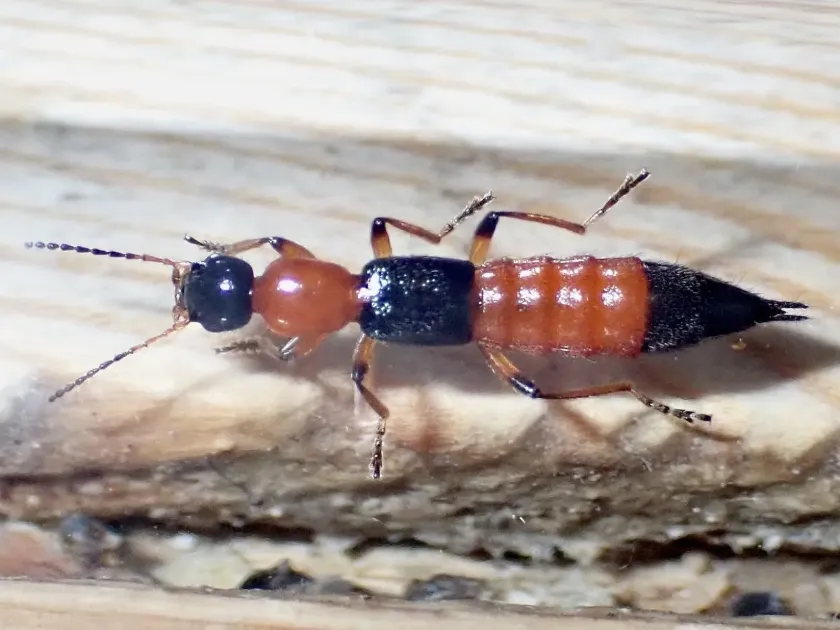
Paederus riparius belongs to the Staphylinidae family (rove beetles), order Coleoptera. Adult specimens are easily recognized by their slender, elongated body, measuring 7–10 mm, with a bright orange abdomen and thorax contrasting with metallic blue or blue-green elytra.
The head is distinctly black, and the antennae are well-developed and filiform. Unlike most beetles, their elytra are extremely short, leaving most of the abdomen exposed, which gives them a superficial resemblance to large ants.
The larvae share similar morphological traits with the adults and are highly active, dwelling primarily in the top layer of moist soil or within thick vegetation debris where they hunt for smaller invertebrates.
The most critical biological feature is the presence of pederin, a potent toxin found in the beetle's hemolymph. This chemical causes severe skin inflammation and dermatitis if a beetle is crushed against human skin, posing a significant occupational hazard.
These beetles are strongly attracted to moist habitats. They are commonly found in riverbanks, wetlands, and well-irrigated agricultural fields, especially in areas with dense vegetation cover.
What it damages
It is important to note that Paederus riparius is not a plant feeder; it is a predator that survives by consuming other small invertebrates. Therefore, it causes no direct tissue damage to crops.
The primary agricultural concern is the safety risk it poses to field workers. The presence of these beetles complicates routine maintenance and harvest activities, as physical contact must be strictly avoided.
High population densities can cause indirect economic losses, as farmers may delay critical agronomic operations to avoid areas known for high beetle activity, potentially affecting harvest timing.
As a predatory insect, it may compete with other beneficial arthropods in the agro-ecosystem for food sources, which could occasionally disrupt the natural biological control of other, more harmful plant pests.
In greenhouses or high-density crop areas, controlling their population is primarily focused on reducing the risk of accidental human exposure to their toxic hemolymph during standard labor duties.
When it appears
Paederus riparius is most active during the warmer months, typically from late spring through early autumn, as long as soil and air moisture remain at sufficient levels to support their survival.
These beetles are primarily nocturnal and show a strong attraction to artificial light sources. Consequently, they often congregate around agricultural building lights, storage facilities, and illuminated field complexes.
The life cycle undergoes complete metamorphosis, including egg, three larval stages, pupa, and adult. Overwintering occurs in the adult stage, sheltered within soil crevices, beneath stones, or in dry plant litter.
Mass appearance of adults is often correlated with periods of increased soil moisture following seasonal rainfall, which provides the necessary environment for them to emerge and navigate the surface.
Depending on local climate conditions, several generations can develop throughout the season, with peak emergence usually recorded during the months of June and July.
Signs of infestation
The primary method of identifying their presence is through visual monitoring of the soil surface, particularly during early morning or late evening when the beetles are most active.
A recurring incident of skin dermatitis among field workers serves as a strong indicator of high population density, highlighting the presence of beetles in the working environment.
Light traps are an effective diagnostic tool. Placing these traps at night allows for rapid assessment of the population level and potential danger zones within the farm area.
The accumulation of dead or dying beetles near outdoor lamps or building lighting in the evenings is a reliable visual cue that the local population density is currently high.
During daylight hours, searching through moist weeds or decaying crop residues will often reveal adult beetles actively moving across the surface of the soil or stems.
Control measures
The most vital safety measure is personal protective equipment, such as long sleeves, trousers, and gloves, for all staff working in areas where Paederus populations are documented.
If a beetle lands on skin, it must be gently blown or brushed off without being crushed. Direct contact with the hemolymph is the sole cause of the resulting chemical skin burn.
Agrotechnical management focuses on regular weeding and the removal of heavy plant debris, as these serve as the primary daytime refuges for larvae and adults.
Improving field drainage and preventing standing water or over-irrigation makes the environment less hospitable for the beetles, helping to naturally limit their breeding success.
Chemical control should be considered as a last resort, strictly targeting excessive populations, and must be applied with caution to prevent collateral damage to beneficial predatory insects that inhabit the same space.
Taxonomy
- Latin name
- Paederus riparius
- Order
- Coleoptera (beetles)
- Family
- Staphylinidae
- EPPO code
- PAEDRI
Discussion
No discussions yet — be the first.