
Rove beetle of the genus Paederus
Paederus ilsae
Description
How to identify
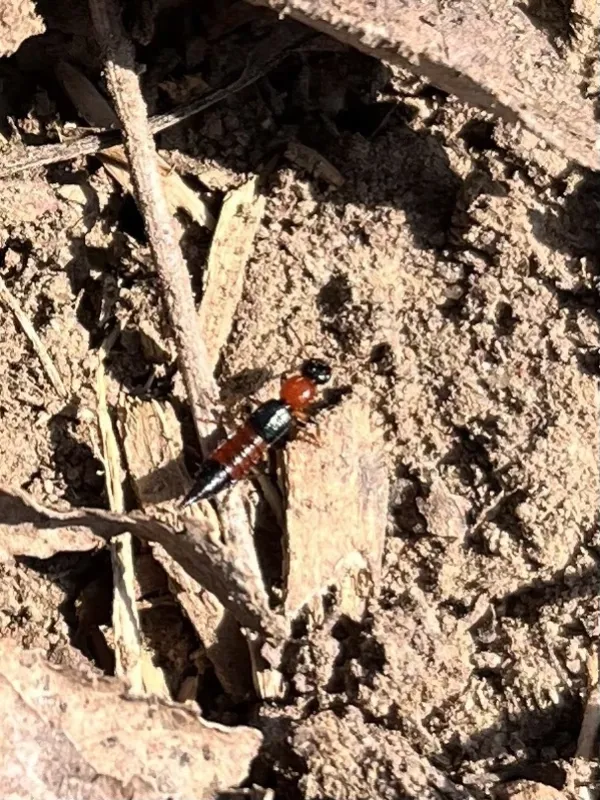
The rove beetle of the genus Paederus, specifically Paederus ilsae, belongs to the family Staphylinidae. These insects are easily recognized by their contrasting coloration: the head, pronotum, and abdominal tip are typically black, while the elytra are a vibrant red or orange with a metallic sheen.
They possess a slender, elongated body typical of rove beetles. Although their wing covers (elytra) are short, they have functional wings underneath, allowing for significant mobility and dispersal across agricultural fields during the growing season.
Adult beetles generally measure between 7 to 10 millimeters in length. They are highly sensitive to moisture levels and are most commonly found in humid environments, such as irrigated vegetable plots, low-lying fields, or near water sources.
The larvae resemble the adults but lack wings and are typically found in the upper soil layers or leaf litter. They lead a secretive lifestyle, feeding primarily on small soil-dwelling invertebrates and decomposing organic matter.
It is crucial to note that the hemolymph of Paederus beetles contains pederin, a potent toxin. Contact with the insect can cause severe skin irritation and blistering (dermatitis) in humans, so protective gear is essential when handling plants in infested areas.
What it damages
While Paederus ilsae is primarily a predator, it can occasionally damage crops during mass outbreaks. When their natural prey becomes scarce, they may resort to feeding on the tender tissues of young shoots, leaves, and buds of vegetables and grains.
The damage manifests as small necrotic spots or edge-feeding marks on the leaves. This feeding activity can slow down the development of young plants, making them more vulnerable to environmental stress and secondary infections.
High-value greenhouse crops, such as tomatoes, cucumbers, and lettuce, are particularly susceptible to damage due to the confined environment where beetle populations can increase rapidly without the presence of natural predators.
Furthermore, the physical damage caused by the beetles creates entry points for various pathogens, including fungi and bacteria, which can lead to root rot or leaf blight, significantly reducing the market value of the produce.
The presence of these beetles can also disrupt field operations, as workers may be hesitant to approach areas with high beetle density due to the risk of contact dermatitis caused by the pederin toxin.
When it appears
The activity of Paederus ilsae is closely tied to warm and humid conditions. The peak population levels typically occur from late spring through mid-summer when temperatures and humidity are optimal for their life cycle.
Frequent rainfall or the implementation of intensive irrigation systems can trigger rapid increases in beetle numbers. These moist conditions provide an ideal habitat for both the adults and the developing larvae in the soil.
The life cycle consists of egg, three larval instars, and pupal stages. In moderate climates, they can complete multiple generations per season, allowing them to rapidly colonize agricultural fields if left unmanaged.
As temperatures begin to drop in the autumn, the beetles enter a state of diapause. They burrow deep into the soil, hide under debris, or find shelter in cracks to survive the winter months, reappearing once spring temperatures rise.
Monitoring should begin early in the season, particularly after the first leaves emerge. Tracking weather patterns is essential for predicting potential outbreaks, as early spring rains combined with rising temperatures are key indicators.
Signs of infestation
The primary sign of an infestation is the visual detection of the beetles on the plants. They are most active during the early morning or evening hours and often congregate on the undersides of leaves to avoid the intense midday sun.
Leaf damage, such as small, irregular holes or wilted edges, serves as a strong indicator of their presence. If plants appear stunted, investigating the soil around the base of the plant may reveal larvae or pupae.
Yellow sticky traps are highly effective in greenhouses for monitoring population trends. A sudden increase in the number of beetles trapped is a clear sign that mitigation measures are required to protect the crop.
A non-botanical sign of high infestation is skin irritation among field workers. Reports of itching or burning sensations after working in specific zones are reliable anecdotal evidence of a localized outbreak of Paederus beetles.
Finally, examine the plant for signs of secondary infections, such as mold growth or bacterial lesions on leaves that show signs of physical biting, as these are often associated with prior beetle activity.
Control measures
Management of Paederus ilsae relies on a combination of cultural practices and integrated pest management. Controlling excess moisture and ensuring proper soil drainage are fundamental to reducing the suitability of the habitat for these beetles.
Good sanitation practices, such as removing weeds and crop debris, eliminate the shelter that beetles require during the heat of the day. Deep plowing at the end of the harvest is an effective way to destroy overwintering sites in the soil.
Biological control methods involve fostering natural predators, such as spiders and carabid beetles, which help keep pest populations in check. Applying microbial pesticides or fungi-based biological agents can also be effective.
Chemical control should be reserved for cases where economic thresholds are exceeded. When choosing an insecticide, select products that are selective and have minimal impact on the local beneficial insect population.
- Regulate irrigation to avoid water stagnation.
- Use mulching to create a barrier between soil and leaves.
- Deploy yellow sticky traps for monitoring purposes.
- Clear weeds along the field edges to reduce refugia.
- Implement deep tilling after harvest to disrupt wintering.
Taxonomy
- Latin name
- Paederus ilsae
- Order
- Coleoptera (beetles)
- Family
- Staphylinidae
- EPPO code
- PAEDIL
Discussion
No discussions yet — be the first.