
Oxytelus rove beetle
Oxytelus
Description
How to identify
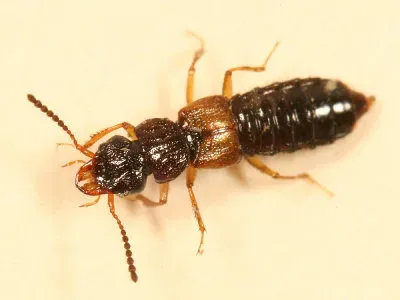
Rove beetles of the genus Oxytelus belong to the family Staphylinidae, order Coleoptera. These are small insects, typically ranging from 3 to 5 millimeters in length.
A distinctive feature of their morphology is an elongated body with shortened wing covers (elytra), which conceal well-developed wings used for flight.
The coloration of these beetles varies from dark brown to black, allowing them to camouflage effectively within soil debris and plant litter.
The head of the Oxytelus is relatively large and equipped with strong mandibles, which are adapted for both scavenging organic matter and feeding on plant tissues.
The larvae have a pale, yellowish appearance; they are highly mobile and prefer to inhabit the upper layers of damp soil or the area around the root collar.
What it damages
Oxytelus beetles are most frequently observed on vegetable crops grown in high-humidity conditions, such as lettuce, cabbage, and various root vegetables.
The pest tends to target seedlings, as the tender tissues of young plants are easier to pierce mechanically and digest by the insects.
Beyond live plants, these beetles thrive in decaying organic material, making them common in fields with excessive use of fresh manure or uncomposted mulch.
In greenhouses or poly-tunnels, where a specific microclimate persists, these beetles can damage germinating seeds, leading to a complete loss of young sprouts.
The economic impact increases during mass outbreaks when the beetles feed heavily on stems and leaves near the soil line.
When it appears
The peak activity of Oxytelus occurs during the spring and summer when warm, moist weather conditions favor their population development.
Adults overwinter in the soil, under plant residue, or in sheltered areas, becoming active as soon as soil temperatures reach approximately 10–12 degrees Celsius.
A second peak in population density often occurs in late summer, particularly in years with frequent rainfall, which creates ideal conditions for their reproduction.
The life cycle includes the egg stage, three larval instars, pupa, and adult; development from egg to adult is relatively fast under favorable temperatures.
Several generations can emerge within a single season, which complicates control efforts for growers attempting to manage their numbers.
Signs of infestation
The primary symptom of infestation includes tiny holes in leaves and stems, usually clustered near the base of the plant where it meets the soil.
Wilting of seedlings without apparent root rot disease is a common indicator that the insects have been feeding on the stem at the root collar.
Inspecting the soil surface around affected plants often reveals clusters of active beetles that scatter quickly when the soil is disturbed.
Damage sites often become entry points for secondary infections, such as bacterial or fungal rot, which can further weaken or kill the plant.
A tell-tale sign is the presence of the pest's frass (excrement) on the stems, which appears as tiny dark dots visible under magnification.
Control measures
Effective management begins with proper crop rotation and deep autumn plowing to disrupt the overwintering sites of adult beetles.
Growers should avoid excessive soil moisture and the over-application of fresh manure, which serves as a primary attractant and breeding ground for the beetles.
Using physical barriers like row covers can protect sensitive seedlings from beetle access during the most vulnerable early stages of growth.
- Seed treatment and targeted soil applications of insecticides in cases of severe infestation.
- Frequent shallow cultivation of soil to disrupt the beetle's habitat and limit larval movement.
- Encouraging natural predators, including birds and beneficial predatory insects, to suppress beetle populations.
Biological control methods, such as utilizing entomopathogenic fungi, are effective tools for managing Oxytelus populations without chemical residues.
Taxonomy
- Latin name
- Oxytelus
- Order
- Coleoptera (beetles)
- Family
- Staphylinidae
- EPPO code
- OXTESP
Discussion
No discussions yet — be the first.