
Grape plume moth
Oxyptilus periscelidactylus
Description
How to identify
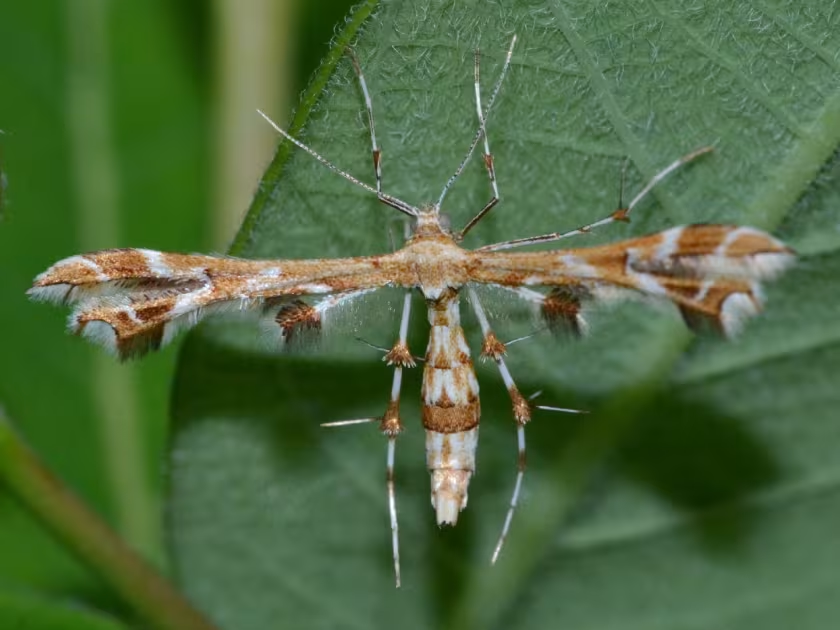
The grape plume moth (Oxyptilus periscelidactylus) belongs to the Pterophoridae family within the order Lepidoptera. These moths are characterized by their unique wing structure: the wings are narrow and deeply cleft, giving them a distinct feathery appearance.
The larvae are small, typically pale green or yellowish, and covered in sparse, fine hairs. Their coloration provides excellent camouflage against the backdrop of developing grapevine shoots, making them difficult to detect during early infestations.
The life cycle involves one or two generations per year, significantly influenced by local climate conditions. Adults are generally nocturnal or crepuscular, spending daylight hours hidden within the dense canopy of the vines.
The insect typically overwinters in the larval or pupal stage, seeking shelter in the crevices of the vine bark or within dry leaves on the ground. As spring temperatures rise, they emerge to begin their feeding cycle.
Outbreaks are most frequent following mild winters and warm, moist springs, which align the emergence of the larvae with the budding and flowering phenophases of the grapevine.
What it damages
The primary host for the grape plume moth is Vitis vinifera. The larvae target the most delicate and nutrient-rich tissues, including swelling buds, young leaves, and developing flower clusters.
First-generation larvae bore into the opening buds, consuming the inner tissues. This often kills the bud entirely, leading to direct loss of primary and secondary flower clusters before the plant even blooms.
As the season progresses, larvae feed on the inflorescences by webbing the clusters together. They consume individual buds and flowers within the web, which frequently results in fruit set failure and significantly reduced yields.
Leaf damage manifests as skeletonization or irregular holes. Heavily infested leaves become distorted and tightly curled within silken webs, which restricts the plant's ability to photosynthesize effectively.
Severe infestations on shoots lead to stunted growth and structural deformation, which can weaken the overall vigor of the grapevine and make it more susceptible to environmental stress and opportunistic diseases.
Signs of infestation
The most prominent sign of an infestation is the presence of tightly curled, webbed leaves on the shoot tips. If these structures are opened, a small larva or its waste products are typically found inside.
During the flowering stage, the appearance of shriveled, webbed flower clusters is a diagnostic indicator. These clusters often remain attached to the vine, showing signs of necrosis due to the feeding activity.
Deformed or stunted terminal growth of the shoots is another visual indicator. The lack of normal elongation suggests that the larvae have compromised the integrity of the apical meristem.
The accumulation of frass (larval excrement) within the silken webbing or at the base of the leaves provides clear evidence of the insect's recent feeding activity.
While adults are rarely seen during the day, they may be attracted to light traps placed within the vineyard at night, serving as a warning system for potential population pressure.
Control measures
Chemical control is most effective when systemic or contact insecticides are applied during the critical windows of bud break and pre-bloom, targeting the larvae as they emerge from overwintering.
Good vineyard sanitation is essential. This includes removing old, loose bark where pupae may hide and disposing of prunings promptly to reduce overwintering sites for the next generation.
Biological control, including the use of Bacillus thuringiensis sprays, provides a targeted approach that is effective against larvae while being safe for beneficial predators and pollinators.
In small-scale or home vineyard settings, mechanical removal—manually picking and destroying the webbed leaves and flower clusters—is highly effective at limiting the spread of the moth.
- Use of pheromone traps for monitoring and mating disruption.
- Encouraging natural predators such as parasitic wasps in the vineyard ecosystem.
- Ensuring proper vine nutrition to promote robust growth and tolerance to pest damage.
Taxonomy
- Latin name
- Oxyptilus periscelidactylus
- Order
- Lepidoptera (butterflies)
- Family
- Pterophoridae
- EPPO code
- OXYPPE
Discussion
No discussions yet — be the first.