
Three-striped soldier fly
Oxycera trilineata
Description
How to identify
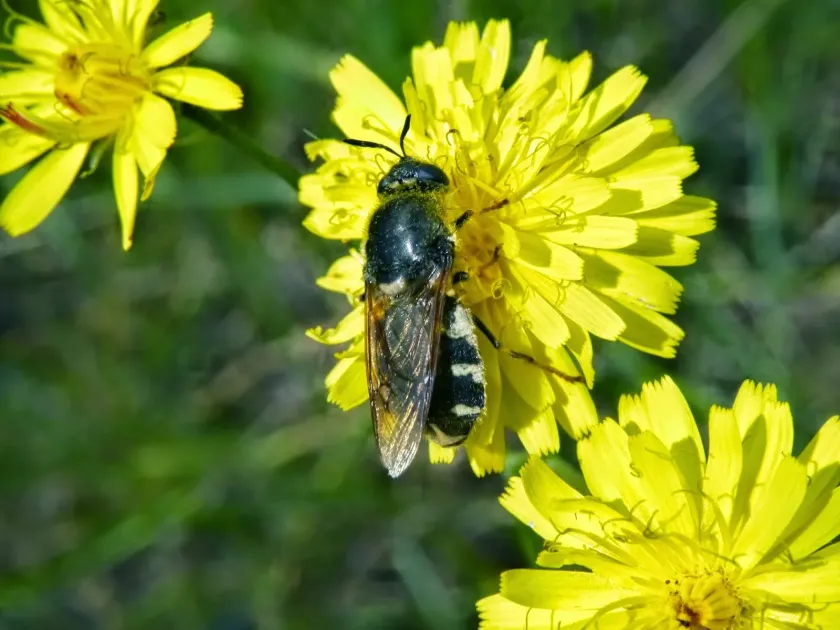
The three-striped soldier fly (Oxycera trilineata) is a member of the Stratiomyidae family. These flies are characterized by their relatively small size, typically measuring between 6 and 8 millimeters in length.
They are easily recognizable by their distinctive black abdomen featuring three clear yellow or whitish transverse stripes, which provides the species with its name.
The larvae of this fly are notable for their flattened, somewhat armored appearance, which protects them as they navigate through moist soil or decaying matter.
The head of the larva is small and partially retracted, adapted for feeding on decomposing organic substances in wet environments.
Adult flies are often seen visiting flowers to feed on nectar, which makes them common inhabitants of gardens and agricultural landscapes during the summer.
What it damages
Although these flies are primarily saprophagous, their larvae can become accidental pests when organic matter in the soil is scarce or when crops are weakened.
They are known to feed on the roots of young seedlings or plants growing in waterlogged conditions where tissue decay has already begun.
Damage often occurs in greenhouse environments or field patches with poor drainage, where accumulation of rotting material attracts the insects.
While healthy plants are rarely the primary target, larvae can cause secondary damage that leads to root rot and eventual plant failure.
The presence of these larvae in large numbers signifies a poor microclimate in the soil, which itself poses a threat to plant growth and crop vigor.
When it appears
The activity period for the adult Oxycera trilineata generally occurs throughout the warm summer months, typically from June through August.
Females seek out humid locations, such as wet soil or decaying plant piles, to lay their eggs, ensuring an immediate food source for the emerging larvae.
The larval stage is capable of overwintering in moist soil or under layers of decaying leaves, allowing the population to persist from one season to the next.
The development of the larvae is heavily dependent on moisture and temperature; thus, wet years often correlate with higher population densities.
New generations of adults typically emerge when temperatures consistently support their rapid life cycle in late spring and throughout early summer.
Signs of infestation
The most common sign of a potential infestation is the unexplained wilting or decline of young crops despite consistent irrigation practices.
A closer inspection of the root zone often reveals the presence of flattened, armored larvae clustered near the decaying root tissues.
The visual presence of black and yellow striped flies hovering near damp areas of the garden is a strong indicator of their breeding activity.
The soil around affected plants may develop a distinct odor of decay, often accompanied by increased moisture or waterlogging in the immediate area.
Root system damage, often appearing as necrotic patches on the roots, serves as a diagnostic sign that larvae have been feeding on the plant tissue.
Control measures
Effective management focuses on disrupting the environmental conditions required for the larvae to thrive, primarily by targeting excessive moisture.
Improving the field's drainage system is the most critical step to prevent water accumulation and eliminate potential breeding grounds for the fly.
Good sanitation practices, such as clearing away debris and composting organic waste away from planting beds, are essential for prevention.
Regular cultivation and soil aeration help to disturb the larvae's habitat, making the environment less hospitable for their development.
- Install effective drainage systems
- Practice regular soil aeration
- Remove and compost crop residues
- Maintain proper soil moisture balance
Taxonomy
- Latin name
- Oxycera trilineata
- Order
- Diptera (flies)
- Family
- Stratiomyidae
- EPPO code
- OXRATR
Discussion
No discussions yet — be the first.