
Soldier fly
Oxycera
Description
How to identify
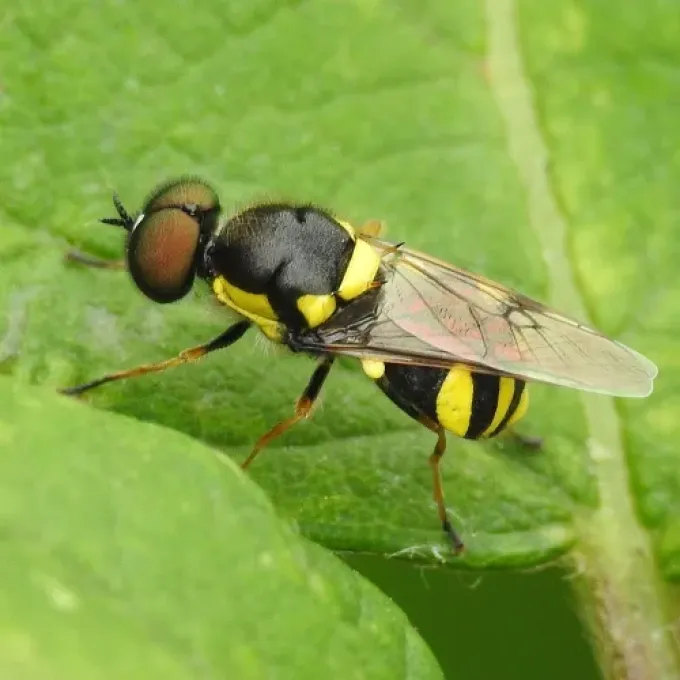
The Oxycera genus belongs to the Stratiomyidae family, commonly known as soldier flies. Adult flies are distinguished by their compact, often brightly colored bodies, featuring distinct yellow or white markings on the abdomen.
Adults are frequently observed on flowers, where they feed on nectar and pollen. They are generally active during warmer months and are known for their characteristic wing-folding behavior, where wings are held flat over the abdomen while at rest.
The larvae of these flies typically possess a flattened, segmented body, which is highly adapted for navigating moist environments and decaying organic matter. Their appearance often mimics plant debris, serving as an effective camouflage.
The lifecycle includes a complete metamorphosis, progressing through egg, larval, pupal, and adult stages. Females typically lay eggs in small clusters on damp surfaces or near decaying organic material to ensure the larvae have immediate access to nutrients.
Identifying this species requires observing both the adult flies and the larval stages in the substrate. Understanding that they thrive in high-moisture conditions is critical for diagnosing the presence of this insect in an agricultural setting.
What it damages
While most soldier flies are beneficial decomposers, certain species under the Oxycera genus can become problematic in intensive greenhouse environments if conditions are overly moist or poorly managed.
Larvae can cause damage to vegetable crops by feeding on root systems or the base of stems. This occurs primarily when the soil or growth substrate remains waterlogged, creating a habitat suitable for the larvae.
The damage is twofold: physical feeding on plant tissues and the subsequent introduction of secondary rot-causing pathogens. This makes the plant highly susceptible to fungal and bacterial infections which are often more destructive than the larvae themselves.
Young transplants and greenhouse vegetables like tomatoes or cucumbers are particularly at risk. When the base of the stem is compromised by larval activity, the plant loses its ability to absorb water and nutrients efficiently.
Severe infestations can lead to stunted growth, yellowing foliage, and in extreme cases, the total collapse of the crop. Managing soil moisture is the primary factor in preventing such significant damage.
Signs of infestation
A primary indicator of larval presence is the inexplicable wilting of plants, which fails to recover despite adequate watering. This suggests that the root system has been compromised.
Close inspection of the soil near the root zone may reveal the presence of flat, brown, segmented larvae. These are often difficult to spot as they blend in with soil particles and organic matter.
The presence of adults in large numbers within a greenhouse is a clear warning sign. If these flies are observed, it suggests that the environment is conducive to their reproduction.
Soft rot at the plant base near the soil surface is a classic symptom of larval feeding. If you detect a foul, decaying odor when touching the soil, it indicates an accumulation of organic waste and potential insect activity.
- Unexpected plant wilting.
- Yellowing of lower leaves.
- Foul odor near the roots.
- Visible larvae in the growing medium.
Control measures
The most effective strategy is the rigorous maintenance of proper moisture levels. Improving drainage and preventing water stagnation in greenhouse beds is the best way to deter these insects.
Sanitation is equally critical. Removing plant debris and compost from the growing area significantly reduces the availability of food and breeding sites for larvae.
Biological control methods, such as using entomopathogenic nematodes, can be highly effective in reducing larval populations in the soil without the use of harmful chemical pesticides.
If chemical control is necessary, use targeted soil insecticides that are approved for use on vegetable crops. Always adhere to the recommended application intervals to ensure food safety.
Regular monitoring of the growing environment is essential. Proactive management of irrigation and sanitation helps to maintain a healthy root zone, effectively preventing soldier fly infestation.
Taxonomy
- Latin name
- Oxycera
- Order
- Diptera (flies)
- Family
- Stratiomyidae
- EPPO code
- OXRASP
Discussion
No discussions yet — be the first.