
Sand wasp
Oxybelus uniglumis
Description
How to identify
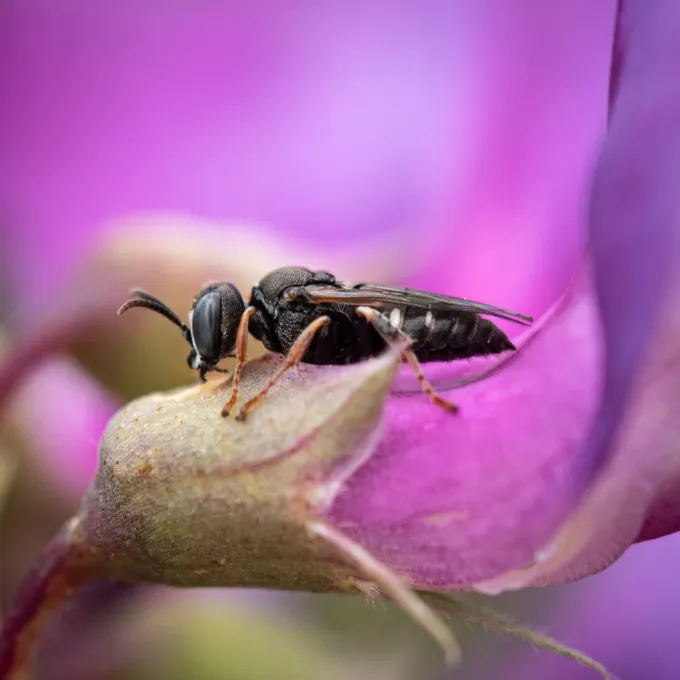
The sand wasp, known scientifically as Oxybelus uniglumis, is a member of the Crabronidae family. These wasps are small and display a slender, agile body structure typical of hunting Hymenoptera.
They are characterized by their dark coloration with contrasting yellow or white markings on the abdomen, which serve as camouflage in sandy environments.
A defining morphological feature is the presence of a distinct spine-like process called a mucro on the scutum of the thorax, a key characteristic used for species identification.
Females are highly skilled at burrowing into sandy or loose soil, where they create intricate tunnel systems to protect their developing larvae.
These wasps are rapid flyers, showing high maneuverability, which helps them during their predatory activities as they target small dipteran insects.
What it damages
The Oxybelus uniglumis is not a crop pest. It does not feed on plant tissues, meaning it causes no direct damage to crops, vegetables, or ornamental plants.
On the contrary, these wasps play a beneficial role by predating on various small flies, some of which may be agricultural pests or nuisances.
There is virtually no negative economic impact associated with their presence. They do not sting unless handled carelessly, making them safe to have in the garden environment.
In some cases, the only potential issue is the physical displacement of soil during nest construction, which can be a minor concern in highly landscaped areas.
Overall, they are considered beneficial or at least neutral agents in the garden ecosystem, contributing to the natural control of small flying insect populations.
When it appears
The activity period for these wasps coincides with the warm months, typically spanning from late spring in May until the end of August.
Adults are most active during sunny, warm weather, which is essential for both their foraging habits and the successful development of their brood.
Throughout the season, females concentrate on provisioning their nests, which involves the continuous collection of paralyzed flies for their larvae.
As the season progresses toward autumn, adult numbers decline significantly as the life cycle completes and individuals transition to wintering phases.
Overwintering is achieved by fertilized females, who seek refuge deep within the soil profile, protected from the cold temperatures of the winter months.
Signs of infestation
The presence of Oxybelus uniglumis is indicated by small, circular tunnel openings in areas of exposed sandy or loose, dry soil.
Small mounds of sand or dirt around the burrow entrance are characteristic signs of active digging and maintenance by the female wasp.
One may also observe the characteristic darting flight patterns of the wasps as they patrol their nesting sites or search for small fly prey nearby.
During the peak of the season, observing the wasps visiting flowers for nectar is a common sight in gardens with diverse floral resources.
Monitoring the frequency of tunnel openings in sandy sections of the property is the most reliable way to assess the level of their colonization.
Control measures
No formal control measures are required for this species, as they are not detrimental to agricultural or horticultural production.
If their presence is undesirable in a specific location, the most effective management strategy is to change the physical condition of the site, such as adding ground cover or mulching.
Keeping soil moist can also discourage them from nesting, as they require loose, dry, and easily penetrable substrate for their burrowing activities.
Avoid using insecticides, as these broad-spectrum chemicals will disrupt the local ecosystem and eliminate beneficial pollinators and natural pest control agents.
Promoting a dense carpet of ground-covering plants is the best long-term strategy for naturally excluding these wasps from specific garden beds.
Taxonomy
- Latin name
- Oxybelus uniglumis
- Order
- Hymenoptera
- Family
- Crabronidae
- EPPO code
- OXYBUN
Discussion
No discussions yet — be the first.