
Eurasian scops owl
Otus scops
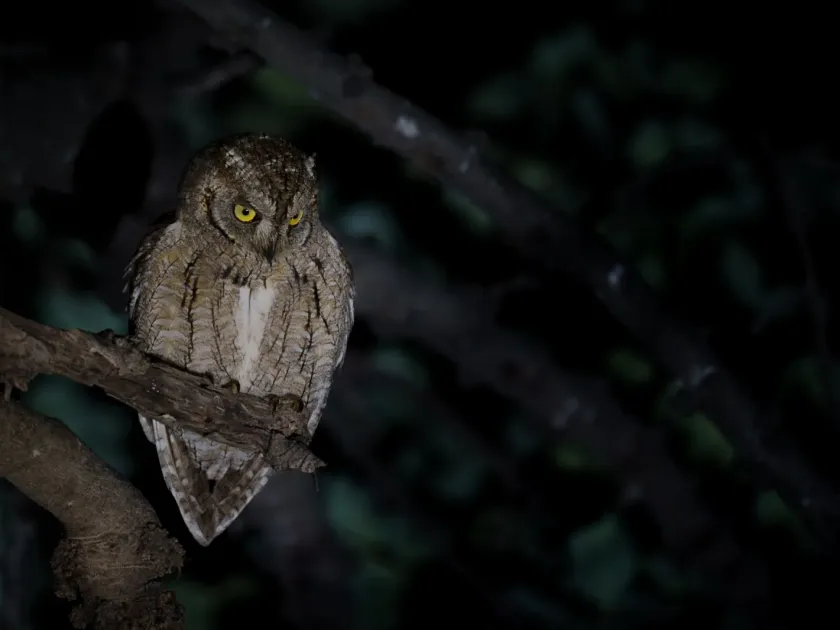
Description
How to identify
The Eurasian scops owl (Otus scops) is a small nocturnal bird of prey belonging to the order Strigiformes and the family Strigidae. It is known for its small size, cryptic plumage, and distinct whistling call.
During the day, these owls remain perfectly camouflaged in tree canopies, making them difficult to spot. Their presence is usually only revealed by their song at dusk or during the night.
This species is not a plant pest. Instead, it is highly regarded by agricultural experts as a beneficial predator that helps regulate insect populations within orchard and farm ecosystems.
The biological life cycle of the scops owl depends on the availability of cavities in old trees for nesting. They are migratory birds that arrive in agricultural regions during the warmer months to breed.
From an agronomist's perspective, the Eurasian scops owl is an indicator species. Its presence often signifies a balanced environment that supports natural predator-prey relationships.
What it damages
The Eurasian scops owl causes no damage to crops. It is strictly insectivorous and carnivorous, meaning it does not feed on any parts of cultivated plants, such as fruits, seeds, or leaves.
Their diet consists primarily of large insects such as beetles, moths, crickets, and grasshoppers, which are often classified as agricultural pests. They perform a vital service by thinning out these populations.
There is no evidence of these owls causing structural damage to trees or competing with other beneficial wildlife. They are non-destructive and generally keep a low profile on any farm or garden.
By consuming large quantities of insects, they act as a natural pesticide alternative. They do not pose a threat to livestock or human infrastructure, making them completely harmless to agricultural productivity.
In summary, the species should be viewed as an ally rather than a pest. Their activities align with the principles of integrated pest management (IPM) by providing natural population suppression.
Control measures
Since the Eurasian scops owl is a beneficial species, there is no need for control measures. In fact, many farmers actively promote the conservation of this owl to enhance their garden's health.
To encourage scops owls to settle in an area, installing nest boxes is an effective practice. These boxes should be placed in quiet, tree-covered areas to provide safe nesting sites.
Avoid broad-spectrum chemical insecticides, as they reduce the owl's food supply and can have adverse effects on bird health. Maintaining a chemical-free environment is essential for their long-term presence.
- Preserve old-growth trees with natural hollows.
- Reduce light pollution near nesting areas.
- Increase structural complexity of orchard margins.
Conserving the Eurasian scops owl leads to a more resilient and sustainable agricultural operation. It allows for natural biocontrol, reducing reliance on synthetic inputs and ensuring healthier ecosystems.
Taxonomy
- Latin name
- Otus scops
- Family
- Strigidae
- EPPO code
- OTUSSC
Discussion
No discussions yet — be the first.