
Osmia taurus
Osmia taurus
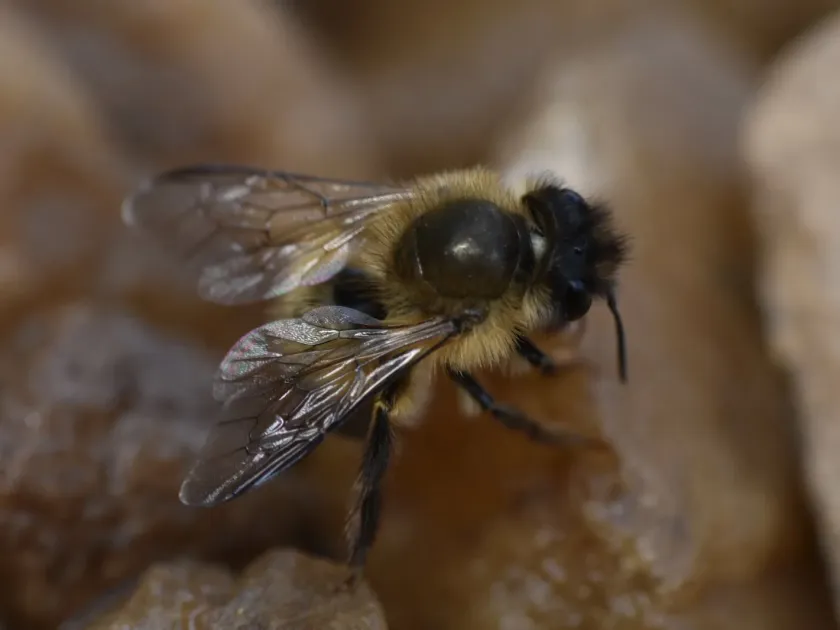
Description
How to identify
Osmia taurus is a species of solitary bee belonging to the family Megachilidae. Often referred to as a horn-faced bee, it plays a vital role in the pollination of early-blooming plants.
The species is easily recognized by the male's distinct cephalic horns, which are used for intraspecific interactions. Females lack these horns but are more robust in size.
These bees are typically dark-colored with a metallic sheen and covered in dense setae, making them highly efficient at collecting and transporting pollen from flower to flower.
While some growers may mistakenly categorize them as pests, they are primarily beneficial insects. Their solitary nature means they do not form aggressive colonies, making them safe for orchard management.
Distinguishing Osmia taurus from other species requires close inspection of their physical traits and the materials they use to construct their nest partitions.
When it appears
The activity of Osmia taurus is synchronized with the early spring flowering season. Their emergence is triggered by rising temperatures, usually coinciding with the bloom of apple and cherry trees.
They follow an univoltine life cycle, completing one generation per year. Adult bees hibernate within their cocoons inside nesting cavities throughout the winter.
Females start nesting shortly after emergence, selecting pre-existing cavities. They provision each cell with a mixture of pollen and nectar before laying a single egg and sealing the chamber.
Development from larva to adult occurs within the nesting tube over the summer. By autumn, the bees reach the adult stage and remain dormant until the following spring.
Monitoring the flight timing is essential for fruit growers who utilize these bees as a primary tool for increasing yield through cross-pollination.
Control measures
As a highly efficient pollinator, Osmia taurus is a valuable asset rather than a pest. Management strategies are usually aimed at conserving and increasing their populations.
To discourage nesting in specific areas, one can physically block or remove potential nesting sites such as hollow reeds, bamboo tubes, or pre-drilled wooden blocks.
Chemical control must be avoided during the blooming season. The use of broad-spectrum pesticides is the primary threat to the health of these solitary bee populations.
If chemical intervention on crops is absolutely necessary, it should only be performed in the late evening, long after the bees have ceased their daily foraging activities.
Sustainable agricultural practices favor the protection of nesting habitat, which ensures that these bees continue to thrive and support the ecosystem of the commercial orchard.
Taxonomy
- Latin name
- Osmia taurus
- Order
- Hymenoptera
- Family
- Megachilidae
- EPPO code
- OSMITA
Discussion
No discussions yet — be the first.