
Mason bee
Chalicodoma
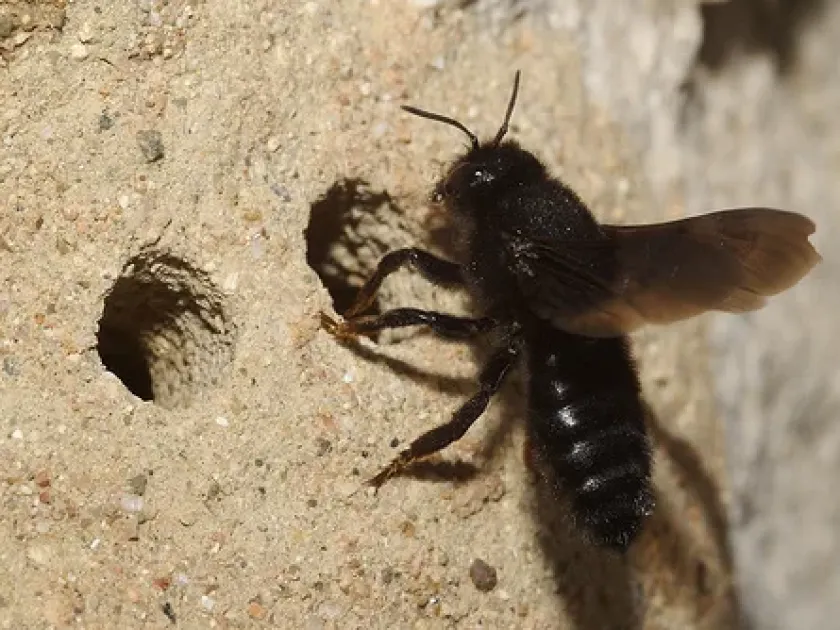
Description
How to identify
The mason bee (genus Chalicodoma) belongs to the Megachilidae family, order Hymenoptera. These are solitary bees known for their unique nesting habits and architecture.
They are called mason bees because females construct their brood cells using mud, clay, or a mixture of sand and saliva, which hardens like concrete or stone.
Adult bees are robust and covered in dense hair, which makes them excellent pollinators as they move from flower to flower collecting pollen for their larvae.
They are solitary insects, meaning each female creates and provisions her own nest independently, usually in crevices, holes in wood, or stone cavities.
Unlike honey bees, they do not have a queen or workers, which makes their nesting activity localized rather than representing a hive-wide infestation.
What it damages
While mason bees are primarily beneficial pollinators, they can cause minor damage to the aesthetic appearance of ornamental plants in nurseries or gardens.
To provide material for their nest construction, females may cut circular or oval fragments from the leaves of soft-leaved plants like roses or wisteria.
This cutting activity creates distinct, clean-edged holes in the leaf margins, which can reduce the visual appeal of highly prized decorative foliage.
Young plants or seedlings are the most susceptible to this behavior, as they have fewer leaves to spare, making the damage more noticeable and potentially impactful on their growth.
The damage is strictly localized and rarely results in the death of a plant, as the bee consumes very little plant tissue compared to traditional defoliators.
When it appears
Mason bees emerge in the spring, typically from late April to May, depending on local temperatures and the availability of early-blooming flora.
The peak period of their nesting and construction activity occurs throughout the early summer months, when females are most busy gathering materials.
During warm and sunny weather, these bees are highly active in the garden, flying between nesting sites and the plants they use for leaf collection.
By mid-summer, the adult phase concludes, and the larvae continue their development within the protected, hardened cells built by the female.
Seasonal monitoring is advised during the spring and early summer, as this is when the visual impact on leaf foliage is most likely to occur.
Signs of infestation
The most prominent sign of mason bee activity is the presence of perfectly round or oval holes along the edges of plant leaves.
These holes are smooth and cleanly cut, which differentiates them from the irregular, ragged damage caused by chewing insects like caterpillars or beetles.
Observing small, bee-like insects flying around shrubs or visiting crevices in walls and wooden structures is a primary indicator of their presence.
The detection of hardened mud pellets or clay-like structures tucked into wall cracks or holes is a definitive sign of an active nest site nearby.
Significant leaf margin removal on ornamental shrubs is a clear visual cue that bees are utilizing your plants for nest-building materials.
Control measures
Since mason bees are highly efficient pollinators, chemical control should be avoided as it kills beneficial insects and harms the garden ecosystem.
Physical barriers, such as lightweight protective netting, can be used to cover susceptible young or ornamental plants during the peak nesting season.
Sealing deep cracks in garden structures, walls, or dead wood can help reduce the number of available nesting sites near sensitive plants.
Applying mild, non-toxic deterrents or repellents may discourage the bees from selecting your specific plants for their nest-building leaf collection.
If the damage is purely aesthetic and minor, it is best to tolerate their presence to benefit from the superior pollination services they provide to the garden.
Taxonomy
- Latin name
- Chalicodoma
- Order
- Hymenoptera
- Family
- Megachilidae
- EPPO code
- CHCDSP
Discussion
No discussions yet — be the first.