
Coelioxys
Coelioxys
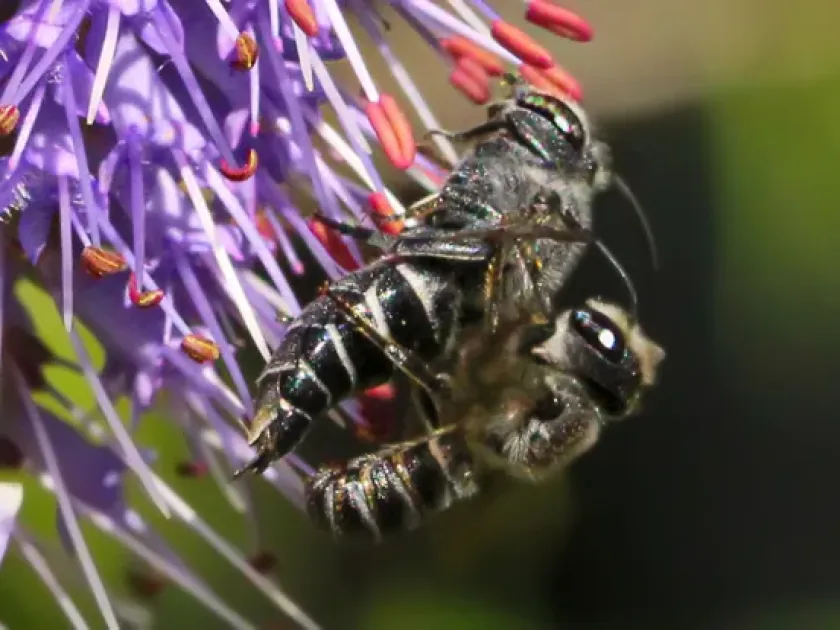
Description
How to identify
Coelioxys is a genus of parasitic bees belonging to the family Megachilidae (leafcutter and mason bees). These insects are known as kleptoparasites because they do not build their own nests or provision them with pollen.
Physically, these bees are recognized by their pointed abdomens and the absence of scopa (pollen-collecting hairs). They are highly specialized and often exhibit a distinct, sometimes metallic or dark coloration with light hair bands on the abdomen.
What it damages
The primary agricultural impact of Coelioxys is its status as a parasite of leafcutter bees (genus Megachile), which are essential for the pollination of various leguminous crops like alfalfa.
The larvae of the parasite consume the food stores intended for the host larvae and often kill the host larvae themselves. This results in a significant decline in the population of beneficial pollinators, which ultimately reduces overall crop yields.
When it appears
Adult Coelioxys are typically active during the summer months, aligning perfectly with the flight period of their host bees. This is the critical window when they search for host nests to deposit their eggs.
They follow a univoltine lifecycle, meaning they produce only one generation per year. The overwintering stage occurs inside the host's nest as a prepupa, waiting for the following season to emerge.
Signs of infestation
Infestation is usually detected through the examination of trap nests or artificial nesting blocks used for managed pollinator populations. Disrupted brood cells are a common sight.
If the emergence rate of healthy pollinators is unexpectedly low despite successful nesting activity, it is a strong indicator of high parasitic activity within the colony.
Control measures
Managing Coelioxys involves cultural and physical methods rather than chemical ones, as insecticides would also harm the beneficial bees being protected.
- Install protective screening over nesting sites to block parasite access.
- Implement rigorous sanitation of nesting materials at the end of the season.
- Regularly rotate nesting locations to prevent parasite buildup.
- Monitor the health of the host population to determine the need for preventive measures.
Taxonomy
- Latin name
- Coelioxys
- Order
- Hymenoptera
- Family
- Megachilidae
- EPPO code
- COEXSP
Discussion
No discussions yet — be the first.