
Coelioxys mandibularis
Coelioxys mandibularis
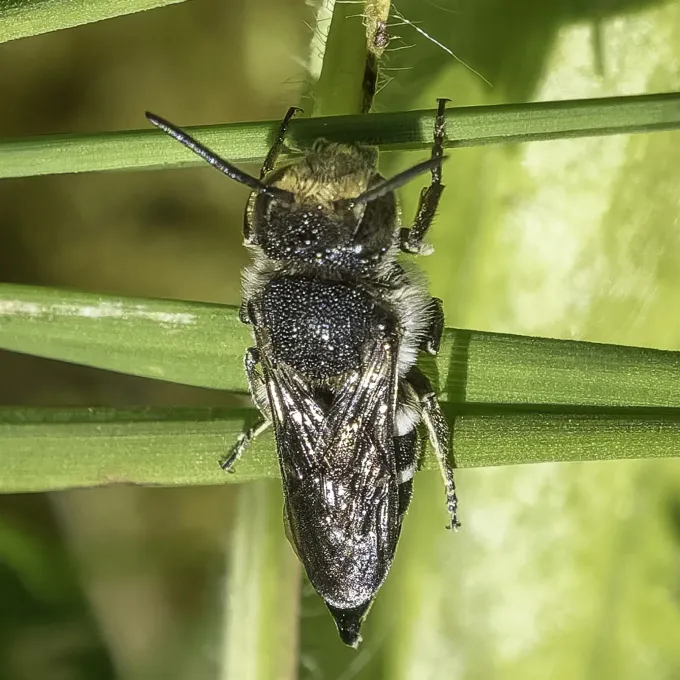
Description
How to identify
Coelioxys mandibularis is a species of kleptoparasitic bee belonging to the family Megachilidae. These insects are known for their parasitic behavior, specifically targeting the nests of other bees.
The species is named for its distinctive mandibular structure, which is adapted for penetrating the nests of host bees. They are typically small, bee-like insects with a slim and elongated body shape.
Unlike pollinating bees, they lack pollen-collecting structures such as scopa on their legs, which serves as a primary morphological characteristic for field identification.
The coloration of these bees is usually dark, sometimes with a metallic sheen, and they often display distinct banding on their abdomen, which helps them camouflage within the nesting environment.
Their flight patterns are characterized by frequent hovering and scanning of the ground or wood, searching for active nests of host bees to deposit their eggs.
What it damages
The damage caused by Coelioxys mandibularis is primarily ecological and economic, as it targets and kills the larvae of beneficial pollinators like leafcutter bees.
By reducing the population of these efficient pollinators, the parasite indirectly leads to lower fruit sets and reduced seed yields in entomophilous crops.
In intensive agricultural settings, such as alfalfa or clover seed production, this parasitism can result in significant yield losses due to the decline in effective pollination rates.
The parasite competes directly with the host larvae for food resources, consuming the pollen and nectar provisions stored by the host, which ensures the survival of the parasite at the expense of the beneficial bee.
Because they act as population regulators for wild bees, their presence can disrupt the balance of pollination services provided to local farms and gardens.
When it appears
The active flight season of adults typically aligns with the mid-summer period, generally from June to July, which is when most host bee species are actively provisioning their nests.
Their life cycle is highly synchronized with the activity of their hosts, ensuring that the timing of egg deposition coincides with the availability of fresh provisions in the nest cells.
As the season progresses, the development of the larvae occurs within the protected cells of the host, where they eventually pupate and prepare for overwintering.
Winter dormancy is spent in protected nesting cavities, where the species remains in a state of diapause until the return of favorable temperatures in the following spring.
The emergence of adults is dependent on thermal accumulation in the nesting substrate, which determines the start of the next generation's parasitic activity.
Signs of infestation
An early indicator of infestation is the observation of suspicious insect activity around bee hotels or nesting sites, where the parasitic bees hover near entrances without carrying pollen.
The presence of abandoned or partially destroyed nest cells within artificial housing is a sign that a parasite may have successfully invaded the site.
A noticeable decrease in the number of active host bees during the peak flowering season, despite favorable conditions, can be a symptom of high parasitism pressure.
Visual inspection of nesting tubes might reveal traces of forced entry or damaged nest partitions, which are telltale signs of the physical intervention of Coelioxys bees.
In cases of severe infestation, one might notice a lack of healthy brood emergence from host nesting tubes, indicating that the parasite has successfully depleted the nest.
Control measures
Protecting the host population is the most effective way to mitigate damage. Installing protective mesh or barriers around nesting sites can physically block the access of parasites.
Regular maintenance of nesting equipment, including the replacement and cleaning of nesting tubes at the end of each season, helps prevent the survival of overwintering parasites.
Promoting a healthy environment with minimal pesticide usage ensures that pollinator populations remain robust and better equipped to withstand parasitic attacks.
Carefully selecting the nesting site location—away from sources of moisture and areas prone to high parasite density—can reduce the likelihood of infestation.
In controlled farming environments, manual removal of identified parasitic individuals during their flight activity can help keep their population levels under control without harming the pollinators.
Taxonomy
- Latin name
- Coelioxys mandibularis
- Order
- Hymenoptera
- Family
- Megachilidae
- EPPO code
- COEXMA
Discussion
No discussions yet — be the first.