
Osmia
Osmia
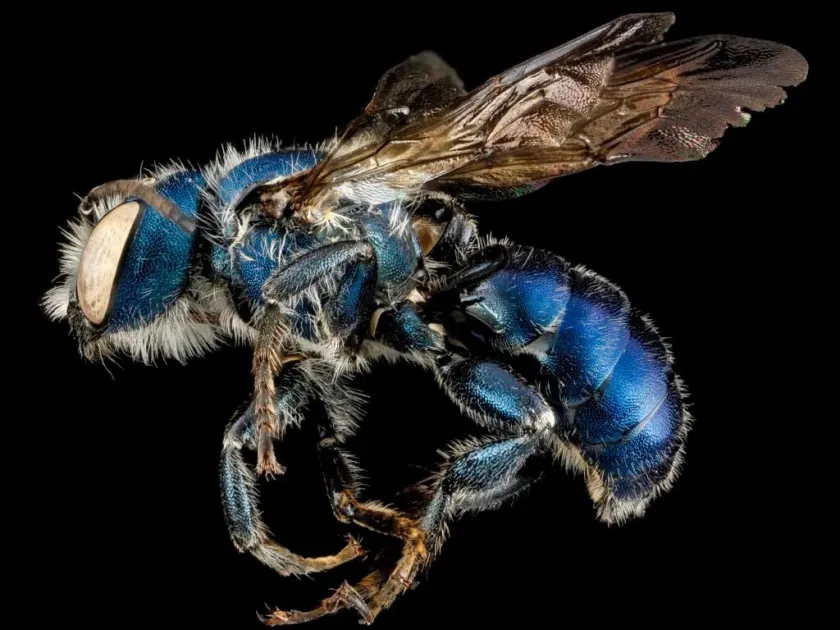
Description
How to identify
Osmia is a genus of solitary bees within the Megachilidae family. They are known as "mason bees" because many species use mud or other masonry materials to build their nests. They are typically smaller than honeybees and often feature a metallic sheen.
These bees do not live in colonies. Each female is responsible for building her own nest, provisioning it with pollen and nectar, and laying her eggs, typically in pre-existing cavities such as hollow stems or wood crevices.
A key physical characteristic of Osmia is the pollen-collecting brush of hairs located on the underside of the abdomen. They are extremely docile and are widely regarded as safe, non-aggressive insects for human presence.
In agronomy, Osmia are recognized not as pests, but as highly efficient pollinators of early-blooming fruit trees. Their foraging behavior is distinct from honeybees, making them critical for orchard productivity.
They are prized in sustainable agriculture because they are hardy, active in cooler temperatures, and significantly increase the fruit set of various crops.
What it damages
Osmia are not pests and cause no damage to agricultural crops. They do not consume plant tissues, stems, leaves, or fruit, and they do not possess the biological capability to infest or destroy healthy plant structures.
Some growers may incorrectly identify their presence in holes as a sign of wood-boring pests. However, Osmia only occupy existing, abandoned cavities and do not tunnel into healthy living wood or crops.
Their activity is strictly focused on gathering resources for their offspring, posing no threat to the commercial or ornamental value of plants in a garden or orchard setting.
No agricultural damage has ever been attributed to these bees. On the contrary, their presence is actively encouraged by agronomists to ensure maximum pollination efficiency and higher yields.
It is crucial for farmers to identify these bees correctly to avoid unnecessary and harmful insecticide applications that would destroy a valuable natural resource for pollination.
When it appears
Osmia bees are most active during the early spring, typically from late March through May, which aligns perfectly with the flowering window of various stone fruits and pome fruits.
Their ability to fly at lower temperatures than honeybees allows them to pollinate flowers effectively even during overcast or slightly chilly spring days, which is vital for early season crops.
Following the spring bloom, the adult generation completes its life cycle. The larvae spend the summer developing inside the protective nests, consuming the pollen reserves prepared by the female.
By autumn, the larvae transform into pupae and eventually into adults, remaining in a dormant state inside their cocoons until the following spring, thus ensuring their survival over the winter.
The predictable lifecycle of these insects allows growers to manage their population levels through simple techniques like moving nest blocks, which is a common practice in orchard management.
Control measures
In the context of Osmia, the term "control" is substituted with "conservation and encouragement." Protecting these bees is essential for maintaining natural orchard fertility.
Providing artificial nesting sites, such as bundles of reeds or wooden blocks with drilled holes, is a highly effective way to increase their local population and ensure pollination success.
- Avoid the use of broad-spectrum insecticides during the flowering stage.
- Ensure any necessary pest control treatments are done outside of the bees' active foraging hours.
- Maintain natural flower strips to provide diverse nectar sources throughout the season.
By minimizing the use of chemicals and providing suitable nesting habitats, farmers can support robust populations of mason bees, which act as natural stewards of the orchard.
Proper management of Osmia populations creates a self-sustaining cycle of productivity, reducing the need for artificial interventions and promoting a healthier overall agricultural ecosystem.
Taxonomy
- Latin name
- Osmia
- Order
- Hymenoptera
- Family
- Megachilidae
- EPPO code
- OSMISP
Discussion
No discussions yet — be the first.