
European rabbit
Oryctolagus cuniculus
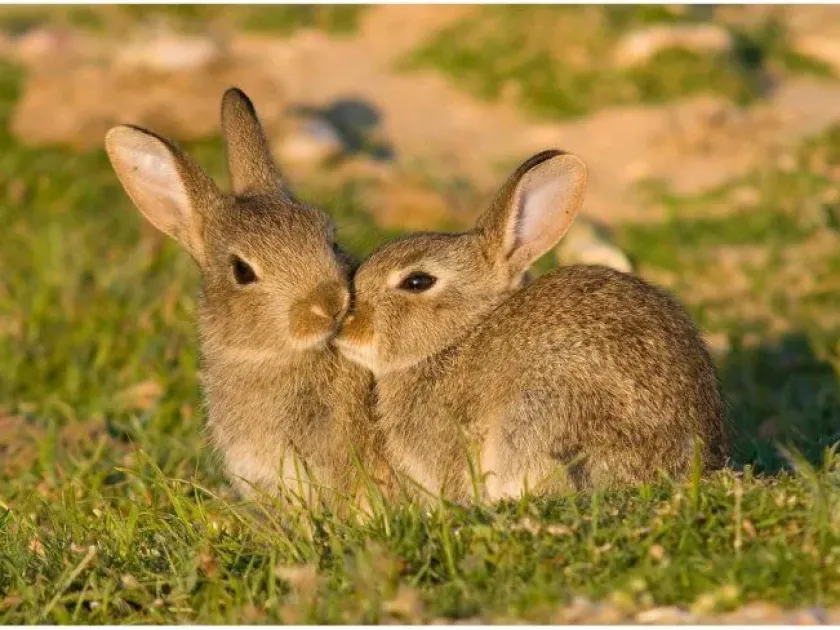
Description
How to identify
The European rabbit (lat. Oryctolagus cuniculus) is a small mammal of the Lagomorpha order, well-known for its high fertility and complex burrowing behavior.
Adult rabbits typically measure 35-45 cm in length and feature grayish-brown fur that provides effective camouflage in varied terrains.
They are highly social animals that live in elaborate underground tunnel systems called warrens, often housing large colonies that can grow rapidly.
The species is notorious for its reproductive potential, with females capable of producing multiple litters annually, leading to population explosions if not controlled.
In many regions outside their natural habitat, they are classified as invasive pests that cause severe degradation to local ecosystems and farmland.
What it damages
European rabbits are generalist herbivores that inflict severe damage on both field crops and horticultural plantations by overgrazing.
In orchards, they are particularly devastating during winter, as they strip the bark from young trees, which often leads to the death of the entire plant.
Cereal crops often suffer from complete loss when rabbit populations graze on young shoots, preventing plants from reaching the tillering stage.
Garden vegetables, including lettuce, cabbage, and carrots, are highly susceptible to rabbit damage, with entire harvests being destroyed in a matter of days.
Furthermore, their constant digging activity creates tunnels that compromise soil stability, damage irrigation infrastructure, and destroy the root systems of crops.
When it appears
While rabbit activity persists throughout the year, the impact on agriculture is most severe during the spring and summer growing seasons.
During the warmer months, they focus on succulent plant tissues, leading to immediate yield losses in vegetable fields and grain crops.
In winter, as green foliage becomes scarce, the pressure on perennial woody plants increases, making bark-stripping the primary winter damage factor.
The breeding season, which spans most of the year, ensures that younger, more active rabbits are constantly putting pressure on agricultural resources.
Activity patterns are predominantly crepuscular and nocturnal, though in high-density populations, rabbits may feed during the daylight hours to avoid competition.
Signs of infestation
Identifying a rabbit infestation involves looking for several distinct markers that reveal their presence in a field or garden environment.
- Characteristic incisor tooth marks on the trunks of trees or woody shrubs.
- Entrance holes to burrows, usually accompanied by mounds of excavated soil.
- Small, spherical droppings concentrated in feeding or resting areas.
- Distinctive worn-out paths leading from burrow entrances into the vegetation.
- Clean-cut edges on damaged foliage, indicating feeding by sharp teeth rather than insects.
Control measures
Managing rabbit populations requires a multi-faceted approach, emphasizing physical barriers and integrated pest management techniques.
Fencing is the most reliable method for protecting high-value crops, provided the fence is buried at least 30-40 cm underground to stop digging.
Young trees should be protected with individual plastic or wire guards to prevent bark damage during the critical growth years.
Vegetation management around field edges can reduce the availability of cover, making the area less attractive for establishing new rabbit warrens.
Where permitted, biological control agents and regulated trapping programs are used to manage populations in large-scale agricultural operations.
Taxonomy
- Latin name
- Oryctolagus cuniculus
- Family
- Leporidae
- EPPO code
- ORYTCU
Discussion
No discussions yet — be the first.