
Oplodontha
Oplodontha
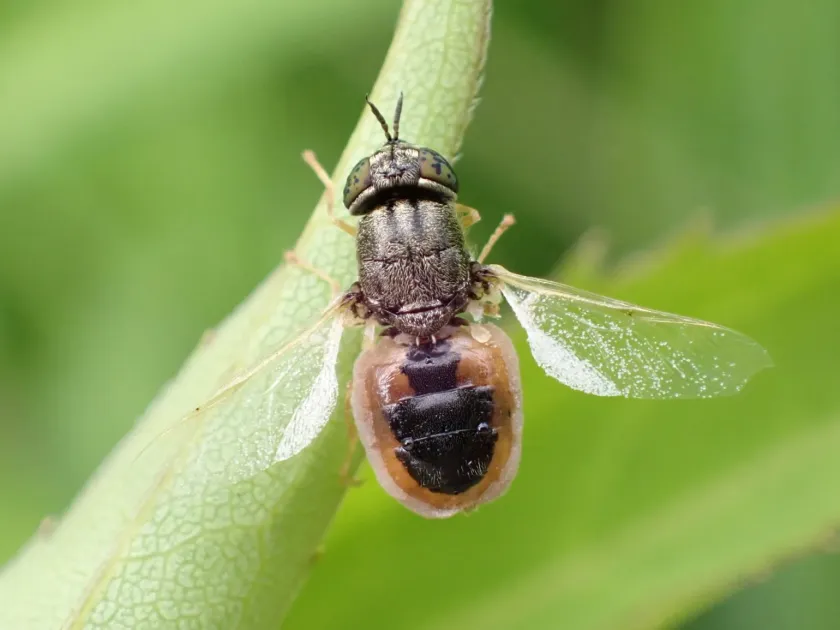
Description
How to identify
Oplodontha is a genus of insects belonging to the family Stratiomyidae (soldier flies) within the order Diptera. Adults typically measure between 8 and 12 mm and exhibit a flattened body shape often with distinct, bright coloration patterns.
The larvae possess an elongated, cylindrical body covered by a tough, chitinous cuticle. The head is partially retracted into the thoracic segment, which facilitates their movement through soil and decomposing organic matter.
Adult identification relies on specific wing venation patterns and the structure of the antennae, which are key taxonomic traits for this family of flies.
These insects generally thrive in semi-aquatic or damp soil environments, frequently being found in river floodplains or areas with high moisture content.
Unlike some highly destructive pests, their presence is often associated with organic debris, yet they can become detrimental when environmental conditions favor population surges.
What it damages
The primary damage is caused by the larvae, which, in their search for nutrients, can feed on the underground parts of young plants, including roots and subterranean stems.
Crops grown in damp or peat-rich soils are at the highest risk. Vegetable crops and seedlings are particularly vulnerable during their initial stages of development.
The larvae do not only consume plant tissue but also create entry points for secondary pathogens like fungi and bacteria, which often lead to plant rot and rapid decline.
Significant economic losses occur in years characterized by high precipitation, which maintains the soil moisture required for the optimal survival and development of the larvae.
Root damage results in poor nutrient and water uptake, manifesting as stunted growth, yellowing foliage, and potential total seedling mortality in heavily infested areas.
When it appears
Adults are typically active during the summer months, specifically from June to August, when they mate and lay eggs in moist soil or decaying organic substrates.
Larvae are most active during the spring and autumn seasons, when soil temperatures are conducive to their growth. During the winter, they retreat deeper into the soil profile.
The complete life cycle, spanning from egg to adult, may take one to two years depending on local climate conditions and regional temperature patterns.
The period of maximum risk corresponds to the early crop stages, making early season monitoring crucial for successful management of these pests.
Agronomic assessments and soil inspections before planting are recommended in areas with a history of high moisture to identify potential larval populations.
Signs of infestation
The most noticeable sign of an Oplodontha infestation is sudden wilting of young plants despite sufficient irrigation, indicating compromised root health.
- Yellowing and curling of lower leaves.
- Visible larval galleries or gnawing on the root collar and primary roots.
- Reduced plant growth rate compared to healthy areas of the field.
- Discovery of larvae in the soil matrix surrounding the root zone during inspections.
Infested root tissue often appears discolored, sometimes accompanied by a dark, slimy residue resulting from the infection of the damaged tissue by opportunistic microbes.
In cases of severe infestation, patchy crop stands occur, necessitating rapid diagnosis and immediate action to prevent further loss of the plant population.
Control measures
The most effective management strategy focuses on agronomic practices, particularly improving field drainage to eliminate the moist conditions that attract the flies.
Crop rotation is an essential tool, as it disrupts the life cycle of the pest by changing the environmental conditions required for larval survival.
Chemical control involving soil-applied insecticides may be necessary when larval densities exceed the economic injury level for the specific crop.
Managing the quality of organic amendments, such as well-composted manure, helps reduce the attractiveness of the field for egg-laying females.
Ongoing research into biological control, including the use of entomopathogenic fungi, provides a promising avenue for reducing larval populations in the soil.
Taxonomy
- Latin name
- Oplodontha
- Order
- Diptera (flies)
- Family
- Stratiomyidae
- EPPO code
- OPLOSP
Discussion
No discussions yet — be the first.