
Shore rove beetle
Omalium rivulare
Description
How to identify
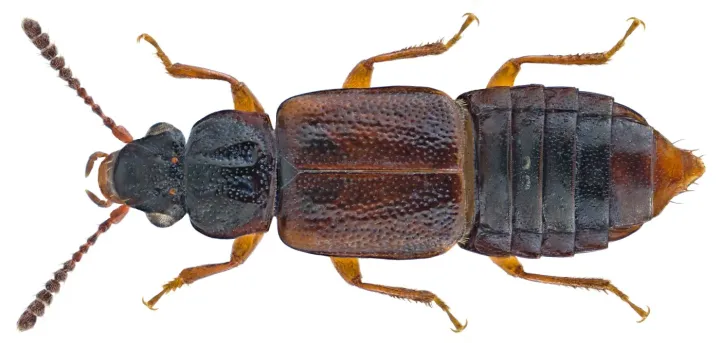
The shore rove beetle (Omalium rivulare) is a member of the Staphylinidae family, easily recognizable by its short elytra that leave most of the abdomen exposed.
Adult beetles are typically 3–4 mm long, with a dark, often brownish-black body and a shiny appearance. They possess strong mandibles adapted for opportunistic feeding.
The larvae are elongated and highly mobile, often found in moist environments where they feed on decaying organic matter or delicate plant tissues if food becomes scarce.
These beetles are known for their fast, jerky movements and their ability to quickly disappear into soil cracks or organic litter when disturbed by light or movement.
In nature, they thrive in humid habitats, such as muddy banks or damp soil, but they adapt very well to the artificial environment of greenhouses and gardens.
What it damages
While often considered scavengers, Omalium rivulare can become a secondary pest, causing damage to seedlings and young plants in greenhouses with high humidity.
They target the roots and stems of young vegetables, creating wounds that not only stress the plant but also serve as infection points for soil-borne pathogens and fungi.
Severe infestations can lead to damping-off symptoms, where the base of the stem is eaten away, causing the plant to collapse and die within a short period.
Vegetable crops such as lettuce, cabbage, and young cucumbers are particularly susceptible, especially if they have been stressed by unfavorable growing conditions.
The damage is usually concentrated at the soil line, where the moisture levels are optimal for the beetle's activity and the plant tissue is still soft and succulent.
When it appears
The shore rove beetle is most active during the spring and summer months when soil temperatures favor their reproduction and larval development.
In greenhouses, this pest can persist year-round if the conditions remain consistently moist and there is a steady supply of decomposing organic matter.
The greatest threat to crops occurs during the early stages of plant development, such as when seeds are germinating or when young transplants are settling into the soil.
Overwintering occurs as adults in the soil or under organic debris, allowing them to emerge and start feeding as soon as the weather becomes warm and humid.
Heavy rainfall periods often correlate with increased surface activity, as soil saturation forces the beetles to look for drier or higher ground, often leading them to garden beds.
Signs of infestation
Visible signs of infestation include small, irregular holes or necrotic patches appearing at the base of the plant stem just above or at the soil level.
Plants may show signs of wilting despite adequate irrigation, which indicates damage to the root system or the primary stem at the soil interface.
If you disturb the soil surface near a wilted plant, you may spot the small, shiny black beetles quickly scuttling away to hide.
- Stem necrosis and tissue loss near the base.
- Sudden wilting and death of young seedlings.
- Presence of larvae in the substrate surrounding the roots.
Examining the soil profile around the affected plant often reveals the presence of both adults and larvae feeding on the decaying material or the plant tissue itself.
Control measures
Effective management begins with improving sanitation in greenhouses, ensuring the removal of old crop debris that can harbor overwintering beetle populations.
Maintaining proper soil moisture and ensuring good drainage are crucial, as high humidity and waterlogged soil are the primary conditions that attract this pest.
Use only well-composted organic material, as fresh, decomposing manure provides an ideal breeding ground that can attract large numbers of rove beetles.
Biological control agents, such as beneficial nematodes or soil-applied microbial preparations, can be effective in reducing the larval population in the soil.
If chemical intervention is necessary, apply registered insecticides as a soil drench according to local agricultural guidelines to minimize the population of the pest.
Taxonomy
- Latin name
- Omalium rivulare
- Order
- Coleoptera (beetles)
- Family
- Staphylinidae
- EPPO code
- OMALRI
Discussion
No discussions yet — be the first.