
Rove beetle of the genus Omalium
Omalium
Description
How to identify
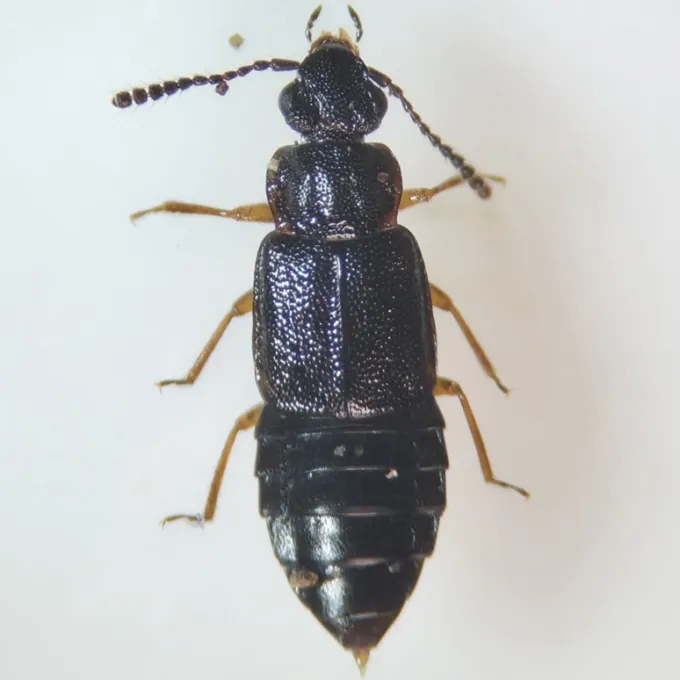
Rove beetles of the genus Omalium belong to the family Staphylinidae, order Coleoptera. These are small insects, usually measuring between 3 to 4 millimeters in length.
A distinctive feature of this genus is their flattened body shape and relatively long elytra, which cover most of their abdomen, unlike many other staphylinid species.
The coloration of these beetles typically ranges from dark brown to black, with the body surface often showing fine punctation and a subtle matte luster.
They possess well-developed mandibulate mouthparts that allow them to consume a variety of foods, including decaying plant matter, fungi, and occasionally crop tissues.
Adult beetles are capable of active flight, which enables them to quickly spread within greenhouse environments or across crop fields to find suitable habitats.
What it damages
In agriculture, the genus Omalium is often viewed as a secondary or opportunistic pest, primarily associated with rotting organic matter or fungal infections.
Significant damage occurs when large populations congregate on vegetables that are already suffering from rot, physical damage, or fungal pathogens.
Beetles can gnaw on the tender tissues of young seedlings, especially if these plants are in contact with damp soil or decomposing organic debris.
They often act as secondary pests in greenhouse conditions, worsening the health of crops already suffering from root rots or stem base decay.
Indirect damage is caused by the mechanical transmission of phytopathogenic fungal spores on the insect's body, which accelerates the spread of diseases to healthy plants.
When it appears
Activity usually begins in the spring as soon as soil temperatures reach approximately 10-12 degrees Celsius, signaling the end of their winter dormancy.
Population density typically peaks during wet and humid periods of the season, as high humidity is a critical factor for their survival and reproductive success.
In greenhouses, these rove beetles can remain active throughout the entire year if moisture levels and organic debris accumulation are maintained.
The peak reproductive period generally occurs during mid-summer, allowing for several generations to develop if environmental conditions remain favorable.
As autumn approaches, adults seek shelter in organic mulch, compost piles, or the top layer of soil, where they survive the winter months.
Signs of infestation
Visual identification involves locating small, mobile dark-colored beetles on the surface of rotting fruit, damp soil, or the base of stems.
Plant surfaces infested by Omalium often exhibit superficial tissue damage, which is frequently accompanied by the development of secondary mold.
- Epidermal scraping on the plant root collar.
- Presence of tiny beetle frass on the soil surface near infested plants.
- Rapid expansion of decay spots on plant stems.
- Characteristic musty odor in areas with high insect density.
The damage often appears as surface-level abrasion, which opens pathways for bacteria and fungi to infiltrate the plant's internal structures.
Control measures
The primary control strategy involves good sanitation practices, which include the prompt removal of decaying plant residues and general greenhouse hygiene.
Growers should avoid excessive irrigation that creates high humidity at the soil surface, as this environment specifically attracts and supports these beetles.
Regular cultivation and loosening of the topsoil can disrupt the beetles' habitat and negatively impact the survival rate of their larvae in the substrate.
In cases of severe infestation, contact insecticides applied directly to the affected areas can be used to reduce the adult population effectively.
Biological control methods, such as utilizing entomopathogenic fungi or nematodes, can help suppress population growth and reduce the secondary fungal rots these insects feed on.
Taxonomy
- Latin name
- Omalium
- Order
- Coleoptera (beetles)
- Family
- Staphylinidae
- EPPO code
- OMALSP
Discussion
No discussions yet — be the first.