
Oligota inflata
Oligota inflata
Description
How to identify
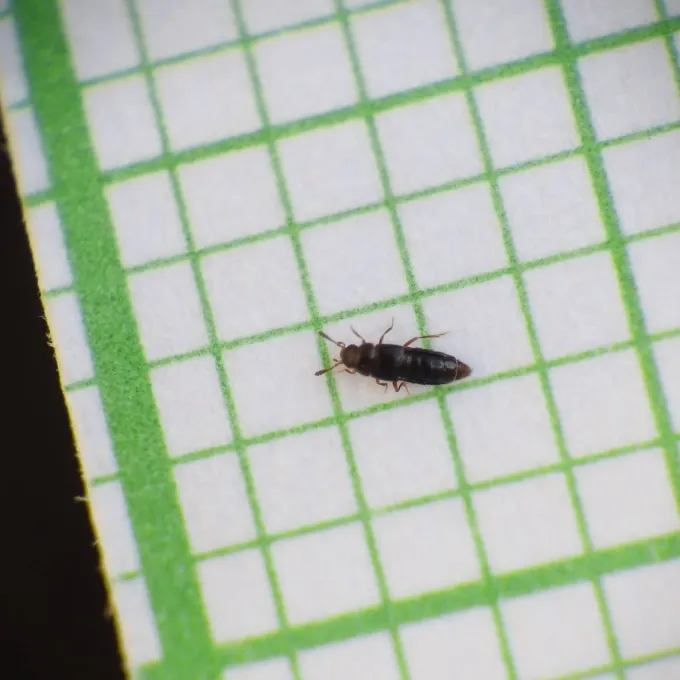
Oligota inflata is a tiny predatory beetle belonging to the Staphylinidae family within the order Coleoptera. Adult beetles are typically 1–1.5 mm long, characterized by a dark, somewhat inflated body shape.
They are specialized predators primarily found in association with various species of spider mites (Tetranychidae). Both larvae and adult beetles actively hunt for eggs and motile stages of their prey.
The life cycle encompasses an egg, three larval stages, a pupal stage, and the adult phase. Development is highly temperature-dependent, usually completing a generation in under three weeks in optimal conditions.
Due to their small size, they are often overlooked by farmers, though they play a significant role as natural biological control agents in many agricultural ecosystems.
Distinguishing Oligota from other small beetles requires microscopic examination, focusing on the specialized mouthparts and the unique body structure characteristic of staphylinids.
What it damages
It is important to note that Oligota inflata itself does not consume plant tissue and is therefore not a crop pest. It is a beneficial organism found on crops such as tomatoes, cucumbers, peppers, and various ornamental plants.
The damage associated with its presence is caused by the spider mites upon which it feeds. Mite infestations lead to the chlorosis of leaves, stippling, and eventual leaf drop if left unchecked.
Plants infested with spider mites experience reduced metabolic function, significantly lowering the overall yield and quality of the produce in greenhouse conditions.
The presence of these beetles serves as an important biological indicator, signaling that a spider mite population has reached a density sufficient to sustain a predator population.
Managing the interaction between the predator and the pest is crucial; if the mite population is controlled effectively, the need for chemical intervention is greatly minimized.
Control measures
Control strategies for crops where Oligota inflata is present should prioritize Integrated Pest Management (IPM) to preserve the predatory population while keeping spider mites below economic injury levels.
Avoid the use of broad-spectrum insecticides, as these chemicals are often lethal to beneficial predatory beetles like Oligota and can lead to secondary pest outbreaks.
Maintaining proper greenhouse microclimate conditions is essential, as high humidity can naturally suppress spider mite population growth without the need for chemical inputs.
When chemical control is absolutely necessary, select selective acaricides that have minimal toxicity toward non-target predatory insects to ensure ecological balance.
Routine scouting and the use of sticky cards for monitoring assist in making informed management decisions, ensuring that interventions are applied only when thresholds are exceeded.
Taxonomy
- Latin name
- Oligota inflata
- Order
- Coleoptera (beetles)
- Family
- Staphylinidae
- EPPO code
- OLGOIN
Discussion
No discussions yet — be the first.