
Oligota
Oligota
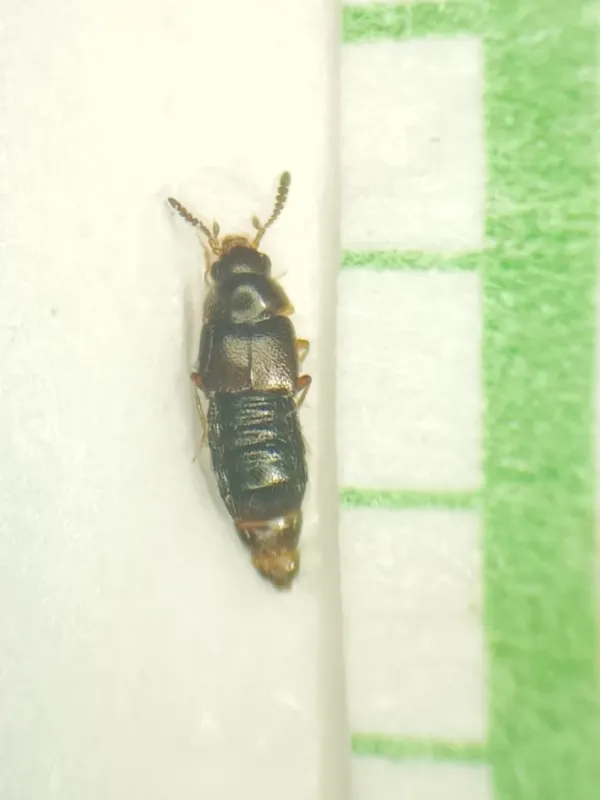
Description
How to identify
Oligota is a genus of rove beetles belonging to the family Staphylinidae. These are extremely small insects, typically measuring 1 to 2 millimeters in length, characterized by a flattened, dark-colored body.
Adult beetles are highly mobile and are known for their ability to move quickly across leaf surfaces. Their larvae are also specialized predators that dwell within spider mite colonies.
The genus is widely distributed and includes numerous species, many of which serve as highly effective natural enemies of agricultural pests, specifically spider mites (Tetranychidae).
Systematically, Oligota are recognized as important entomophagous insects that have evolved to track and consume various mite species in diverse habitats, including greenhouses and orchards.
Identification often requires the use of magnification tools, as their small size and rapid movement make them difficult to spot without close inspection of the underside of leaves.
What it damages
Oligota is not a plant pest; rather, it is a highly beneficial predator. It feeds on all developmental stages of spider mites, including eggs, nymphs, and adults, providing significant biological control.
In agricultural settings, the presence of these beetles is a positive sign, indicating that natural suppression of mite populations is occurring without the need for chemical intervention.
Misidentifying these beetles as pests can lead to improper chemical treatments that kill beneficial insects, ultimately leading to severe outbreaks of spider mites.
They are frequently found on a variety of crops, such as strawberries, cucumbers, tomatoes, and various ornamental plants, where they effectively manage pest densities.
The economic value of Oligota lies in its ability to reduce the need for acaricides, thereby promoting sustainable agricultural practices and reducing chemical residues on produce.
When it appears
The activity period of Oligota is heavily influenced by temperature and the lifecycle of its primary prey, the spider mite. They become active during the spring and summer months.
In greenhouse environments where climate control is maintained, Oligota can be active and reproductive throughout the year, provided there is a constant supply of prey.
The lifecycle consists of egg, three larval stages, pupa, and adult. Warm, dry conditions that favor spider mite explosions also accelerate the development of Oligota populations.
During the autumn and winter months, adult beetles seek shelter in plant debris, soil crevices, or under bark to overwinter until warmer temperatures return in the following season.
Population surges of Oligota typically follow the population growth of mites, demonstrating a classic predator-prey relationship that maintains balance in the ecosystem.
Signs of infestation
The primary sign of Oligota presence is the discovery of small, fast-moving dark beetles within spider mite colonies on the undersides of leaves.
A reduction in mite activity and a decrease in webbing density often indicate that Oligota or other predators are successfully managing the pest population.
Unlike spider mites, which cause stippling and yellowing of leaves, the presence of Oligota leaves the plant foliage intact and healthy.
Observing larvae actively feeding within the webbing of spider mite colonies under a microscope is a definitive sign of their predatory activity.
In fields where Oligota is present, plants tend to remain greener and show fewer signs of mite-induced stress compared to fields where beneficial insects are absent.
Control measures
The primary goal for growers should be the conservation of Oligota populations, as they are essential allies in integrated pest management (IPM) strategies.
It is crucial to minimize the use of broad-spectrum pesticides, as these chemicals are often lethal to beneficial rove beetles and can disrupt the natural biological control balance.
If chemical pest control is strictly necessary, select products that have minimal toxicity to beneficial entomophagous insects and apply them with precision.
Maintaining a balanced environment and avoiding excessive sanitation that removes all natural cover can help ensure that Oligota remains in the area for subsequent seasons.
- Avoid prophylactic chemical spraying that might harm beneficial beetles.
- Monitor for the presence of natural predators before making treatment decisions.
- Preserve natural habitats and overwintering sites for beneficial rove beetles.
Taxonomy
- Latin name
- Oligota
- Order
- Coleoptera (beetles)
- Family
- Staphylinidae
- EPPO code
- OLGOSP
Discussion
No discussions yet — be the first.