
Plume moth (Oidaematophorus tenuidactylus)
Oidaematophorus tenuidactylus
Description
How to identify
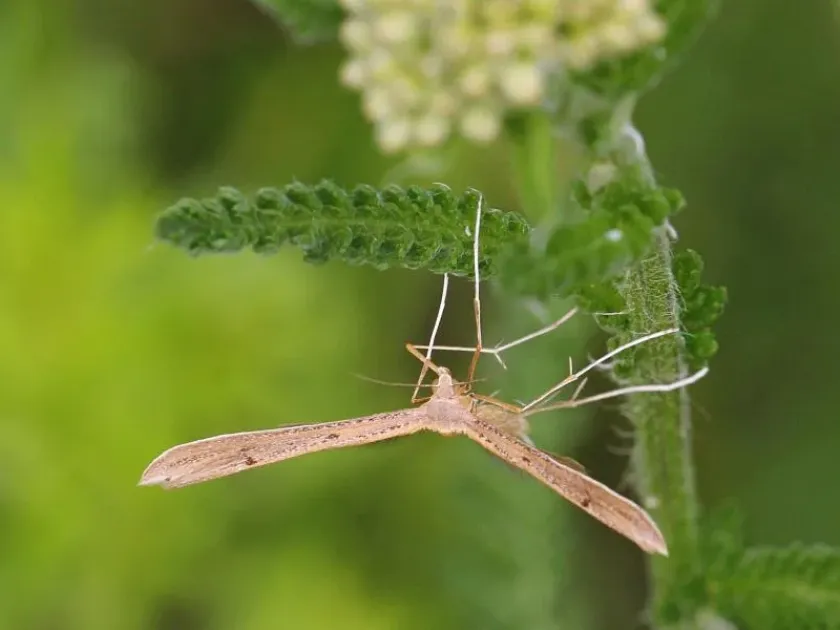
The plume moth (Oidaematophorus tenuidactylus) is a small insect belonging to the family Pterophoridae. The name derives from its unique wing structure, which is divided into thin lobes, giving the wings a feathered or finger-like appearance.
The adult moth has a very slender body and wings, typically colored in light yellow, beige, or brownish shades. This coloration provides excellent camouflage against dry stalks and dead foliage, making them difficult to spot during the day.
The larvae, or caterpillars, are medium-sized and covered in fine hairs. They are generally cryptic, living deep within stems, rolled leaves, or inside flower buds, which protects them from predators.
Eggs are tiny, oval-shaped, and usually laid singly or in small groups on the underside of leaves or near the base of plant buds, often going unnoticed by gardeners during routine checks.
Pupae are often found attached to leaves or stems by fine silken threads. They match the color of the host plant, further enhancing the pest's ability to remain concealed in the garden ecosystem.
What it damages
The primary hosts for this species are plants in the Asteraceae family. They are frequently associated with wormwood, asters, goldenrod, and other related ornamental or wild-growing flora.
The damage is primarily caused by the larvae feeding on soft leaf tissues, skeletonizing the leaves, or boring through young buds. This feeding behavior reduces the plant's photosynthetic efficiency and aesthetic appeal.
Inflorescence damage is particularly problematic, as the larvae consume the interior of flower buds, leading to malformed flowers or complete failure to bloom, which is critical for flower production.
Wounds created by the larvae provide entry points for secondary fungal and bacterial infections. Once the tissue is breached, the plant becomes susceptible to diseases that may further degrade its health.
Affected plants often exhibit stunted growth and loss of vigor, making them less resistant to environmental stressors like drought or temperature fluctuations.
When it appears
Adult flight typically begins in late spring or early summer, synchronized with the warming temperatures. The peak activity period usually occurs during the warmest months of June and July.
The life cycle duration depends on regional climate conditions. In warm, favorable seasons, the plume moth can produce multiple generations, significantly increasing the potential population pressure.
Hibernation usually occurs in the larval stage or as a pupa. These life stages seek shelter in plant debris, bark crevices, or the root zone to survive the winter temperatures.
Spring emergence is timed with the start of the plant growing season. As soon as the host plants show new, succulent growth, the larvae emerge from diapause to begin feeding immediately.
As autumn approaches and temperatures drop, the moths prepare for winter dormancy. They seek protected microhabitats that offer insulation against frost and excessive moisture during the winter months.
Signs of infestation
One of the earliest signs of infestation is the appearance of skeletonized leaves or small, irregular holes in the leaf blades, indicating that larvae are actively grazing on the tissues.
The presence of fine webbing between leaves or around terminal buds is a clear indicator of larval activity, as the caterpillars construct these webs for protection while feeding.
Frass, or caterpillar excrement, often appears as small, dark granular pellets found on the leaf surfaces or at the base of the plant, serving as a distinct sign of their presence.
Deformed, drooping, or unopened flower buds are common indicators that a larva has bored into the reproductive structures of the plant, disrupting normal floral development.
- Small webbing clusters on plant tips.
- Rolled or curled young leaves.
- Visible holes and skeletonized tissue.
- Presence of dark granular droppings.
- General decline and stunted growth of shoots.
Control measures
Cultural control is the most effective approach, involving the thorough removal and destruction of plant debris in the autumn to eliminate overwintering sites for the larvae and pupae.
Managing weed populations, particularly wild Asteraceae species near gardens, is essential to remove secondary hosts and reduce the overall pest pressure on your valued ornamental plants.
Biological control methods, such as applying treatments containing Bacillus thuringiensis, are highly effective against larvae and are considered environmentally friendly options for the home garden.
Chemical insecticides should be used as a last resort and only when monitoring indicates that the economic threshold has been exceeded, ensuring proper application timing for maximum effect.
Promote biodiversity in your garden by attracting natural predators such as parasitic wasps, lacewings, and predatory beetles, which can help keep plume moth populations in check naturally.
Taxonomy
- Latin name
- Oidaematophorus tenuidactylus
- Order
- Lepidoptera (butterflies)
- Family
- Pterophoridae
- EPPO code
- OIDATE
Discussion
No discussions yet — be the first.