
Morning glory plume moth
Oidaematophorus monodactylus
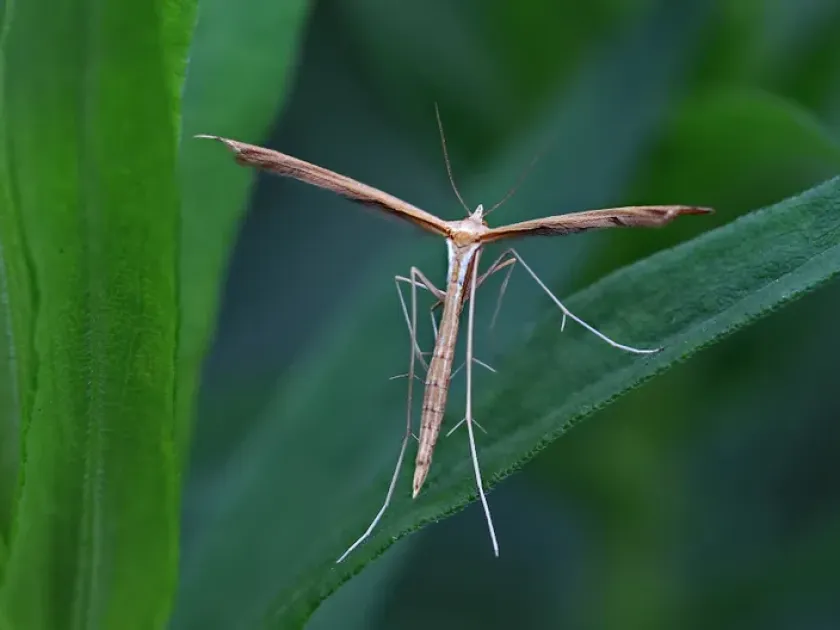
Description
How to identify
The morning glory plume moth, known scientifically as Oidaematophorus monodactylus, is a small moth belonging to the Pterophoridae family. Its wingspan typically ranges from 20 to 25 mm, characterized by unique, feathery, split wings.
Adult moths are usually brownish or greyish in color, providing excellent camouflage against dead foliage and dry stems. The forewings are split into two lobes, while the hindwings are divided into three, giving them a distinct slender appearance when at rest.
The larvae are cylindrical, covered with short, sparse hairs. Their coloration varies from pale green to yellowish-green, often featuring a darker longitudinal stripe down the back, which helps them blend seamlessly with the stems of their host plants.
Pupae are generally green or brown and are often suspended from the host plant by a silk pad. Their slender shape makes them difficult to spot among the leaves and stems of the infested vegetation.
As members of the Lepidoptera order, these moths are widely distributed across temperate regions. They are highly adaptable to various environments, thriving wherever their host plants, particularly members of the Convolvulaceae family, are present.
What it damages
The primary hosts for the larvae are plants in the Convolvulaceae family, specifically bindweeds (Convolvulus spp.). In agricultural landscapes, they often migrate from these weeds to nearby cultivated plants.
While not a primary pest for many major crops, in cases of high population density, these larvae can cause significant damage to ornamental plants and some vegetables by feeding on their foliage.
Larvae feed by chewing irregular holes in leaves, often reducing them to just the veins. This severe defoliation significantly impairs the plant’s photosynthetic ability and can lead to reduced overall plant vigor.
Feeding damage to growing tips can result in stunted growth, leaf deformation, and weakened stalks. In severe infestations, the cumulative damage can lead to premature leaf drop and the death of young seedlings.
Furthermore, the physical damage to leaf tissues creates entry points for secondary pathogens, such as fungi and bacteria, which can cause far more damage to the plant's health than the initial insect feeding.
When it appears
The moth typically overwinters as an adult, seeking shelter in protected areas such as bark crevices, leaf litter, or dense dry vegetation. Activity resumes as soon as spring temperatures begin to rise.
The flight period for adults begins in late spring and can continue through the summer months. During this time, they engage in mating and egg-laying, usually placing eggs on the underside of host leaves.
The life cycle from egg to adult is relatively fast, often lasting around one month under favorable weather conditions. This allows for multiple overlapping generations to occur within a single growing season.
Peak activity is frequently observed during mid-summer. It is during this period that larvae are most abundant and actively feeding, causing the most noticeable damage to the vegetation.
As autumn approaches, the final generation of adults prepares for hibernation. They continue to feed on nectar before searching for suitable overwintering sites, often moving away from open fields toward sheltered perimeters.
Signs of infestation
The most common sign of an infestation is the appearance of irregular, ragged holes in the leaves of bindweed or adjacent plants, which can quickly spread across the area.
Accumulated dark granular frass (excrement) found on the leaves or beneath the plants is a clear indicator that larvae are actively feeding in the immediate vicinity.
Leaves that appear folded, tied together, or rolled with silk threads are typical protective shelters created by larvae. Inspecting these areas often reveals the presence of the pest.
Sighting adult moths with their distinctive feathery wings during the evening or dusk indicates a high probability of an established population in the area.
Secondary symptoms, such as the yellowing and wilting of plant sections, often occur because the larvae have disrupted the vascular flow or caused extensive tissue damage to the stems.
Control measures
Cultural control is the most effective approach, focusing primarily on the management and reduction of host weeds, such as bindweed, which act as a reservoir for the pest population.
Regular cultivation and mechanical weeding are crucial to destroy pupae and overwintering adults in the soil and plant debris, significantly reducing the pressure for the following season.
For environmentally conscious management, biological insecticides based on Bacillus thuringiensis are highly effective against larvae while remaining safe for non-target beneficial insects.
In cases where infestations exceed economic injury thresholds on cultivated crops, targeted application of appropriate insecticides is recommended, strictly adhering to product safety labels.
- Monitor fields regularly for early signs of defoliation.
- Eliminate host weeds from field edges and perimeters.
- Promote natural enemies like birds and predatory beetles.
Taxonomy
- Latin name
- Oidaematophorus monodactylus
- Order
- Lepidoptera (butterflies)
- Family
- Pterophoridae
- EPPO code
- OIDAMO
Discussion
No discussions yet — be the first.