
Soldier fly
Odontomyia
Description
How to identify
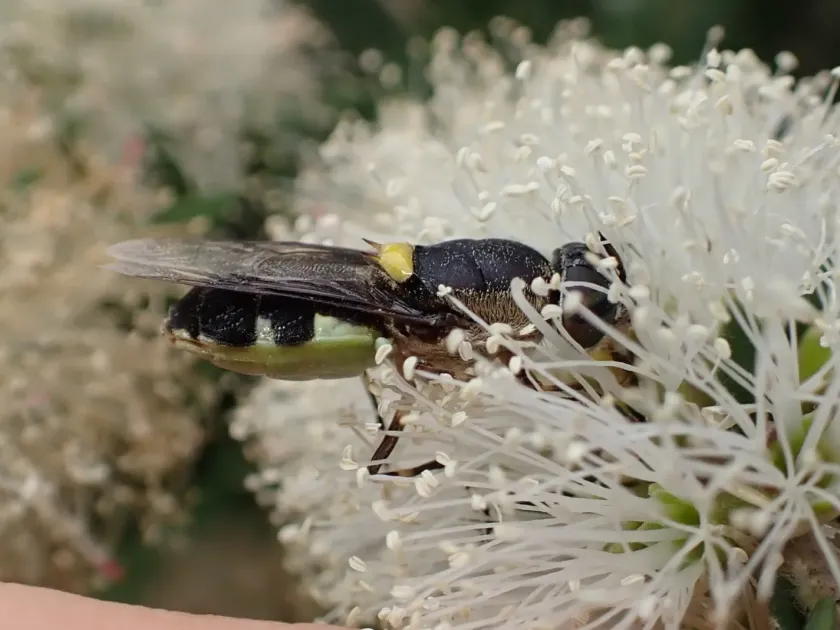
The genus Odontomyia belongs to the family Stratiomyidae, commonly known as soldier flies. These insects are distinguished by their often vibrant colors and unique body structures.
Adult flies are characterized by a scutellum with distinct spines. They are typically found in moist environments, hovering near flowering plants to feed on nectar.
Larvae are easily identified by their flattened, leathery appearance, which provides significant protection against environmental stressors and predators.
The life cycle involves complete metamorphosis, progressing through egg, larval, pupal, and adult stages, with larvae often thriving in aquatic or semi-aquatic habitats.
While many species in this family are beneficial decomposers, certain populations can become problematic if they transition to cultivated fields in high numbers.
What it damages
In most agronomic contexts, Odontomyia species are considered neutral or beneficial, as they primarily feed on decaying organic matter rather than living tissue.
However, when standard crop conditions are compromised, such as during excessive soil moisture or improper fertilization, larvae may feed on seedling roots.
This feeding activity can cause mechanical damage to root systems, making the plants highly susceptible to secondary fungal infections and root rot.
Impact is most commonly observed in greenhouses or poorly drained fields where organic debris accumulates, providing an ideal breeding ground for the larvae.
Plants affected by larval feeding often show stunted growth and decreased vigor, which impacts overall yield quality and economic performance.
When it appears
Adult soldier flies are most active during the spring and summer months, coinciding with warm temperatures and the availability of floral resources.
Larval development is closely tied to soil moisture and the availability of decomposing organic material, peaking during wet spells or irrigation cycles.
Overwintering occurs at the larval stage, allowing the insects to survive cold periods while embedded in soil or thick layers of organic mulch.
The emergence of adults in late spring is highly dependent on the warming of soil and stagnant water sources where larvae complete their development.
Continuous monitoring during the peak growing season is recommended to detect high population densities that may threaten sensitive young crops.
Signs of infestation
The primary symptom of infestation is the unexpected wilting or yellowing of young plants that do not respond to standard moisture adjustments.
Inspecting the soil surface around the plant base often reveals the presence of larvae or their distinct, hardened exoskeletal remains.
Root systems of affected plants may appear damaged, with eroded surfaces caused by the rasping mouthparts of the larvae feeding on the tissue.
Large numbers of adult soldier flies in the vicinity are a clear indication of potential larval breeding sites within the soil or composting organic matter.
Localized patches of suppressed plant development often indicate areas where larvae have congregated due to poor soil aeration or excess debris.
Control measures
The most effective management strategy is to maintain soil hygiene and optimize the growing environment to prevent the accumulation of pests.
- Improve soil drainage to eliminate stagnant water and overly moist areas.
- Use fully composted organic matter to prevent attracting egg-laying females.
- Remove crop residues and weeds that serve as shelter for developing larvae.
- Implement proper crop rotation to minimize long-term buildup in the soil.
Chemical control is rarely necessary and should be avoided in favor of cultural practices that enhance plant resistance and soil health.
Taxonomy
- Latin name
- Odontomyia
- Order
- Diptera (flies)
- Family
- Stratiomyidae
- EPPO code
- ODNMSP
Discussion
No discussions yet — be the first.