
Devil's coach horse beetle
Ocypus olens
Description
How to identify
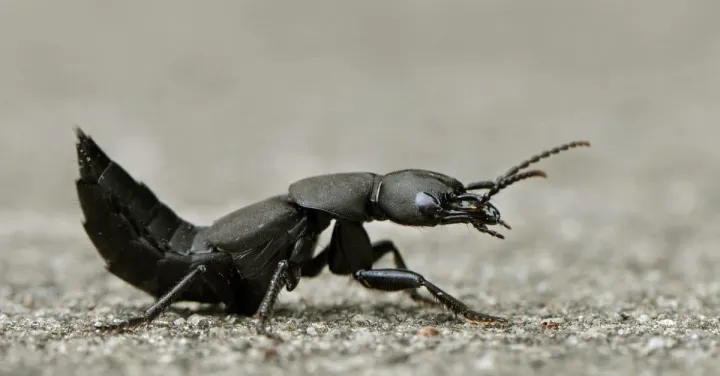
The Devil's coach horse beetle (Ocypus olens) is a large species belonging to the Staphylinidae family (rove beetles). Adults typically grow between 20 mm and 30 mm in length.
They possess a sleek, black, elongated body with shortened wing covers (elytra). Their appearance is distinctive due to their ability to raise their abdomen, mimicking a scorpion when threatened.
The beetle possesses specialized scent glands at the end of its abdomen that emit a foul-smelling secretion to deter potential predators or threats.
The life cycle includes a larval stage. The larvae are cream-colored to brownish, agile predators that reside in the soil or under leaf litter, hunting small soil-dwelling organisms.
Adults are primarily nocturnal hunters, spending daylight hours hidden in cool, damp crevices, under logs, or beneath dense garden vegetation.
What it damages
Despite their intimidating appearance, Devil's coach horse beetles are not crop pests. They are strictly predatory and do not feed on plant tissues, fruits, or roots.
Their role in the garden or field is that of an effective predator. They hunt slugs, snails, earthworms, and larvae of various pest insects that can damage agricultural crops.
Farmers and gardeners benefit from their presence because they actively regulate the populations of common pests without requiring human intervention or chemical input.
No damage to vegetation has been recorded associated with this species. They are considered entirely harmless to crops and beneficial to the overall health of the soil ecosystem.
Misunderstanding the beetle's diet often leads to unnecessary fear, but in professional agronomy, they are protected and encouraged as part of natural pest management.
Control measures
Control measures are not necessary for the Devil's coach horse beetle, as they provide valuable ecological services to any farm or garden by preying on agricultural pests.
If you prefer to reduce their presence around human dwellings, keep the area dry, remove decaying wood, and clear away heavy leaf litter where they hide and hunt.
Avoid the prophylactic use of broad-spectrum insecticides, as these chemicals kill beneficial predators like the Devil's coach horse, making the field vulnerable to pests.
Encourage natural habitats such as hedgerows and grassy margins to help sustain populations of predatory beetles, which act as a natural barrier against slug infestations.
Adopting sustainable agricultural practices, which preserve beneficial entomofauna, is recommended over attempting to eradicate this harmless and helpful predatory species.
Taxonomy
- Latin name
- Ocypus olens
- Order
- Coleoptera (beetles)
- Family
- Staphylinidae
- EPPO code
- OCYPOL
Discussion
No discussions yet — be the first.