
Large Skipper
Ochlodes venatus
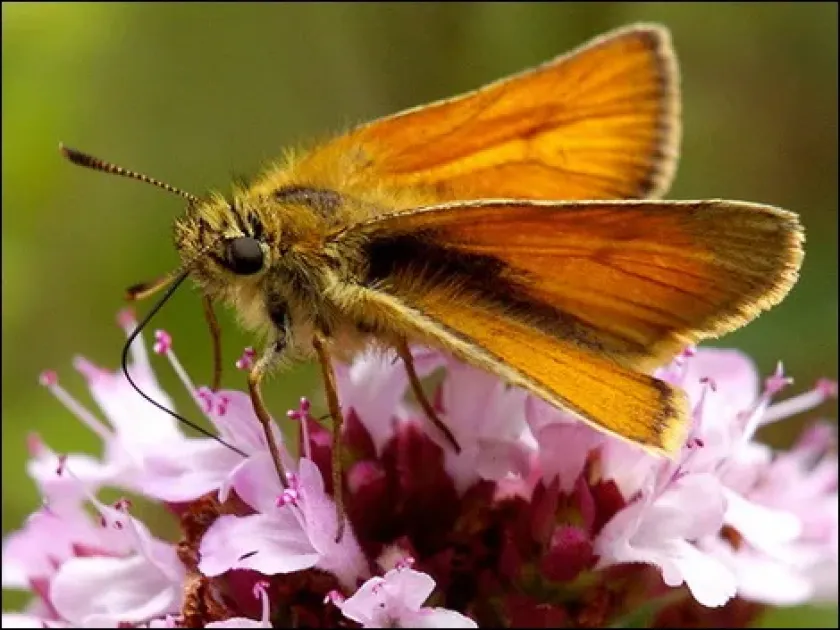
Description
How to identify
The Large Skipper (Ochlodes venatus) is a butterfly belonging to the Hesperiidae family, known to impact grass species and occasionally cereal crops.
Adults have a wingspan of approximately 25-32 mm, featuring distinctive orange-brown wings with dark brown edges and spots, which aid in camouflage.
Larvae are pale green with a darker line along the back and a brown head, making them difficult to spot against the stems and leaves of host grasses.
The life cycle encompasses four main stages: egg, larva (five instars), pupa, and adult, with the pupa stage often protected within a rolled leaf.
Correct identification of this pest is crucial, particularly distinguishing it from other skipper species that occupy similar ecological niches in field margins.
What it damages
Larvae feed primarily on various grasses and cereals, including fescues, cocksfoot, and in some cases, domesticated grain crops near field edges.
Feeding damage consists of larvae consuming leaf tissue, which results in irregular edges or complete defoliation if the population density is high.
Reduced leaf surface area limits the photosynthetic capacity of the plants, leading to weakened growth and potentially lower grain yields at harvest.
By folding and tying leaves together with silk, larvae create protected areas that can harbor secondary pathogens, further compromising plant health.
While often considered a minor pest, in favorable environmental conditions, large populations can cause localized damage in cereal crops adjacent to meadows.
When it appears
The species typically undergoes one generation per year, with the larvae overwintering in the third or fourth instar stage hidden in grass tussocks.
Larval activity resumes in the spring, typically peaking in May and June as the caterpillars feed and mature before entering the pupal stage.
Adults emerge from June through August, during which time they mate, and females lay eggs on the leaves of host plants.
The timing of the adult flight period is closely linked to the local climate, with warmer summers leading to earlier activity and potential egg-laying cycles.
By autumn, the newly hatched larvae begin to prepare for winter dormancy, securing themselves within the base of the grass clumps.
Signs of infestation
The most reliable sign of a Large Skipper infestation is the presence of leaves that have been rolled into tubes and secured with white silk threads.
Feeding marks at the edges of the leaves appear as irregular notches, significantly different from the grazing patterns caused by insects like aphids.
The presence of dark, granular frass (excrement) within the rolled leaf shelters confirms that larvae are actively using the host plant.
A noticeable thinning of grass or leaf material in field margins is a clear indicator of larval presence during the late spring months.
Observing adult butterflies hovering near agricultural fields or grasslands during mid-summer confirms their presence in the local ecosystem.
Control measures
Integrated Pest Management (IPM) is the most effective approach to minimize the impact of Large Skipper populations on agricultural lands.
Maintaining clean field margins and eliminating host grasses helps reduce the primary habitat available for the larvae to overwinter and feed.
Deep cultivation and soil turning post-harvest are highly effective in disrupting the life cycle by exposing overwintering larvae to predators.
- Targeted application of approved insecticides if population thresholds are exceeded.
- Biological control methods, such as utilizing natural predators or parasitic wasps.
- Strategic mowing of grass margins to reduce the food supply for early-stage larvae.
Consistent monitoring and early detection of rolled leaves in late spring allow for timely interventions that prevent significant crop damage.
Taxonomy
- Latin name
- Ochlodes venatus
- Order
- Lepidoptera (butterflies)
- Family
- Hesperiidae
- EPPO code
- OCHLVE
Discussion
No discussions yet — be the first.