
Large Skipper
Ochlodes
Description
How to identify
The Large Skipper (Ochlodes sylvanus) is a butterfly species belonging to the Hesperiidae family, order Lepidoptera. It is a small but robust butterfly frequently found in grassy habitats.
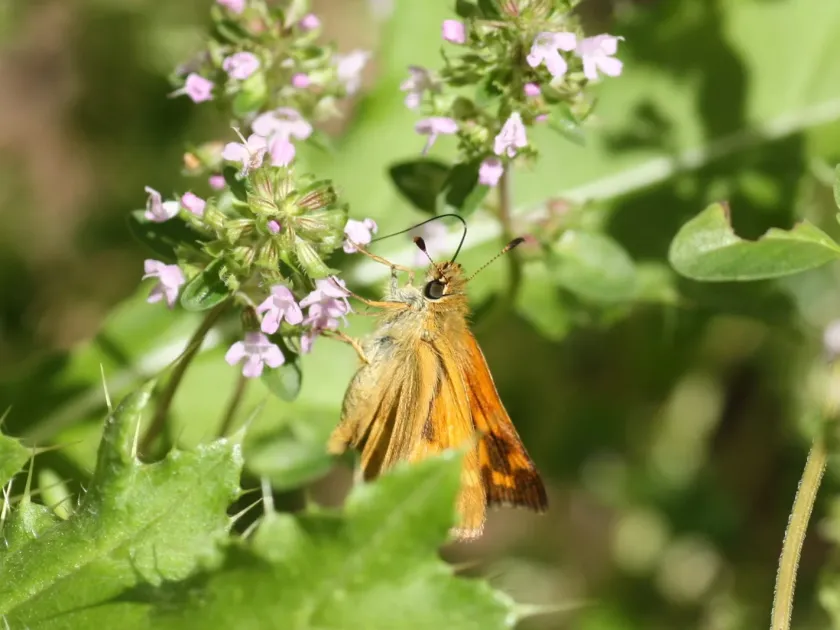
The wingspan of the adult insect typically ranges between 25 and 30 mm. Its wings are bright orange-brown with distinct dark margins and lighter spots, providing excellent camouflage.
The body of the moth is thick and covered in dense hairs. Its antennae are clubbed at the tips, which is a diagnostic feature of the skipper butterfly family.
Larvae (caterpillars) are green in color with a darker dorsal line and a brown, well-defined head, making them difficult to spot against the stems of host plants.
The species is widely distributed across the Palearctic region, commonly inhabiting meadows, woodland edges, and unmanaged field margins where grasses grow abundantly.
What it damages
The primary hosts for the Large Skipper larvae are various species of wild and cultivated grasses, including cocksfoot, couch grass, and various fescue species.
In agricultural settings, these caterpillars can feed on perennial forage grasses, potentially reducing the biomass available for hay production or grazing.
Although Large Skipper infestations rarely reach levels that cause massive crop failure, they contribute to the thinning of grass swards in localized areas.
The larvae feed on the leaf blades, creating ragged edges or irregular holes, which effectively reduces the total photosynthetic surface area of the affected plants.
Significant larval activity can weaken the grass plants, making them more susceptible to secondary stressors like drought or fungal pathogens.
When it appears
The Large Skipper typically completes one generation per year. Larvae in early developmental stages are responsible for overwintering, usually hidden at the base of grass clumps.
In the spring, as temperatures rise, the overwintered larvae resume feeding, growing rapidly and consuming the fresh spring foliage of host grasses.
Pupation occurs in late spring or early summer. The pupa is formed within a shelter created by rolling a grass leaf and securing it with silken threads.
Adult butterflies emerge during the summer months, specifically from June through August, which is their peak period for mating and egg-laying.
Eggs are laid individually on the leaves of host plants, and the newly hatched larvae begin the cycle again before the onset of autumn and eventual winter diapause.
Signs of infestation
A primary indicator of infestation is the presence of rolled grass leaves, which the caterpillars utilize as protective daytime shelters.
Visible feeding damage, characterized by notched leaf edges or irregular patterns of consumption, serves as a clear sign of larval presence during the active season.
The accumulation of small, pellet-like frass (excrement) near the rolled leaves is a common diagnostic sign indicating an active feeding site.
In mid-summer, wilting or browning of the tips of the rolled leaves can be observed as the plants react to the tissue damage caused by the larvae.
Visual confirmation of adult butterflies fluttering low over the grassland during sunny days suggests that oviposition may be occurring in that area.
Control measures
Effective management includes the removal of tall, unmanaged grasses along field margins, which serves to destroy the overwintering sites for the larvae.
Controlled grazing or regular mowing of pastures can disrupt the habitat requirements for the larvae, significantly reducing their population density over time.
If intervention is necessary, biological control using Bacillus thuringiensis-based products can effectively target the caterpillars without impacting non-target species.
Broad-spectrum insecticide applications are rarely recommended for this pest due to its low economic impact and the potential disruption of beneficial insect populations.
Monitoring the population levels of adults in early summer allows for a risk assessment, ensuring that any management efforts remain cost-effective and environmentally friendly.
Taxonomy
- Latin name
- Ochlodes
- Order
- Lepidoptera (butterflies)
- Family
- Hesperiidae
- EPPO code
- OCHLSP
Discussion
No discussions yet — be the first.