
Obama flatworm
Obama
Description
How to identify
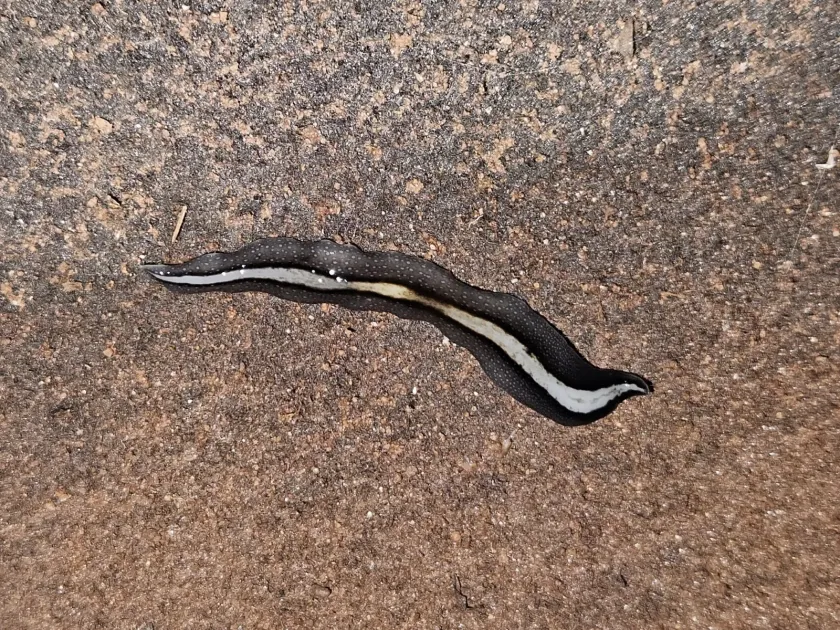
The genus Obama belongs to the order Tricladida and the family Geoplanidae. These flatworms typically have elongated, ribbon-like bodies ranging from 5 to 10 centimeters in length.
Adult specimens exhibit colors ranging from dark brown to almost black, often featuring small yellowish or orange spots on their dorsal side.
The ventral side is generally lighter and secretes a sticky mucus that facilitates movement on vertical surfaces and helps in capturing prey.
A notable feature is the presence of numerous tiny eyespots along the anterior margin, although these are primitive and only respond to light intensity.
Unlike earthworms, their bodies are unsegmented and smooth; they lose moisture rapidly when exposed to dry air, which is why they are primarily nocturnal.
What it damages
Obama flatworms are specialized predators that feed on other invertebrates inhabiting the leaf litter and topsoil layers.
Their primary food source is earthworms, which are essential for soil aeration, decomposition, and maintaining soil fertility in gardens and landscapes.
In addition to earthworms, they prey on snails, slugs, and other beneficial soil organisms, disrupting the fragile ecological balance of the soil.
While these pests do not feed on plant tissues directly, their presence leads to soil degradation due to the significant reduction of earthworm populations.
In regions where this species has invaded, it causes substantial damage to private gardens and local ecosystems where soil health relies on native biota.
When it appears
The activity of these flatworms is highly dependent on environmental humidity and temperature, making spring and autumn their most active seasons.
During hot summer months, they retreat deep into the soil or hide beneath dense mulch layers to maintain the moist microclimate they require.
Reproduction occurs year-round under favorable conditions; these worms are hermaphrodites and deposit cocoons directly into the soil.
Peak activity and surface presence are observed following heavy rainfall, when worms emerge to forage or search for mating partners.
The spread of this invasive species often occurs through the movement of potted plants, nursery stock with soil balls, and contaminated organic fertilizers.
Signs of infestation
The first indicator of an infestation is a noticeable decline in earthworm activity and population density in the topsoil layers.
Individuals can be found by inspecting garden equipment, turning over pots, or checking beneath boards and stones resting on damp ground.
Their presence is often revealed by the characteristic sticky mucus trails left on stones, walkways, or borders during morning hours after damp nights.
A slowdown in the decomposition of organic matter in the garden is a secondary sign of the suppression of soil biota by this predator.
Visual inspection of plants at night using a flashlight allows for the detection of their characteristic slow movement across stems or soil surfaces.
Control measures
Currently, there are no specific chemical pesticides officially registered for the control of Obama flatworms in agricultural or garden settings.
The most reliable control method remains manual collection of individuals at night, followed by disposal in a salt or alcohol solution.
Strict biosecurity measures, such as inspecting all incoming plants and soil, are crucial to prevent the introduction of this pest to new areas.
Maintaining garden hygiene by removing unnecessary piles of wood, stones, and excessive debris reduces suitable shelters for these flatworms.
Biological control methods are still under investigation, so vigilance and physical removal remain the best defense strategies for gardeners.
Taxonomy
- Latin name
- Obama
- Family
- Geoplanidae
- EPPO code
- OBAMSP
Discussion
No discussions yet — be the first.