
Black-crowned night heron
Nyctocorax
Description
How to identify
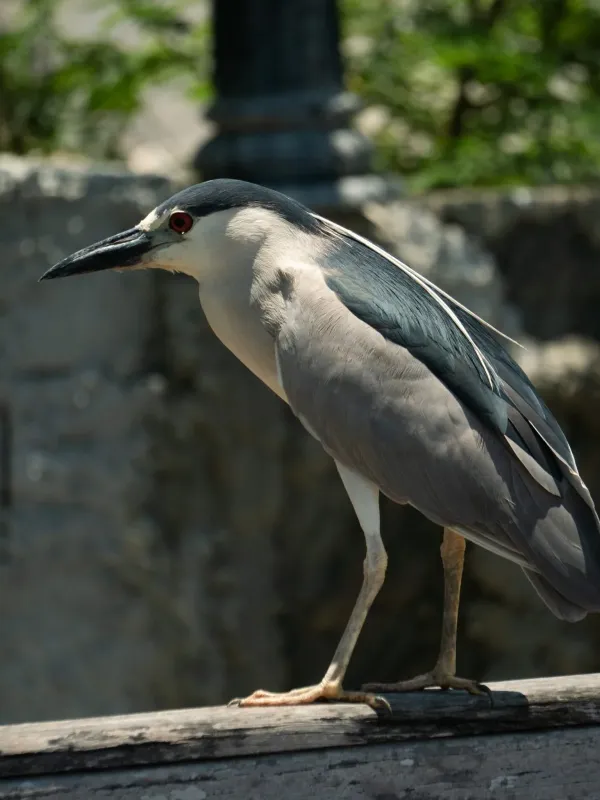
The Black-crowned night heron is a species in the heron family characterized by its nocturnal and crepuscular lifestyle. Adults have a stocky build with a relatively short neck and legs, distinguishing them from other heron species.
The plumage of adults is bold: the back and crown are black with a greenish gloss, while the wings and belly are grey. Juvenile birds exhibit brown plumage with buff streaks, which provides excellent camouflage in dense vegetation.
The bird's head is adorned with long white plumes, which become particularly prominent during the breeding season. Their bill is straight, strong, and sharp, perfectly adapted for grabbing slippery prey in the water.
When in flight, the bird retracts its neck, assuming a compact shape. With a wingspan of about 80-90 centimeters, they can maneuver rapidly through tree canopies or low over the water surface.
They prefer to nest in dense floodplain forests, coastal thickets, and wetlands, often forming large breeding colonies alongside other heron species.
What it damages
The primary economic damage caused by the Black-crowned night heron is its predatory impact on aquaculture facilities and fish nurseries.
These birds actively hunt young fish and fingerlings, significantly reducing the productivity of fish ponds. The losses can be substantial if a nesting colony is located near a commercial pond.
In rice-growing regions, these herons may indirectly damage crops by establishing foraging sites in flooded fields, leading to the trampling of young rice shoots.
In addition to direct predation on fish, they can act as vectors for various parasitic fish diseases, serving as intermediate hosts for specific helminths.
The high density of birds in nesting colonies leads to the accumulation of guano in water bodies, potentially degrading water quality for commercial fish farming.
When it appears
The Black-crowned night heron is a migratory species that arrives at its breeding grounds with the onset of warm weather, typically in April or early May.
The peak of their activity and damage coincides with the chick-rearing period, which lasts from late May to mid-July, when the need for protein-rich food is greatest.
By late summer, the birds gather in flocks before their migration, increasing the pressure on fish farms ahead of the autumn harvest season.
Migration to wintering grounds begins in September, marking the conclusion of their active impact on agricultural sites for the year.
In warmer southern regions, some populations may remain sedentary, posing a threat to agricultural facilities throughout the entire growing season.
Signs of infestation
The main signs of their presence include the accumulation of feathers, droppings, and food debris such as fish scales or bone fragments along pond banks.
The distinctive, sharp «quok» call during dusk hours is a reliable indicator of their presence in nearby riparian vegetation.
A noticeable decline in fish stocks within ponds, unexplained by other biological factors, often points to the work of nocturnal bird predators.
Damaged aquatic vegetation and cleared foraging paths around ponds serve as evidence of frequent visits by a colony.
Sightings of birds emerging for flight and hunting at dusk confirm their establishment in the production area.
Control measures
To protect fish ponds, the most effective method is the installation of overhead anti-bird netting, which prevents physical access to the water surface.
Visual and acoustic deterrents, such as predator decoys, reflective tapes, or propane cannons, provide a temporary effect and require frequent rotation to remain effective.
Agrotechnical management involves clearing dense coastal vegetation, which removes the cover needed for herons to nest and shelter.
Lighting systems can be effective as barriers, given that these birds rely on low-light conditions to hunt effectively.
In cases of severe damage, biological control methods or the active presence of human guards are employed to protect the most valuable fish stocks.
Taxonomy
- Latin name
- Nyctocorax
- Family
- Ardeidae
- EPPO code
- NYKTSP
Discussion
No discussions yet — be the first.