
Grey heron
Ardea cinerea
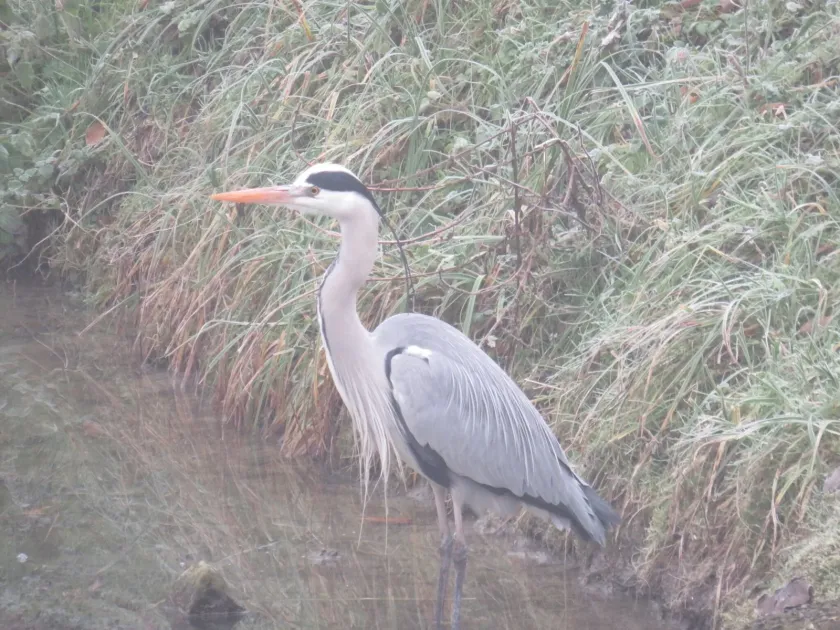
Description
How to identify
The Grey heron (Ardea cinerea) is a large wading bird belonging to the Ardeidae family. It is characterized by its long neck, sharp bill, and slender legs that are perfectly adapted for hunting in shallow aquatic environments.
The plumage is primarily ash-grey with white markings on the head and a distinct black crest. With a wingspan that can reach up to 195 cm, this bird is a formidable and highly mobile visitor to agricultural lands and water bodies.
Grey herons are generally sedentary or nomadic, often forming colonies near rivers, lakes, and artificial ponds, making them a recurring challenge for professional fish farmers.
These birds are primarily diurnal, but they can be active during crepuscular hours, often arriving at hunting spots just before dawn or at sunset to maximize their catch.
The population of grey herons has increased significantly in recent years due to high adaptability and lack of natural predators in managed landscapes.
What it damages
The primary economic impact of the grey heron is the predation of fish, particularly fry and juveniles of commercial species like carp, trout, and catfish in aquaculture ponds.
Beyond direct consumption, the birds cause significant damage to larger fish through stabbing injuries. These wounds often lead to secondary infections, such as saprolegniasis, which can result in mass mortality in fish populations.
Herons disrupt the natural feeding cycles of fish, causing stress and reduced growth rates, which directly affects the economic performance of a fish farming operation.
These birds are also known as vectors for various fish parasites, transporting eggs or larvae of trematodes and other pathogens between isolated water systems.
In high-density breeding ponds, the heron's ability to consume hundreds of grams of fish per day can lead to massive losses, especially during the stocking season.
When it appears
Heron predation peaks during the spring and summer months, as these birds require high-protein food sources to support the growth and development of their chicks.
The season of stocking new fish fry into grow-out ponds is the most critical time for protection, as the small size and lack of hiding spots make the fish extremely vulnerable.
Autumn activity remains high as herons prepare for winter, often exploiting ponds where the fish are gathered in anticipation of being moved to wintering tanks.
In regions with milder winters where water remains open, herons may continue to hunt throughout the winter, targeting fish stored in wintering complexes.
The seasonal movement of herons is dictated by water availability; therefore, if the pond remains the only source of water in a drought, predation pressure will intensify.
Signs of infestation
The presence of herons is confirmed by distinctive tracks in the mud around the pond perimeter and the accumulation of droppings near their preferred waiting spots.
Signs of predation include fish with puncture marks or open wounds along their bodies, often found floating near the edges or washed up on the banks.
Observation of the pond during the early morning often reveals the heron standing motionless at the water's edge, a hallmark of their patient hunting technique.
An unusual degree of wariness in the fish population, which may avoid the shallow edges of the pond entirely, is another behavioral indicator of constant predator pressure.
Finding leftover scales, skeletal remains, or dropped fish carcasses around the pond bank is a definitive sign of heron activity.
Control measures
Physical barriers such as bird netting over ponds provide the most effective protection, especially for small breeding ponds or hatcheries where the fish are most vulnerable.
Acoustic deterrents that broadcast distress calls or high-frequency sounds can be used to disrupt the bird's hunting focus, though they must be rotated to prevent habituation.
Visual deterrents, including moving decoys and reflective objects, can provide temporary relief and are most effective when used in combination with other methods.
Modifying the pond habitat by deepening the edges or removing dense vegetation reduces the available "ambush" spots for the herons, making the pond less attractive for hunting.
- Installation of electric fencing along the shoreline.
- Deployment of floating covers or grid wires over the water.
- Regular patrol and use of motion-activated light or water sprayers.
Taxonomy
- Latin name
- Ardea cinerea
- Family
- Ardeidae
- EPPO code
- ARDECI
Discussion
No discussions yet — be the first.