
Heron
Ardea
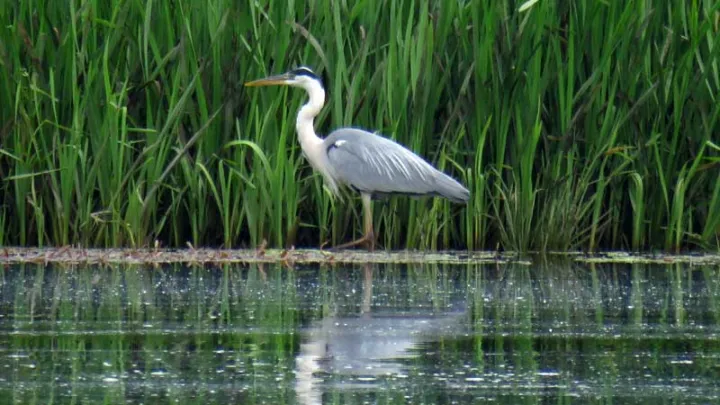
Description
How to identify
Herons (genus Ardea) are large wading birds belonging to the order Pelecaniformes (family Ardeidae). They are characterized by long legs, a long neck, and a sharp, spear-like bill adapted for hunting in shallow waters.
These birds are apex predators in aquatic environments. Their plumage is often camouflaged with gray, white, or brown tones, which helps them remain invisible to prey while standing motionless in reeds or shallow margins.
Herons are highly adaptive birds that often form colonies and build large nests in trees near their hunting grounds. They are known for their patience and precision when striking at prey.
Their life cycle includes seasonal migration and a long rearing period for chicks. During the breeding season, the high protein demand of their offspring makes them significantly more aggressive in their hunting behavior.
In the context of agricultural and aquaculture settings, their presence can be highly disruptive, as they perceive artificial ponds and irrigation canals as ideal, easy-access hunting grounds.
What it damages
The primary economic damage caused by herons is the predation of young fish in commercial ponds, such as trout, carp, and ornamental fish farms, leading to substantial financial losses.
Beyond direct consumption, herons often injure fish that are too large to swallow. These wounds frequently develop into severe secondary infections, causing high mortality rates among the stock.
In agriculture, particularly in rice cultivation, herons can trample seedlings. Their movement across saturated soil destroys young plants, affecting crop uniformity and yield.
They can also serve as vectors for parasites and various aquatic diseases, transferring pathogens between separate ponds or nearby farm operations, which threatens the overall biosecurity of the site.
Maintenance costs are often exacerbated by their presence, as they may damage protective netting or other infrastructure in their persistent attempts to reach the fish stock.
When it appears
The activity of herons is highly seasonal, coinciding with the period of open water. In temperate regions, this is generally from early spring until late autumn.
The spring season (March to May) is particularly critical, as rising water temperatures stimulate fish activity in shallow water, making them highly vulnerable to heron attacks.
Summer months represent the peak of their predatory activity, as adult herons work tirelessly to provide food for their growing chicks in the nearby nesting colony.
Autumn brings a period of increased foraging as birds prepare for migration, which can lead to late-season losses for farms that have not implemented protective measures.
During the winter, when ponds freeze, herons migrate to warmer climates, making the risk negligible for farm owners until the return of spring.
Signs of infestation
The most obvious sign of heron activity is the presence of the birds themselves, often found standing motionless at the water's edge during dawn or dusk.
Evidence of unsuccessful attacks can be found by observing fish with clear, puncture-like wounds along their backs or sides, which indicate they managed to escape a strike.
A sudden, unexplained decline in fish populations within a pond, despite stable water quality and proper feeding practices, often points to avian predation.
Distinctive, long footprints left in the soft, wet soil around the perimeter of the pond or in irrigation channels are strong indicators of their visitation.
Accumulated white droppings, or "whitewash," on pond-side equipment, floating docks, or nearby trees are clear markers that the site is being used regularly by these predators.
Control measures
Installing high-tensile netting over the entire surface area of the pond is widely considered the most effective way to prevent heron access to the fish stock.
Visual deterrents, such as decoys of predatory birds (owls or hawks), reflective tape, or motion-activated light flashers, can discourage birds from settling in the area.
Acoustic deterrents that broadcast bird distress calls or sporadic loud noises can be used to scare them off, though these must be rotated to avoid habituation.
Modifying the pond edge by creating steep slopes reduces the amount of shallow water, making the environment much less attractive and physically difficult for herons to stand in.
Electric fencing, specifically designed for wildlife, installed around the perimeter of the pond provides a robust barrier against wading birds and is highly reliable for large-scale operations.
Taxonomy
- Latin name
- Ardea
- Family
- Ardeidae
- EPPO code
- ARDESP
Discussion
No discussions yet — be the first.