
American bittern
Botaurus lentiginosus
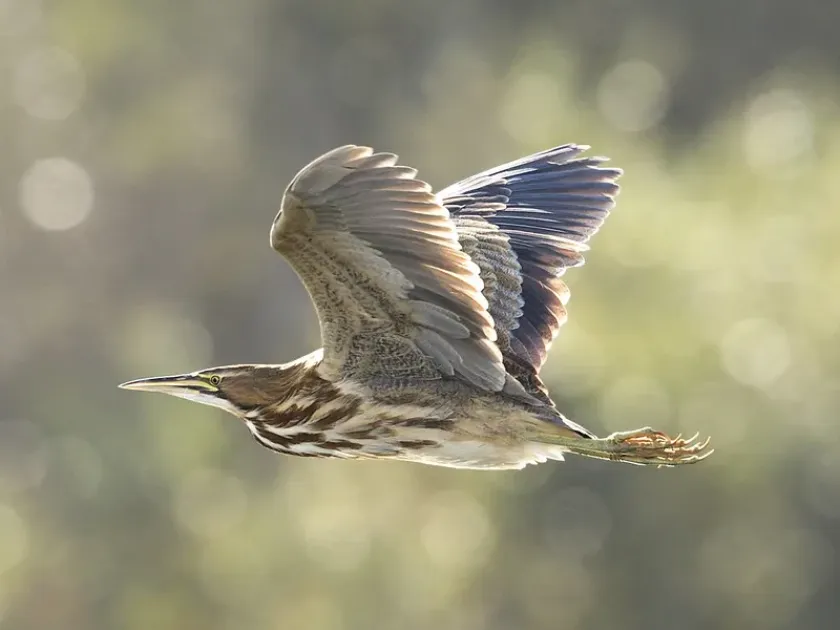
Description
How to identify
The American bittern (Botaurus lentiginosus) is a wading bird of the heron family, Ardeidae. It is a solitary species characterized by its cryptically patterned, brown, and buff-colored feathers, which provide excellent camouflage in wetlands.
Adults are medium-sized with a thick neck and a heavy, pointed bill. They are known for their distinct behavior of standing motionless with their bill pointed upward to blend into the surrounding reeds and tall grasses.
This bird species is typically found in marshy areas, edges of ponds, and drainage channels adjacent to agricultural lands. Its presence is often noted by its unique, booming call during the breeding season.
From a biological standpoint, the species has no specialized herbivorous traits. It is adapted for hunting aquatic prey, which defines its ecological role within the landscape surrounding various crops.
The taxonomic classification places it within the order Pelecaniformes. It remains a fascinating subject for ornithologists but rarely interacts with intensive agricultural practices in any negative manner.
What it damages
The American bittern causes no direct damage to crops. It is not a herbivore; its diet consists almost entirely of fish, amphibians, crustaceans, and large insects, none of which represent the cultivated produce of modern farms.
Any accidental damage, such as minor trampling of seedlings, is negligible and does not warrant any concern from an agronomic productivity perspective or economic assessment of harvest loss.
Some land managers might mistakenly label the species as a nuisance due to its presence in sensitive riparian zones, but this is usually a misunderstanding of the bird's impact on infrastructure or crop health.
On the contrary, the presence of these birds indicates a healthy aquatic environment. As predators, they contribute to the natural suppression of populations of smaller vertebrates and insects that could occasionally impact crops.
Therefore, classifying the American bittern as an agricultural pest is factually incorrect and not supported by agronomic research or field observations conducted in diverse agricultural settings.
Control measures
No control measures are required for the American bittern. As a protected species in many jurisdictions, it is illegal and unethical to target this bird. Its role in the ecosystem is generally seen as positive for environmental health.
To discourage birds from nesting in critical infrastructure such as active irrigation pipes or maintenance areas, manual clearing of overgrown reeds around these structures is a sufficient and effective management practice.
Implementing non-lethal deterrents, such as reflective visual barriers or noise-based systems, is only recommended if the presence of the birds significantly interferes with daily farming operations.
The best strategy involves maintaining natural buffer zones that provide sufficient habitat elsewhere, ensuring the birds have plenty of space away from active heavy machinery or sensitive farming zones.
Sustainable agricultural practices favor coexistence with local wildlife. Keeping water quality high and preserving wetlands adjacent to crops creates a balance that requires no direct intervention against the bittern.
Taxonomy
- Latin name
- Botaurus lentiginosus
- Family
- Ardeidae
- EPPO code
- BOTULE
Discussion
No discussions yet — be the first.