
Black-crowned night heron
Nycticorax nycticorax
Description
How to identify
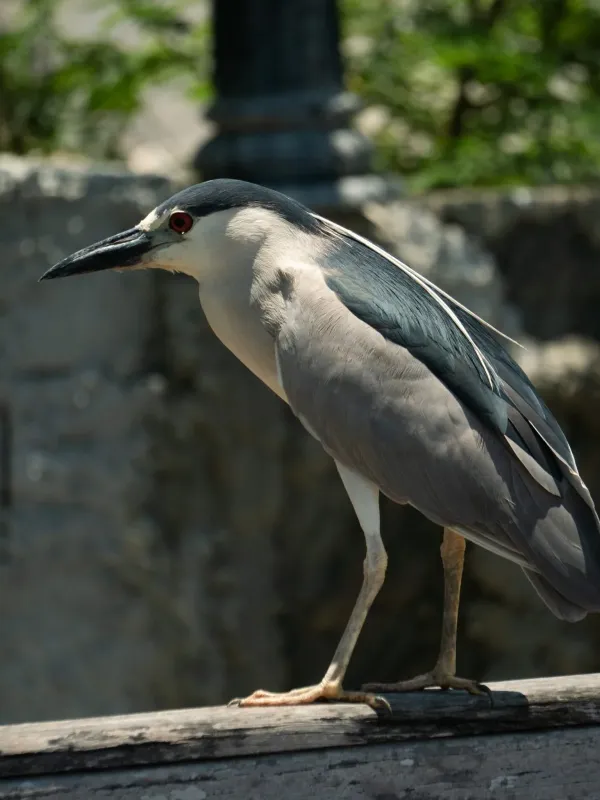
The Black-crowned night heron (Nycticorax nycticorax) belongs to the Pelecaniformes order and the Ardeidae family. It is a medium-sized bird with a stocky build and a relatively short neck.
Adults are recognized by their grey wings and back, contrasting with a striking black crown on the head, while juveniles exhibit brown plumage with distinct white spots.
These birds are primarily nocturnal, as indicated by their scientific name, which translates to "night raven," allowing them to avoid detection during daylight hours.
They typically nest in large colonies located in dense vegetation, such as trees or reed beds near water bodies, which makes managing their populations a complex task.
Highly adaptable, this species thrives in both natural wetlands and artificial environments, including reservoirs and irrigation ponds, where they find abundant food sources.
What it damages
The primary agricultural concern regarding the Black-crowned night heron is its negative impact on aquaculture and commercial fish farming facilities.
Being an active piscivore, the heron hunts fish in shallow pond waters, consuming large quantities of fingerlings and significantly reducing crop productivity.
Beyond direct fish consumption, these birds prey on amphibians and aquatic invertebrates, which can alter the delicate ecological balance within artificial pond systems.
Herons act as vectors for various fish parasites and pathogens, contributing to the spread of diseases when moving between different water bodies during their migratory cycles.
Accumulation of bird droppings around pond sites can lead to water quality degradation, increasing nutrient levels and promoting harmful algal blooms that endanger fish populations.
When it appears
The presence of this species near water bodies in temperate zones is seasonal, starting in spring when ice melts and fish become active in shallow waters.
The highest level of predation occurs during the spring and summer breeding season, as adult birds require significant caloric intake to raise their chicks.
Throughout the summer months, the pressure on fish populations remains high as the birds establish stable feeding grounds around productive aquaculture ponds.
Migration typically begins in early autumn as temperatures drop and the availability of accessible prey diminishes, forcing the birds to move toward warmer regions.
In warmer southern regions, some populations may remain semi-resident, maintaining a constant, albeit lower, level of predation pressure on fish farming facilities throughout the year.
Signs of infestation
The presence of these night herons is often signaled by their characteristic, loud "quawk" calls, which are frequently heard at dusk and dawn near fish ponds.
Identifying footprints in the mud along the pond banks or finding damaged vegetation near the water can confirm the use of the area for roosting or hunting.
Visual confirmation of birds standing motionless in "stalking mode" at the water's edge is a definitive indicator of an active feeding site.
A sudden decline in the stock of juvenile fish within specific shallow areas of the pond system serves as a clear metric for assessing the level of predation.
Evidence of white excrement on foliage and structures surrounding the pond confirms the establishment of a bird colony in the immediate vicinity.
Control measures
Effective management requires a multi-layered approach to exclude birds from ponds or disrupt their hunting patterns without harming the ecosystem.
Installing protective netting over small nursery ponds is the most reliable physical deterrent, preventing birds from accessing the water surface entirely.
Bio-acoustic deterrents, which play recorded alarm calls or raptor sounds, can be highly effective in forcing birds to abandon preferred feeding locations.
Modifying the pond habitat by clearing dense perimeter vegetation reduces the ability of herons to hide and stalk their prey effectively.
The use of advanced laser-based deterrent systems at night provides a non-lethal, high-tech solution to drive birds away from sensitive aquaculture zones during their peak activity periods.
Taxonomy
- Latin name
- Nycticorax nycticorax
- Family
- Ardeidae
- EPPO code
- NYKTNY
Discussion
No discussions yet — be the first.