
Nyctelius
Nyctelius nyctelius
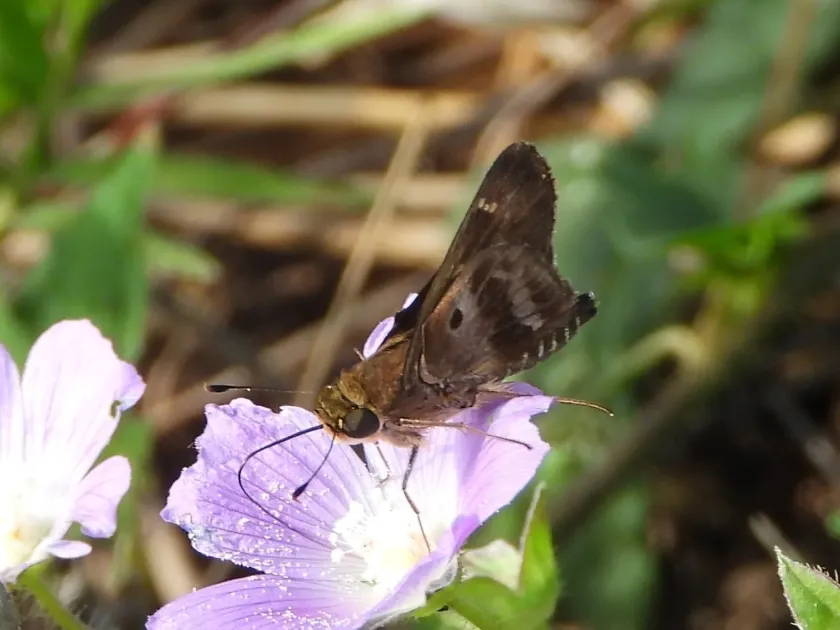
Description
How to identify
The Nyctelius bug (Nyctelius nyctelius) is a member of the Lygaeidae family within the order Hemiptera. These insects are characterized by an elongated, brownish to dark-brown body, which provides effective camouflage against soil surfaces and plant debris.
Adult insects possess well-developed wings, allowing them to migrate across significant distances in search of suitable host plants. Their mouthparts are of the piercing-sucking type, specifically evolved to puncture plant tissues and extract vital sap.
Nymphs morphologically resemble the adults but are smaller, lack fully developed wings, and usually exhibit lighter coloration in the early stages of their life cycle. This species undergoes incomplete metamorphosis, typical for true bugs.
Adults typically measure between 5 and 8 millimeters in length. Accurate identification often requires examining the structure of the pronotum and the specific markings on the scutellum, which are diagnostic features for this species.
These insects are most active during daylight hours, particularly in mild weather conditions, making them easily observable on agricultural fields throughout the spring and summer months.
What it damages
The Nyctelius bug primarily targets technical and field crops, with sunflower being one of its most notable hosts. Both adults and nymphs feed by extracting juices from young leaves, stems, and developing seeds, disrupting the plant's metabolic processes.
Feeding damage results in stunted growth, chlorosis, and premature wilting of specific plant tissues. The constant sap extraction weakens the plant, making it more susceptible to environmental stress and secondary infections.
Severe damage occurs when the pest attacks the generative organs during the flowering and seed-setting stages of sunflowers. Punctures in the receptacle can lead to the formation of empty seeds and significantly reduced yields.
Large-scale infestations often result in decreased oil content in seeds and overall poor seed quality. Plants damaged by these bugs are also more prone to fungal and viral pathogens that enter through the feeding wounds.
Beyond sunflowers, this pest can utilize various weeds from the Asteraceae family as reservoir hosts, allowing the population to survive until the primary crop emerges.
When it appears
The life cycle of the Nyctelius bug is closely tied to climatic conditions. After overwintering, adults emerge from protected areas such as plant litter, shelterbelts, or the upper layers of soil.
Peak activity and colonization of fields typically coincide with the period of active crop growth, usually spanning from late spring through early summer.
In warmer climates, the species is capable of completing multiple generations within a single season. The development of one generation generally takes approximately one month, depending on ambient temperature and humidity levels.
The summer generation is particularly aggressive, as the insects require high-quality nutrition to complete their development and prepare for egg-laying, which sustains the population throughout the growing season.
As autumn temperatures drop, the insects migrate to overwintering sites, where they enter a state of diapause to survive the winter and re-emerge when favorable conditions return.
Signs of infestation
Early symptoms of infestation include the appearance of small, pale, or discolored spots on leaves. Over time, these spots can coalesce, leading to localized necrosis of the leaf tissue.
A closer inspection of the underside of leaves or the leaf axils often reveals clusters of nymphs, which tend to aggregate in areas with the most active sap flow.
Deformation of the plant apex and twisting of stems are significant indicators of pest presence. Additionally, the presence of dark excrement spots on foliage serves as a clear sign of active feeding by the bugs.
In cases of heavy infestation, sunflower heads develop unevenly, often resulting in deformed or underdeveloped seeds within the central part of the flower head.
Detecting the pest is best achieved using an entomological sweep net or by visually inspecting the base of the plant during the cooler hours of the morning.
Control measures
Effective management of the Nyctelius bug requires an integrated approach, combining cultural practices with chemical interventions to keep population levels below the economic injury threshold.
- Implementing crop rotation to break the pest's cycle and reduce host plant availability.
- Thorough incorporation of crop residues and deep autumn plowing to eliminate wintering sites.
- Systematic weeding to reduce the number of reservoir host plants within and around the fields.
If population levels exceed thresholds, chemical control becomes necessary. Organophosphate and pyrethroid insecticides, registered for use on sunflower crops, have proven to be the most effective tools.
Treatment should be timed to coincide with the mass hatching of young nymphs, as they are significantly more sensitive to pesticide applications compared to mature adults.
While biological control involving natural enemies is a potential future strategy, current agricultural practice focuses on the rational and timely application of chemical agents to prevent crop losses.
Taxonomy
- Latin name
- Nyctelius nyctelius
- Order
- Lepidoptera (butterflies)
- Family
- Hesperiidae
- EPPO code
- NYCLNY
Discussion
No discussions yet — be the first.