
Nudaurelia
Nudaurelia
Description
How to identify
Nudaurelia belongs to the Saturniidae family, commonly known as giant silk moths. These large nocturnal moths are significant pests in their larval stage.
Adult moths possess robust bodies and broad wings, often featuring distinctive eyespots on the hindwings, which are characteristic of this moth family.
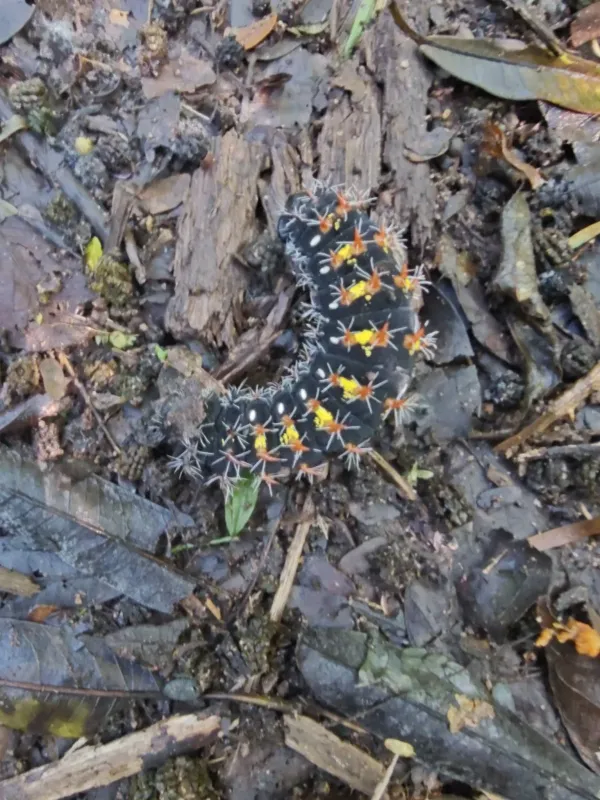
The larvae are known for their large size and often possess dense clusters of stinging hairs or spines, which serve as a primary defense mechanism against birds and other predators.
The species undergoes a complete metamorphosis, including egg, larval, pupal, and adult stages. The duration of these phases is highly dependent on environmental factors like heat and food availability.
The Pine Nudaurelia (Nudaurelia cytherea) is the most notable species, well-documented for its ability to cause massive deforestation in pine plantations.
What it damages
These pests primarily target conifer forests, such as pine, but are also known to infest various broad-leaved trees in tropical and subtropical climates.
The larvae feed voraciously on young needles and leaves, leading to rapid defoliation that weakens the host plant significantly.
When infestation levels are high, trees are stripped of their foliage, which stops photosynthesis and can lead to complete tree mortality after several cycles of attack.
Secondary infections, such as those caused by bark beetles or wood-decaying fungi, often follow Nudaurelia outbreaks as the trees' natural defenses are severely compromised.
The economic impact is profound, resulting in stunted forest growth, loss of timber value, and high costs associated with emergency sanitation harvesting.
When it appears
The larval activity typically aligns with the seasonal flushing of new leaves or needles, which provides the most nutritional value for the growing insects.
Eggs are generally deposited by females on the needles or leaves in late spring or early summer, depending on the geographical region and climate.
Caterpillars reach their peak feeding intensity in mid-to-late summer, which is the period when most noticeable damage occurs in the canopy.
Pupation usually occurs in the soil or in the leaf litter at the base of the tree, where the insect remains in a dormant state until the next favorable season.
Adult moths are short-lived and active mainly at night, making their observation and tracking a difficult challenge for forest health managers.
Signs of infestation
The most evident sign of a Nudaurelia outbreak is the sparse and thinning appearance of the tree crown, which is often visible from a great distance.
Large quantities of larval droppings, known as frass, appearing on the forest floor beneath the trees indicate active feeding high up in the canopy.
Close inspection of the branches reveals the presence of large, often colorful larvae that are quite distinct due to their size and body features.
Evidence of chewed needles or leaves, including ragged edges and incomplete consumption, highlights the ongoing infestation.
- Exuviae (shed skins) found on branches or near the base of the trunk.
- Dieback of twigs and branches due to repeated loss of photosynthetic material.
- Visible pupae or silk cocoons found within the leaf litter beneath the trees.
Control measures
Biological control using Bacillus thuringiensis (Bt) sprays is highly effective for managing larval populations while minimizing harm to non-target insects.
Pheromone monitoring systems are essential for identifying the start of an outbreak and ensuring that control measures are timed perfectly.
In cases of severe economic threat, targeted aerial applications of insecticides may be used to protect large-scale commercial plantations.
Promoting forest biodiversity is a long-term preventive measure, as a wider variety of tree species and natural habitats supports more insect-eating predators.
Encouraging natural bird populations and parasitic wasp communities in forested areas helps regulate Nudaurelia numbers naturally, preventing significant population explosions.
Taxonomy
- Latin name
- Nudaurelia
- Order
- Lepidoptera (butterflies)
- Family
- Saturniidae
- EPPO code
- NUDASP
Discussion
No discussions yet — be the first.