
Phoebe Prominent
Notodonta phoebe
Description
How to identify
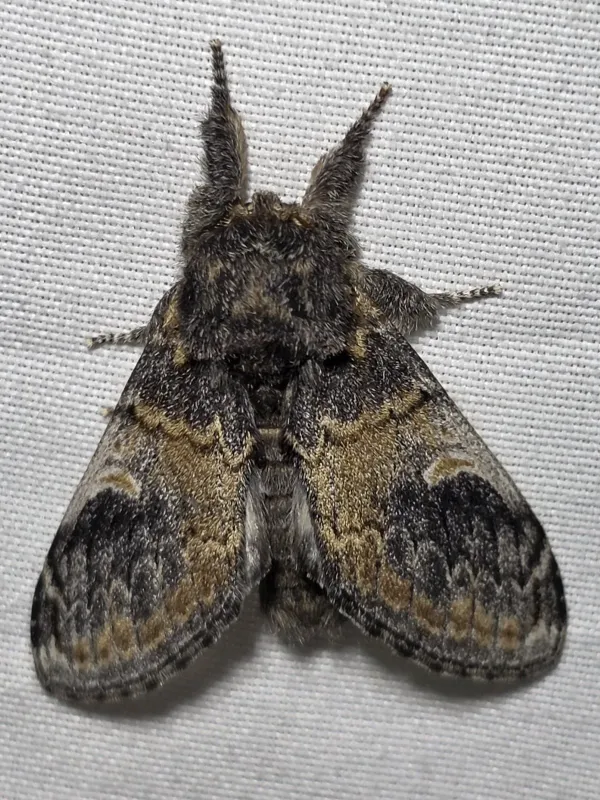
The Phoebe Prominent (Notodonta phoebe) is a moth belonging to the family Notodontidae. These moths are known for their cryptic coloration, which helps them blend into tree bark when resting during the day, making them difficult to spot.
The adult moth typically has a wingspan of 40–50 mm. Its forewings exhibit shades of grey and brown with intricate markings, while the hindwings are usually lighter. The common name "Prominent" refers to the tooth-like tufts of scales on the inner edge of their forewings.
The larvae (caterpillars) are the stage of the insect most recognizable to arborists. They often possess unique protrusions or humps on their bodies, which serve as camouflage, mimicking irregular leaf margins or small twigs.
The species undergoes complete metamorphosis, consisting of egg, larva, pupa, and adult stages. The pupal stage is spent in the soil or within a cocoon hidden in leaf litter, providing a safe harbor against environmental stressors during winter.
While generally not considered a primary agricultural pest, Notodonta phoebe can become locally abundant. In such cases, they can exert significant pressure on deciduous trees, particularly those in shelterbelts and ornamental gardens.
What it damages
The Phoebe Prominent larvae primarily feed on various broad-leaved trees. Willow, poplar, and aspen are the most common host plants, although they may occasionally infest fruit trees situated near wooded areas.
Damage is exclusively caused by the larvae, which possess strong mandibles capable of consuming large amounts of leaf tissue. Intensive feeding leads to defoliation, which is the most visible impact of this pest.
The loss of foliage directly affects the tree's photosynthetic capability. When a significant portion of the leaf area is destroyed, the tree loses the energy required for growth, wood production, and maintaining its immune system.
Persistent or severe defoliation weakens the tree's health, making it more susceptible to opportunistic secondary pests, such as wood-boring beetles, and various fungal diseases that thrive on stressed plants.
In nurseries or young plantations, the damage can be even more severe, affecting the structural development of the trees and potentially leading to stunted growth or branch dieback if left unmanaged.
When it appears
Adult moths generally emerge and are active during the late spring and summer months, typically spanning from late May through July. They are nocturnal and are highly attracted to artificial light sources.
After mating, females lay clusters of eggs on the underside of the host plant's leaves. The eggs hatch relatively quickly, and the young larvae begin their feeding cycle immediately upon emergence.
The most intense feeding activity occurs during mid-to-late summer, as the caterpillars grow rapidly and require substantial nutrients. This is the period when most visual damage is observed on the trees.
As autumn approaches, the fully grown caterpillars descend to the soil to pupate. The pupa remains dormant in the soil or protected under the leaf litter until the following spring, completing the annual cycle.
Although the species typically has one generation per year, warmer climates or extended summers may occasionally trigger a partial second generation, leading to increased pressure on the foliage during the late season.
Signs of infestation
Early identification of Phoebe Prominent activity is key to effective management. The first signs are often small, irregular holes in the leaves, caused by the younger larvae feeding on the softer tissues.
- Droppings (frass) visible on leaves beneath the canopy or on the ground.
- Direct observation of larvae hiding on the undersides of leaves or along branches.
- Skeletonized leaves, where only the larger veins remain, indicating mature larval activity.
- Noticeable thinning of the canopy and premature browning or dropping of leaves.
Using light traps during the night can provide early warning of adult moth presence. Regular monitoring of the underside of leaves for egg clusters during the early summer is the most reliable way to gauge the pest's population.
Be particularly observant of the lower and middle parts of the canopy, as these are common sites for initial colonization. A quick inspection during calm weather can reveal the presence of caterpillars before damage becomes widespread.
Control measures
Chemical control involving insecticides is effective if applied early. Synthetic pyrethroids or systemic neonicotinoids are commonly used, but they should be targeted specifically at the hatching larvae to maximize impact and minimize drift.
Biological control is highly recommended for sensitive areas. Products containing the bacterium Bacillus thuringiensis are selective for caterpillars and have minimal impact on beneficial insects, making them an environmentally sound choice.
Cultural practices are essential for long-term management. Removing leaf litter in the autumn and tilling the soil under the canopy can destroy pupae, significantly reducing the number of moths that will emerge in the spring.
Encouraging natural predators, such as birds, parasitic wasps, and predatory bugs, provides a sustainable way to keep the Phoebe Prominent population below the threshold that causes significant economic or aesthetic damage.
Monitoring using light traps is not only a research tool but also a management strategy that helps in timing applications of insecticides or biological agents, ensuring that interventions are both precise and cost-effective.
Taxonomy
- Latin name
- Notodonta phoebe
- Order
- Lepidoptera (butterflies)
- Family
- Notodontidae
- EPPO code
- NOTDPH
Discussion
No discussions yet — be the first.