
Coxcomb prominent
Notodonta dromedarius
Description
How to identify
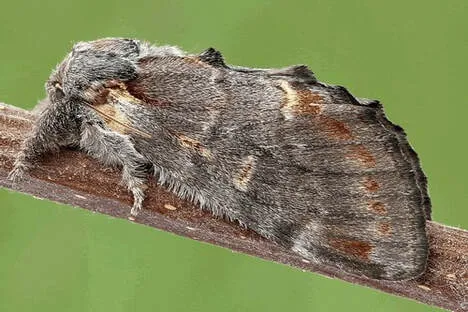
The Coxcomb prominent (Notodonta dromedarius) is a nocturnal moth belonging to the Notodontidae family. The adult moth features a wingspan of 40–50 mm, with cryptic brown, red, and grey coloration that mimics tree bark to provide camouflage.
The caterpillar is distinct due to the series of humps on its dorsal side, which resemble a coxcomb or a saddle. This characteristic profile makes the larvae relatively easy to identify during inspection.
Larval coloration is variable, ranging from shades of green to reddish-brown, often accompanied by pale lateral lines. This variation helps them blend into the foliage of their host trees.
The species overwinters as a pupa, typically nestled within the leaf litter or just below the soil surface at the base of the host tree. This strategy protects the insect from freezing temperatures.
Taxonomically, the moth is part of the order Lepidoptera. Understanding its life cycle is essential for timely intervention, especially in forest management and ornamental gardening.
What it damages
The larvae primarily feed on various deciduous trees, with a strong preference for Alnus (alder), Betula (birch), Salix (willow), and Populus (poplar). They may occasionally affect other broad-leaved species.
Feeding damage starts with younger larvae skeletonizing the leaf tissues. As the larvae grow, they consume the entire leaf lamina, leaving only the midrib and primary veins, which significantly reduces the tree's photosynthetic capacity.
Heavy infestations can lead to widespread defoliation of host trees. This weakens the tree's health, making it susceptible to secondary pests and various fungal diseases that thrive on stressed plants.
In forest nurseries and plantations, the economic impact is substantial as growth rates are stunted due to the loss of foliage. Chronic damage can lead to premature senescence and tree mortality.
The cumulative effect of repeated annual attacks is often more detrimental than a single season of defoliation, as it depletes the tree's stored starch reserves needed for winter dormancy.
When it appears
Adult moths typically emerge in a single generation from May to June. In warmer climates or favorable seasons, a partial second generation may emerge, extending the activity period into late summer.
Larvae are generally present from July through August. During this peak period, they feed aggressively, passing through several instars before reaching their final size for pupation.
Pupation occurs in late summer or early autumn. The mature larvae descend from the branches to the soil, where they construct a cocoon in the leaf mulch to spend the winter months.
Monitoring for adults can be conducted using light traps, which are very effective for this species. This helps determine the timing of the flight period and potential egg-laying windows.
Early intervention is most effective just as the larvae hatch. Scouting the lower branches for feeding signs or small larvae should be conducted consistently throughout mid-summer.
Signs of infestation
The most obvious sign is the presence of eaten leaves. You may notice irregular holes or completely stripped leaves where the larvae have been feeding intensely.
Frass (caterpillar droppings) accumulating on the leaves below or on the ground at the base of the tree is a strong indicator of an active caterpillar colony above.
- Skeletalized leaves with visible veins
- Distinctive humped caterpillars on the underside of leaves
- Early leaf yellowing or drop-off
- Sparse crown appearance during the active growing season
If you inspect the branches, you may find the larvae themselves, which often adopt a defensive posture by raising their head and tail segments when threatened.
In cases of severe infestation, the cumulative sound of feeding can sometimes be heard during calm evenings, as numerous larvae consume the canopy foliage simultaneously.
Control measures
Biological controls such as Bacillus thuringiensis (Bt) sprays are highly effective against young larvae. They provide a targeted approach that minimizes harm to beneficial predatory insects.
For smaller ornamental trees, manual removal of larvae is a practical and non-toxic method. Simply shake the branches or pick them off by hand and dispose of them appropriately.
Where chemical intervention is necessary, systemic or contact insecticides may be used, provided they are applied during the early stages of larval development to ensure maximum efficacy.
Soil management around the base of trees, such as light tilling or removing excessive leaf litter, can destroy pupation sites and expose the pupae to predators or cold conditions.
Promoting a healthy environment for birds, particularly insectivorous species like tits and warblers, helps regulate the population density naturally, preventing the need for more drastic chemical measures.
Taxonomy
- Latin name
- Notodonta dromedarius
- Order
- Lepidoptera (butterflies)
- Family
- Notodontidae
- EPPO code
- NOTDDR
Discussion
No discussions yet — be the first.