
Jumping oak gall wasp
Neuroterus saltarius
Description
How to identify
The jumping oak gall wasp Neuroterus saltarius is a species of hymenopteran insect belonging to the family Cynipidae. These wasps are known for inducing the formation of specific galls on oak leaves.
Adult wasps are microscopic and rarely observed, but their impact is clearly visible through the galls they create on the host plant during their larval stage.
The common name "jumping" originates from the movement of the galls after they drop to the ground. The larvae inside move vigorously, causing the galls to jump on the soil surface.
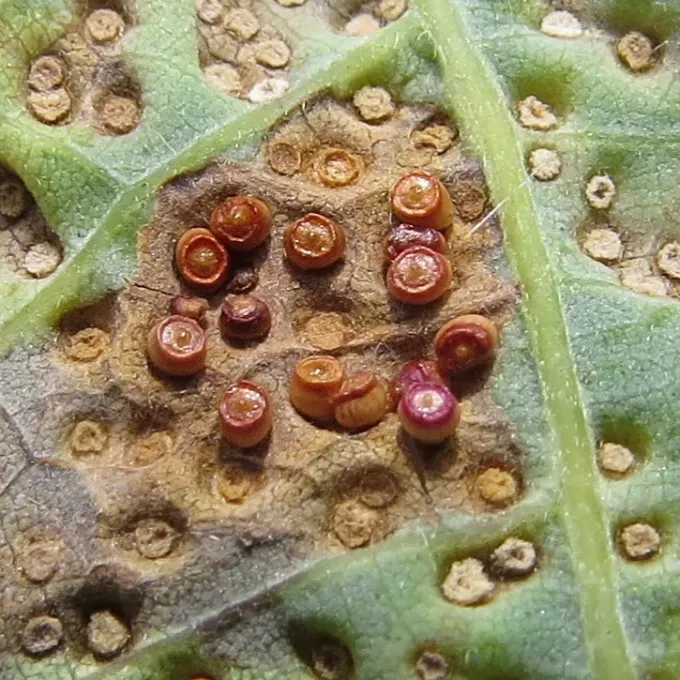
Visually, the galls appear as tiny, seed-like structures on the underside of oak leaves, which can be easily overlooked if one is not specifically looking for them.
The life cycle involves an alternation of generations, which is a common strategy among gall wasps to exploit the phenology of their host trees throughout the year.
What it damages
The jumping oak gall wasp primarily affects oak trees, particularly the English oak. The larvae utilize leaf tissues to build a protected chamber and derive nutrition.
While a single gall causes little harm, heavy infestations can lead to premature leaf yellowing and shedding, reducing the overall photosynthetic surface of the tree.
In forest stands, sustained infestations can reduce annual wood increment, as the tree redirects energy to manage the physiological stress caused by the gall formation.
For ornamental oaks in urban landscaping, the aesthetic damage caused by numerous galls on foliage can be a significant concern for property owners.
Young, vulnerable saplings may show reduced vigor if infested repeatedly over several consecutive years, potentially making them susceptible to secondary pests.
When it appears
The development of galls on the undersides of leaves is typically observed in mid-to-late summer when larvae are actively feeding and growing.
By autumn, as the larvae reach maturity, the galls detach from the leaves and fall to the ground, where the "jumping" behavior begins.
The window for visual observation on the tree canopy extends from mid-summer until the natural leaf-fall period in the autumn.
The insect overwinters as a larva inside the fallen galls, tucked away within the leaf litter or the top layer of soil under the host tree.
Emergence of the adult wasps in spring coincides with the bud break and leaf emergence of the oak, ensuring the continuity of the species' life cycle.
Signs of infestation
The primary sign of infestation is the presence of numerous small, round bumps scattered across the undersides of leaves, often aligned with the leaf veins.
A curious indicator of their presence is the movement of small particles on the ground below an infested tree, where fallen galls are active.
Leaves that are heavily infested may show signs of yellowing or curling, and in severe cases, they may drop earlier than healthy, unaffected foliage.
- Tiny, seed-like galls on the underside of leaves.
- Noticeable movement of fallen galls on the ground in autumn.
- Premature yellowing or defoliation of infested branches.
Control measures
Large-scale control measures are generally not implemented in natural forests as the wasp is usually considered a minor pest that does not kill the host tree.
In nurseries and home gardens, the most effective management strategy is to rake and dispose of fallen leaves and galls to reduce the overwintering population.
Chemical control is rarely recommended due to the difficulty in timing the application exactly when the adult wasps are active and the limited success rate.
Encouraging natural predators, such as parasitic wasps that target cynipid larvae, is the best biological approach to keeping populations in balance.
Maintaining the overall health of the tree through proper watering and soil fertilization can enhance the tree's resilience to occasional pest infestations.
Taxonomy
- Latin name
- Neuroterus saltarius
- Order
- Hymenoptera
- Family
- Cynipidae
- EPPO code
- NEUTSA
Discussion
No discussions yet — be the first.