
Oak jumping gall wasp
Neuroterus saliens
Description
How to identify
The oak jumping gall wasp (Neuroterus saliens) is a small hymenopteran insect belonging to the Cynipidae family. These insects are rarely seen in their adult form due to their tiny size and secretive nature.
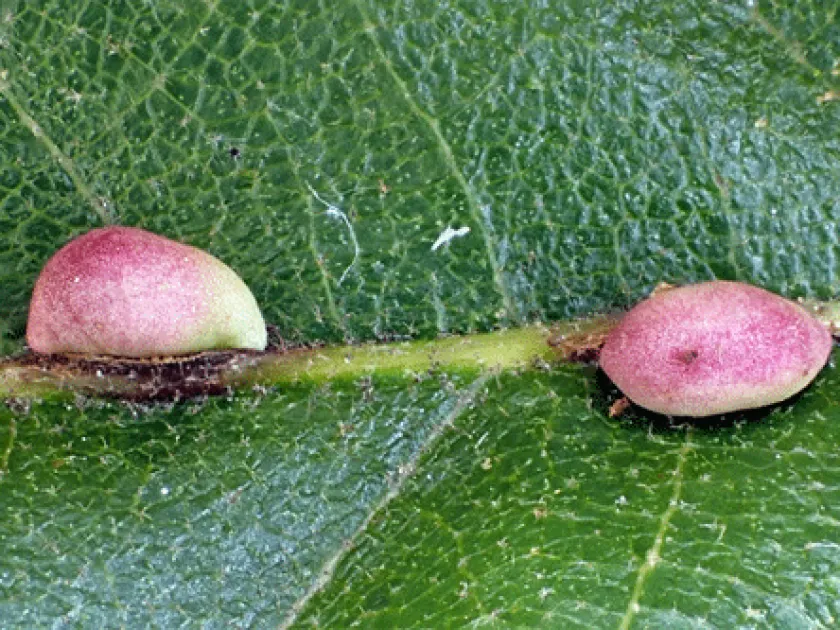
Identification is primarily based on the presence of small, disc-shaped or lenticular galls found on the undersides of oak leaves. These structures serve as a specialized nursery for the developing larvae.
The term "jumping" refers to the peculiar behavior of the galls. Once they fall to the ground in autumn, the larvae inside perform sudden muscular contractions, causing the galls to jump or hop across the leaf litter.
This species exhibits a complex life cycle, which often involves an alternation of sexual and asexual generations. Understanding these stages is critical for the accurate diagnosis of the pest in an ecosystem.
Experts use magnifying lenses to inspect the surface and shape of the galls, which are specific to the Neuroterus genus. These characteristics are the most reliable way to confirm the species presence.
What it damages
The oak jumping gall wasp is a host-specific pest that primarily affects oak trees (Quercus species). The infestation occurs on the foliage, where the formation of galls disrupts normal leaf development.
By stimulating the plant to create these structures, the larva diverts nutrients away from the tree's growth processes. While a single gall is negligible, mass infestations can place significant physiological stress on the tree.
Heavy infestations lead to premature leaf abscission during the summer months. This reduces the total photosynthetic area of the tree, potentially weakening its resistance to environmental stressors like drought.
The damaged tissue at the site of the gall can facilitate the entry of secondary pathogens, including fungi and bacteria. This can lead to localized leaf necrosis or stunted development of the shoots.
In ornamental settings and parklands, the aesthetic damage caused by numerous brown or yellow spots on the leaves can be significant. Tree care professionals must monitor these symptoms to maintain the health of high-value oak specimens.
When it appears
The biological cycle of Neuroterus saliens is highly synchronized with the phenology of the host oak. In early spring, adults emerge from the leaf litter to lay eggs into the developing buds.
Throughout the late spring and summer, the larvae grow within the safety of the developing galls on the leaves. During this phase, they are protected from most environmental threats.
Autumn marks a transition, as the mature galls detach from the foliage and fall to the ground. This is the period when the jumping behavior is most active, aiding the galls in finding suitable crevices for overwintering.
The winter months are spent in the larval or pupal stage inside the fallen galls, safely hidden within the leaf litter layer. This winter diapause ensures the survival of the population until spring.
As temperatures rise and the buds swell, the next generation of adult wasps emerges. This life cycle repeats consistently each year, making the timing of monitoring crucial for any control efforts.
Signs of infestation
The most visible signs are small, raised spots on the underside of oak leaves during the summer. These galls often start as light green or reddish structures before maturing into a woody texture.
The "jumping" activity on the ground in autumn is an unmistakable sign of this species. If you observe small objects moving sporadically in the leaf litter under an oak tree, it is highly likely to be Neuroterus saliens.
Yellowing, curling, or premature drying of leaves can indicate an intense level of infestation. If a large portion of the canopy shows these symptoms, the tree's health is likely being compromised.
Small circular exit holes on the galls indicate that the wasps have successfully emerged. This is a sign that the pest population has completed its current reproductive phase.
Field inspections should focus on the mid-to-late summer months. Examining the underside of leaves for these distinctive structures allows for early detection before significant damage occurs.
Control measures
The primary control method involves sanitation, specifically the removal and destruction of fallen leaves in late autumn. Since the wasps overwinter in the galls within the leaf litter, removing this debris effectively reduces the next generation's population.
Chemical control is rarely necessary but may be used in nurseries or on young, susceptible trees. If required, systemic insecticides applied during the adult emergence phase can prevent egg-laying.
Encouraging natural predators, such as parasitoid wasps that feed on gall larvae, is an excellent ecological strategy. Maintaining a diverse ecosystem helps keep the population of the gall wasp in check naturally.
Selective pruning of heavily infested branches can be useful in manicured landscapes. However, this is only practical for small trees or isolated, severe infestations.
Monitoring using yellow sticky traps is an effective way to track adult activity. Knowing when the adults are active helps in timing any necessary interventions to ensure maximum efficacy with minimal environmental impact.
Taxonomy
- Latin name
- Neuroterus saliens
- Order
- Hymenoptera
- Family
- Cynipidae
- EPPO code
- NEUTSL
Discussion
No discussions yet — be the first.