
Neuroterus papillosus
Neuroterus papillosus
Description
How to identify
Neuroterus papillosus is a small hymenopteran insect belonging to the family Cynipidae, commonly known as gall wasps.
These insects are microscopic in size and are rarely seen as adults, making their physical identification difficult without laboratory tools.
The biology of this species is characterized by a complex relationship with the host plant, specifically oak trees (Quercus species).
The insect induces the tree to grow specialized structures known as galls, which provide a protected environment and food source for the developing larvae.
Identification in the field is almost exclusively based on the characteristic morphology of the galls found on the leaves or buds of the oak tree.
What it damages
The primary damage caused by Neuroterus papillosus involves the diversion of plant nutrients towards the formation and maintenance of galls.
Heavy infestations can lead to significant physiological stress for the tree, as the galls compete with normal growth processes for resources.
While usually not lethal to mature trees, extensive gall development can result in premature leaf drop and reduction of the tree's overall vigor.
Young trees and saplings in nurseries are particularly vulnerable, as gall formation can inhibit normal development and reduce growth rates.
Secondary infections by pathogens or infestations by wood-boring insects may occur more frequently on trees weakened by heavy gall wasp activity.
When it appears
The life cycle of the wasp is tightly linked to the phenology of the oak, with activity beginning in early spring during bud burst.
Gall formation typically peaks during the late spring and early summer months as the foliage develops and matures.
There may be multiple generations per year, depending on the climatic conditions and the specific host species' physiology.
Adult wasps emerge from the galls once development is complete, usually before the end of the growing season, to initiate the next generation.
Overwintering often occurs in the pupal stage within the leaf litter or within protected structures on the twigs of the host tree.
Signs of infestation
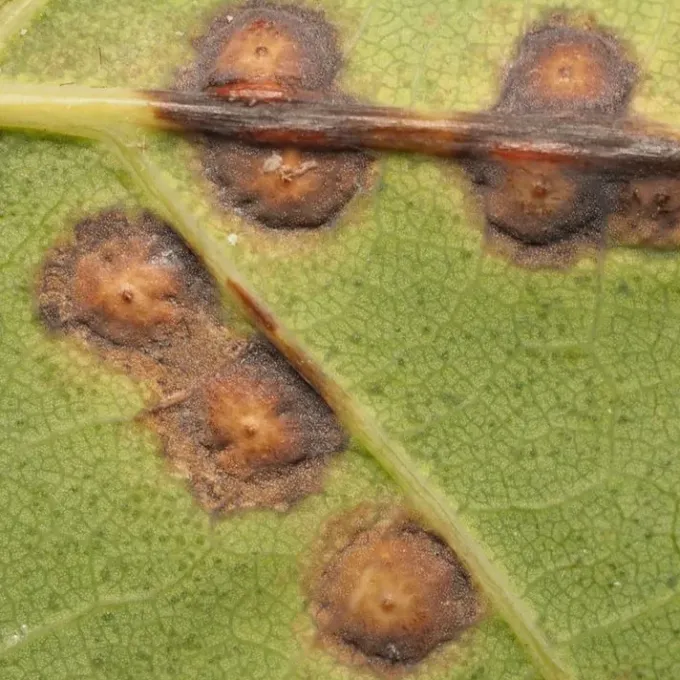
The most prominent sign of infestation is the appearance of small, nipple-like or spherical galls on the surface of the oak leaves.
Affected leaves often exhibit distortion, curling, or chlorotic spots around the area where the gall has developed.
During peak infestation, the tree may show signs of early leaf fall, which creates a sparse canopy during the middle of the summer.
Observing a large number of these galls on the underside of leaves is a definitive indicator of Neuroterus papillosus activity.
In severe cases, the foliage density may appear noticeably reduced, affecting the overall aesthetic and photosynthetic potential of the tree.
Control measures
Management of gall wasps is challenging due to the protection offered by the gall structures to the developing larvae.
Cultural practices, such as raking and destroying fallen leaves in autumn, can help reduce the overwintering population of the insect.
Systemic insecticides applied at the correct phenological stage can be effective in reducing the impact on young or highly valuable landscape trees.
- Pruning and removing infested branches to reduce local pest pressure.
- Enhancing tree health through proper fertilization and irrigation.
- Encouraging natural predators, such as parasitoid wasps that attack gall larvae.
Integrated Pest Management (IPM) strategies are recommended to maintain tree health while minimizing the use of broad-spectrum chemical treatments.
Taxonomy
- Latin name
- Neuroterus papillosus
- Order
- Hymenoptera
- Family
- Cynipidae
- EPPO code
- NEUTPA
Discussion
No discussions yet — be the first.